Honey Garlic Chicken
Thirty minutes, one pan, and a sauce that is syrupy rather than sweet because the honey goes in mixed with vinegar and stock instead of straight onto hot garlic.
- Prep
- 10 min
- Cook
- 20 min
- Total
- 30 min
- Serves
- 4
- Revisions
- 1
Allergens
- Cereals containing gluten
- Sesame
- Soya
Named from the ingredients as written, including those carried in from sub-recipes. This is not a guarantee — check the labels on what you actually buy, and note that a product’s recipe can change.
Ingredients
Serves
Method
Pat the chicken dry with kitchen paper. Wet chicken steams in the pan and never browns, and browning is where most of this dish's flavour comes from.
Toss it with the cornflour, salt and pepper until the pieces look faintly dusty rather than pasty.
Whisk the honey, soy sauce, rice vinegar, sesame oil and stock together in a bowl and put it within reach of the hob. Honey poured onto a hot pan on its own scorches in seconds; diluted like this it reduces instead.
Heat the oil in a wide frying pan over medium-high heat until it shimmers.
Lay the chicken in one layer with gaps between the pieces and leave it alone for 4 minutes. It lifts off the pan by itself once it has browned, and moving it earlier tears the crust off and leaves it stuck to the metal.
Turn the pieces and cook for 3 minutes more.
Lift them onto a plate. They will not be cooked through yet and they finish in the sauce.
Turn the heat down to medium-low, add the garlic and ginger, and cook for 30 to 45 seconds, until the garlic is pale gold and smells sweet. Seconds, not minutes, and it burns bitter fast, which is why the sauce was mixed before the pan went on.
Pour in the sauce with the chilli flakes and bring it to a simmer, scraping the base of the pan clean.
Return the chicken and any juices and simmer for 5 to 6 minutes, turning the pieces, until the sauce is syrupy and clings to them rather than pooling underneath.
Check for 74C/165F in the thickest piece. Thigh stays juicy well past that; if you have used breast instead, cut it into 3cm pieces, brown it for only 2 minutes a side, and return it for the last 2 minutes of the simmer, because breast goes from juicy to dry inside about five degrees.
Take the pan off the heat and scatter over the spring onions and sesame seeds.
Serve with rice, spooning the sauce from the pan over everything.
Nobody has rated this recipe yet.
Sign in to rate this recipe. One rating per person, and you can change it.
What to expect
- Taste
Sweet and salty in almost equal measure, with the vinegar keeping the two apart so neither dominates. Honey gives a floral sweetness that is distinct from sugar and reads as slightly rounder and more perfumed. The soy is the salt and also most of the savoury depth. Garlic is present as a sweet mellow background rather than as a bite, because it was cooked briefly in fat rather than raw or browned. Ginger gives a faint warmth at the back. If the chilli went in, it arrives last and low.
- Aroma
Sweet and sharply savoury, and it is the smell of a takeaway kitchen more than a home one. Frying garlic first, then the moment the sauce hits the hot pan and the vinegar flashes off, which is genuinely eye-catching and should be brief. Toasted sesame at the end sits on top of everything.
- Texture
The chicken should have a thin browned crust from the cornflour that has not gone soft under the sauce, and thigh meat underneath that is juicy and slightly yielding. The sauce is syrupy and coats the back of a spoon. Sesame seeds give the only crunch and it is a small one.
- Sound
A hard sizzle when the chicken goes in, which quietens as the pan cools with the meat in it and picks up again as the sauce reduces. When the sizzle turns sharper and higher the water has gone and the sauce is nearly there.
- How the flavour moves
Sweet first and immediately, then salt underneath it, then a sour lift from the vinegar in the middle that stops the sweetness building, and a warm garlic and sesame finish. The vinegar is the reason you want a second mouthful; without it the whole thing finishes cloying and the dish is over after four bites.
- Serve it
Straight from the pan. The sauce firms considerably as it cools and a plate left standing goes tacky.
- Goes with
Plain rice, and something green and plain with it, since the sauce is doing all the work. Steamed broccoli, pak choi or cucumber in vinegar. Nothing else sweet on the table.
Cook's notes
- Difficulty
Easy.
- Cost
Cheap.
- Equipment
One wide frying pan and a probe thermometer.
- When to make it
Any weeknight. It genuinely is thirty minutes.
- Best season
None.
- You know it is done when
The sauce is ready when it has gone from watery to glossy and it visibly coats the chicken as you turn it, leaving a clear trail across the base of the pan for a second before closing.
- And it feels like
The sauce should be syrupy rather than sticky. Taken too far it goes to toffee on cooling.
- Food safety
74C/165F in the thickest piece.
- Where it goes wrong
- Adding honey directly to a hot pan, where it scorches within seconds.
- Browning the garlic, which turns it bitter and taints the whole sauce.
- Moving the chicken in the first four minutes, which tears the crust off and leaves it stuck to the pan.
- Crowding the pan, so the chicken steams grey instead of browning.
- Reducing the sauce too far, so it sets to toffee on the plate.
- Using breast without adjusting the timings, which is the fastest way to a dry version of this.
- If it does go wrong
Sauce thin: reduce it another minute with the chicken lifted out. Sauce sticky and dark: it went too far, and a tablespoon of stock or water will bring it back. Bitter: the garlic browned. Chicken pale and grey: the pan was crowded or not hot enough.
- Making it ahead
The sauce can be mixed a day ahead. The rest is faster than getting it out of the fridge.
- Keeping it
Three days in the fridge.
- Reheating
In a pan with a tablespoon of water, which loosens the sauce as it warms.
- Freezing
Freezes for two months. The sauce thins slightly on thawing and reduces back.
- Leftovers
Cold in a wrap with cucumber, or chopped through fried rice.
- Scaling it
Doubles, but brown in two batches or the pan floods.
- Substitutions
Thigh is the right cut and the recipe says what to do differently with breast. Rice vinegar can be cider vinegar. Maple syrup works in place of honey and gives a slightly less floral, more caramel result. Sesame oil is a finishing oil and should not be used for frying.
- Dietary swaps
Contains cereals containing gluten and soya from the soy sauce, and sesame. Tamari makes it gluten free. Dairy free and egg free as written.
- Shopping for it
Nothing here needs a special trip.
- Keeping the cost down
Thighs, and stock rather than anything fancier.
- Nutrition
Four tablespoons of honey across four servings, so it is sweet, and lean meat otherwise.
- Worth it?
Mix the sauce before you light the pan and the recipe cooks itself.
Where it comes from
- Origin
Not established. This is a modern dish of Western home cooking with no traceable single origin.
- What the name means
Descriptive and nothing more.
- History
Sauces built on soy, sugar or honey, garlic, ginger and vinegar are long-standing across China, Korea and Japan, and the dish sits in that broad lineage. Beyond that there is nothing specific to say, and this field is deliberately left thin rather than filled with a plausible-sounding story.
- Why it matters
None claimed. It is a weeknight recipe rather than a cultural artefact, and it is one of the most-searched chicken dishes in English.
- When it is eaten
Tuesday.
- The traditional way
None that is specific to it. The techniques used are ordinary ones: dusting with starch to promote browning and thicken a pan sauce, and building a sauce off the heat so a sugar does not scorch.
- How it changed
Not applicable.
- How this version differs
Most published versions pour honey straight into the hot pan or brown the garlic first. Both scorch, and the recipe is written specifically to avoid it: the sauce is mixed before the pan is lit and the garlic gets forty-five seconds at reduced heat.
- Sources and credit
None known. Anyone claiming one should be asked for a source.
 Air Fryer Chicken Breast
 Air Fryer Chicken Thighs
 One-Pot Creamy Chicken and Rice
 Air Fryer Salmon
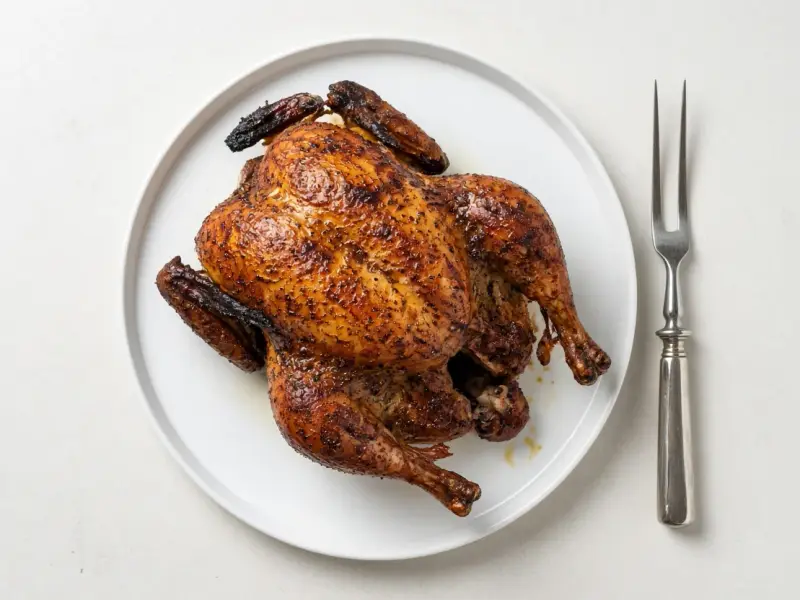 Air Fryer Whole Chicken
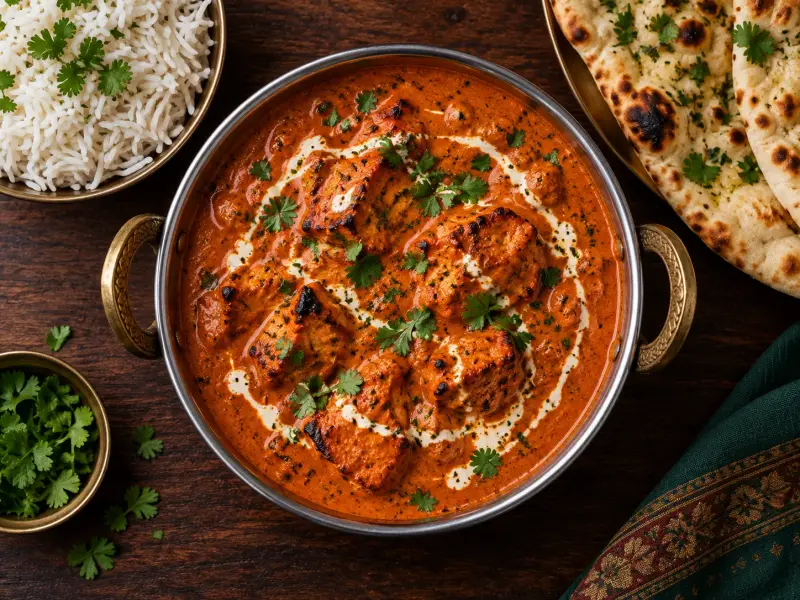 Butter Chicken
 Main courses
 Dinner
 Chicken
 30 minutes