One-Pot Creamy Chicken and Rice
Rice cooked in the same pan the chicken browned in, with the lid on and nothing stirred. Stirring is what turns it to porridge.
- Prep
- 15 min
- Cook
- 40 min
- Resting
- 10 min
- Total
- 1 hr 5 min
- Serves
- 4
- Revisions
- 1
Allergens
- Celery
- Milk
- Sulphites
Named from the ingredients as written, including those carried in from sub-recipes. This is not a guarantee — check the labels on what you actually buy, and note that a product’s recipe can change.
Ingredients
Serves
Chicken
Rice
To finish
Method
Chicken
Pat the chicken dry and season the skin well with the salt.
Heat the oil in a wide casserole with a lid and lay the thighs in skin side down.
Cook for 8 to 10 minutes without moving them, until the skin is deep brown and releases from the pan by itself. If it sticks, it is not ready.
Turn them for 2 minutes on the other side, then lift them out. They are nowhere near cooked through and do not need to be.
Rice
Pour off all but two tablespoons of the fat, then cook the onion and celery for 6 minutes.
Add the garlic and thyme for 1 minute.
Stir in the rinsed rice and turn it in the fat for 2 minutes, until the grains look glassy at the edges. Rinsing removes the loose surface starch that would otherwise make this gluey.
Pour in the hot stock, stir once to level the rice, and bring it to a simmer.
Sit the chicken back on top, skin side up and proud of the liquid so it stays crisp.
Put the lid on and cook on the lowest heat for 20 minutes without lifting it or stirring. Every stir releases more starch, and this is meant to be creamy from the cream, not from wrecked rice.
Take it off the heat and leave it, still covered, for 10 minutes.
To finish
Lift the chicken onto a plate. Check the thickest thigh has reached 74C/165F.
Stir the cream, Parmesan, peas and lemon juice through the rice, fluffing it with a fork rather than beating it.
Sit the chicken back on top and serve from the pan.
Nobody has rated this recipe yet.
Sign in to rate this recipe. One rating per person, and you can change it.
What to expect
- Taste
Mild, savoury and comforting, with the Parmesan doing most of the seasoning and the lemon at the end preventing it from being flat. The crisp skin is the strongest flavour on the plate.
- Aroma
Chicken skin browning at the start, then thyme and stock. Not a dramatic-smelling dish.
- Texture
The point of the dish. Crisp skin, soft chicken, and rice that is creamy but still made of separate grains. All three are lost if the pot is stirred during cooking.
- Sound
The skin crackling for the first ten minutes, then nothing under the lid.
- How the flavour moves
Salt and fat from the skin, then a mild creamy body, then lemon at the end that resets it.
- Serve it
Hot, straight from the pan.
- Goes with
Nothing much is needed. A sharp green salad afterwards, or something pickled beside it.
Cook's notes
- Difficulty
Easy, with two rules that must be kept: rinse the rice, and do not lift the lid.
- Cost
Low.
- Equipment
A wide casserole or deep frying pan with a tight lid.
- When to make it
A weeknight.
- Best season
None.
- You know it is done when
The rice has absorbed all visible liquid and small holes have opened across the surface. The chicken skin should still be brown and dry-looking, not pale and slack.
- And it feels like
Separate grains that hold together loosely, then bound by the cream. If it is gluey, either the rice was not rinsed or the pot was stirred.
- Food safety
Chicken is safe at 74C/165F instantaneous (USDA), or 70C for two minutes / 75C instantaneously (UK Food Standards Agency). Probe the thickest thigh away from the bone. The dish is otherwise straightforward; raw chicken hygiene applies to the board.
- Where it goes wrong
- Stirring during the covered stage, which releases starch and makes it gluey.
- Not rinsing the rice, which does the same thing.
- Submerging the chicken, which turns crisp skin into wet skin.
- Lifting the lid to check, which lets out the steam that is doing the cooking.
- Skipping the 10-minute rest, which is when the grains finish and separate.
- Cold stock, which stops the pot and throws the timing out.
- If it does go wrong
Gluey: rinse next time, and do not stir. Rice still hard after the rest: add 60ml of hot stock, cover and give it 5 minutes more on the lowest heat. Wet and soupy: lid off, medium heat, 3 minutes. Slack skin: it was under the liquid, or it was not browned long enough at the start.
- Making it ahead
Poorly. This is a dish to cook and eat.
- Keeping it
Two days in the fridge. Rice dishes are the one category worth being strict about: cool it within an hour and refrigerate promptly.
- Reheating
Until piping hot all the way through, once only. Add a splash of stock, cover, and heat properly rather than warming it.
- Freezing
Not recommended. The rice goes grainy and the cream splits.
- Leftovers
Made into arancini, or fried hard in a pan until the base crisps.
- Scaling it
Needs a pan wide enough to hold the rice no more than 3cm deep. Doubling in a deep pot cooks unevenly.
- Substitutions
Boneless thighs work and cook in 15 minutes rather than 20; you lose the skin, which is a real loss. Breast is not recommended and will be dry. Basmati works but wants 550ml of stock rather than 600ml. Brown rice does not work in these timings at all.
- Dietary swaps
Contains milk, plus celery and sulphites from the stock. Gluten free as written provided the stock is. Not straightforward to make dairy free — the cream and cheese are what the dish is called after — though a coconut cream version is a different and decent dish.
- Shopping for it
Nothing unusual.
- Keeping the cost down
Thighs rather than breast, which is cheaper and better here. The Parmesan can be a smaller quantity of a stronger cheese.
- Sustainability
Chicken has the lowest footprint of the common meats, and this dish is already mostly rice — the meat is a topping rather than the bulk. Bone-in thighs are the cheaper, less-demanded part of the bird. The largest thing you could change is the cream, since dairy carries a real footprint of its own; a version finished with stock and Parmesan alone is lighter in both senses.
- Nutrition
Substantial. Most of the fat is in the cream and the skin.
- Worth it?
Rinse it and leave it alone. Two instructions, and they are the difference between rice and wallpaper paste.
Where it comes from
- Origin
American home cooking, recently.
- Also called
None; it is a modern dish without a fixed name.
- Said out loud
Straightforward.
- What the name means
Literal, and 'one-pot' is a promise about washing up as much as a description.
- History
Chicken cooked over rice in a single covered pot is one of the oldest and most widespread ways of making a meal — arroz con pollo across Spain and Latin America, plov in Central Asia, and countless regional forms besides. The cream-and-Parmesan version is a recent American development and owes more to the mid-century casserole than to any of them, which is worth stating plainly rather than claiming a deeper lineage.
- Why it matters
Belongs to the modern genre of one-pan weeknight cooking, which is a real category with its own conventions rather than a marketing term.
- When it is eaten
A weeknight, and specifically a weeknight where washing up matters.
- The traditional way
Browning the protein, toasting the rice in the fat, and cooking it covered without stirring — which is the pilaf method and is where this dish's technique actually comes from.
- How it changed
Cream and Parmesan were added to a form that historically used neither.
- Regional variations
This site has Plov, which is the Central Asian version and a genuinely different and older dish.
- How this version differs
The chicken sits proud of the liquid rather than being submerged, which keeps the skin crisp — most versions of this recipe drown it and then call the result creamy. The rice is rinsed, which many recipes skip.
- Sources and credit
None. This is a form rather than an invention.
Related recipes
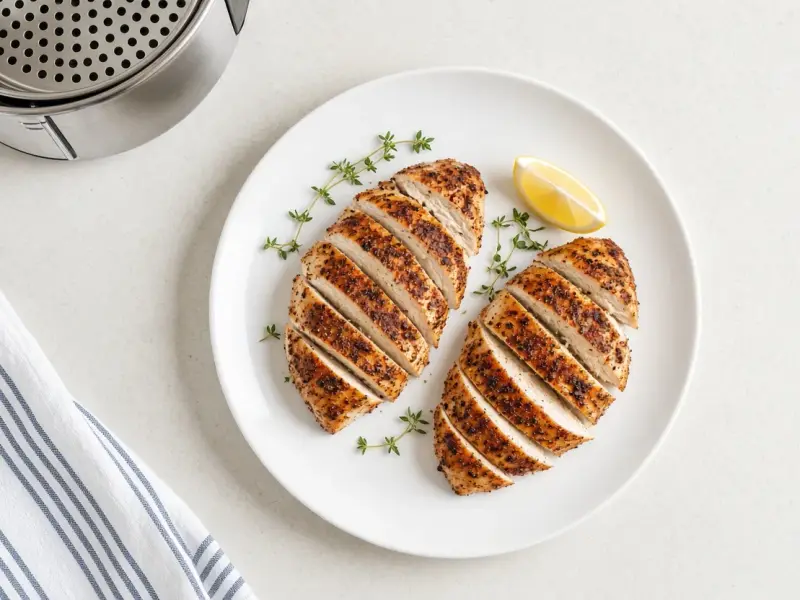 Air Fryer Chicken Breast
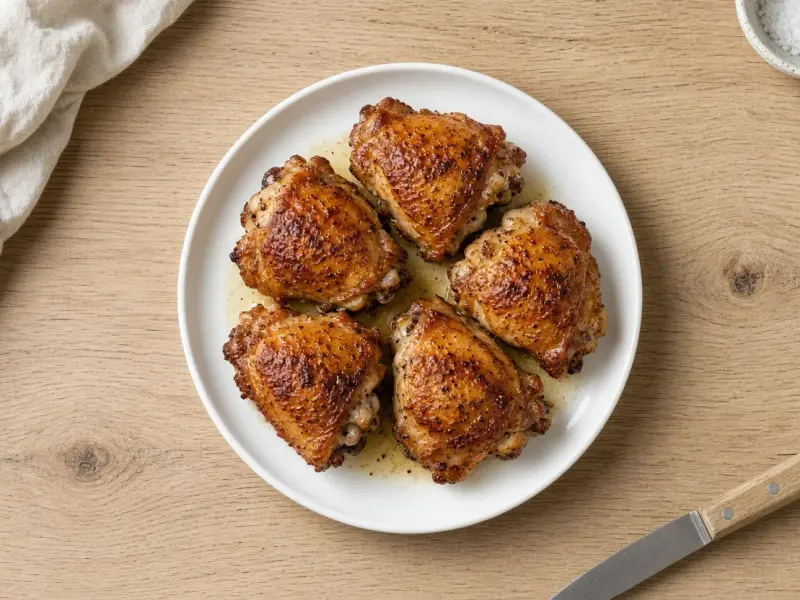 Air Fryer Chicken Thighs
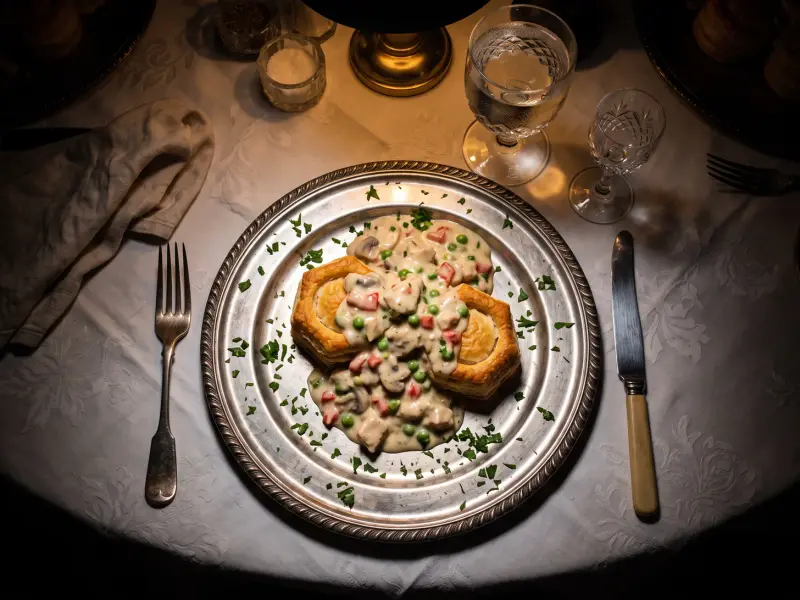 Chicken à la King
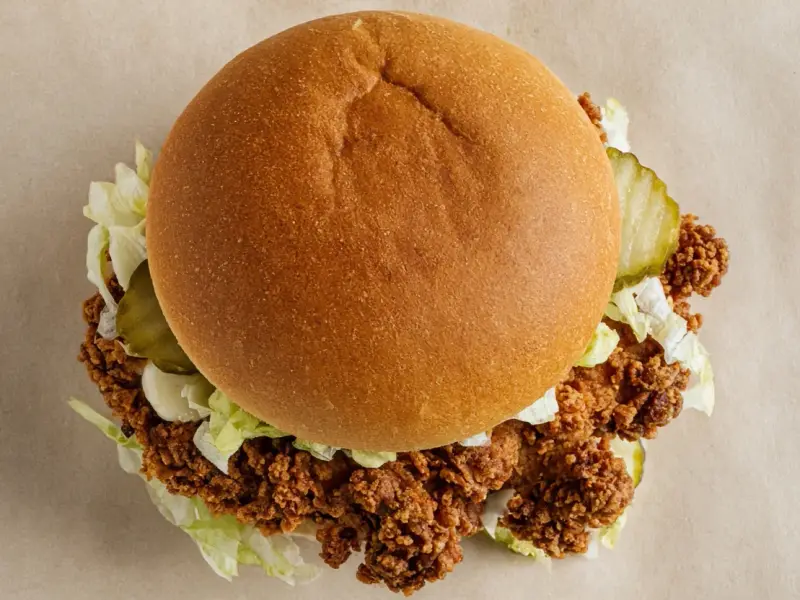 Chicken Burger
 Chicken Caesar Salad
 Chicken Parmigiana
Categories
Cuisines
 American
Courses & dish types
 Main courses
 Dinner
Main ingredients
 Chicken
Time & effort
 30 minutes