Air Fryer Chicken Breast
Boneless breast at 190C, turned once. It dries out because it is cooked by the clock rather than to 74C — and because nobody levels the thick end first.
- Prep
- 5 min
- Cook
- 17 min
- Resting
- 5 min
- Total
- 27 min
- Serves
- 2
- Revisions
- 1
Ingredients
Serves
Method
Lay each breast between two sheets of baking paper and press the thick end down with the heel of your hand until the whole fillet is an even 2cm thick.
This is the entire recipe. A breast that is 3cm at one end and 1cm at the other cannot be cooked properly: by the time the thick end reaches 74C the thin end has been sitting there for six minutes and is already dry.
Pat both breasts completely dry with kitchen paper. A wet surface spends the first minutes steaming instead of browning.
Rub them all over with the oil, then with the salt, smoked paprika, garlic granules, oregano and pepper.
Heat the air fryer to 190C/375F for 3 minutes with the basket in place. A cold basket costs you the first two minutes of browning, and a cook this short does not have two minutes to spare.
Lay the breasts in the basket in a single layer, smooth side up, with a finger's gap between them.
Cook for 9 minutes.
Turn them with tongs and cook for a further 6 to 9 minutes.
Check the thickest part with a probe and take them out at 74C/165F. Without a probe, cut into the thickest point: the juices should run clear and the flesh should be white through, with no pink and no glassy grey.
Air fryers vary more than ovens do. A small drawer model is usually done at 15 minutes and a large oven-style one can need 20, so start checking at 15 and believe the temperature over the timer.
Rest the breasts on a warm plate for 5 minutes before slicing. They climb another two or three degrees off the heat, and cutting them straight out of the basket pushes the juices onto the board instead of leaving them in the meat.
Nobody has rated this recipe yet.
Sign in to rate this recipe. One rating per person, and you can change it.
What to expect
- Taste
Salt and smoked paprika first, then the mild, faintly sweet flavour of the breast meat itself, which is not much on its own and is the reason the rub exists. Garlic granules give a low toasted savouriness rather than the bite of fresh garlic, and the oregano sits behind everything as a dry, faintly bitter herbal note. There is no browning depth to speak of on a skinless breast — this is a clean, direct, seasoned taste rather than a roasted one.
- Aroma
Warm paprika above everything else, with toasted garlic underneath it. The smell arrives about eight minutes in and is the first honest indication the machine is doing its job; before that an air fryer full of chicken smells of very little.
- Texture
The point of the recipe. Cooked properly it is dense but yielding, and slices part cleanly under a knife with visible moisture on the cut face. Cooked five degrees too far it goes stringy — the fibres separate into threads that need chewing and then swallowing with a drink. The surface is dry to the touch with a very thin rub crust; there is no crackle here, because there is no skin.
- Sound
Almost silent. The fan is the loudest thing in the room, and a sizzle only starts once the surface fat and juices have come out, around ten minutes in. A finished breast makes no sound at all when cut, which is worth noting because it means the doneness cues are visual and thermal only.
- How the flavour moves
Seasoning at the front, meat in the middle, and a very short finish — this is not a dish with a long tail. What changes across a plateful is moisture: the first slices from the middle are noticeably juicier than the last slices from the tapered end, which is the same thickness problem showing up on the plate rather than in the basket.
- Serve it
Served hot but rested — five minutes off the heat is what lets the juices redistribute, and the meat carries on climbing two or three degrees in that time, which is why it comes out at 74C rather than being held there.
- Goes with
Anything with acid or fat to make up for what a lean breast lacks: a lemony chickpea and herb salad, garlicky greens, a spoonful of everyday vinaigrette over the slices, or air fryer chips beside it.
Cook's notes
- Difficulty
Easy. The only piece of technique in it is levelling the thickness, and that takes a minute.
- Cost
Low. Two chicken breasts and a spice rub made from things already in the cupboard.
- Equipment
An air fryer, and an instant-read probe thermometer. The probe is the difference between this recipe working every time and working sometimes, because air fryers vary enough that no published time is reliable across models.
- When to make it
Weeknights, and batch-cooking for lunches.
- Best season
None.
- You know it is done when
The surface is matt rather than shiny, with the paprika gone brick-red and darker at the edges, and the flesh at the thickest point is white all the way through — no pink and, more usefully, no glassy grey, which is the colour of chicken that is close but not there. Juices pressed out of the middle run clear.
- And it feels like
Firm and springy under a fingertip, with a slight resistance rather than the wobble of raw meat or the hard, dense bounce of a breast that has gone ten degrees too far. Sliced, it should part in clean moist layers rather than shredding into fibres.
- Food safety
Chicken is cooked when the whole piece has reached a lethal combination of temperature and time. The figure most often quoted, and the one used here, is 74C/165F at the thickest point, which is the United States Department of Agriculture's instantaneous target. The UK Food Standards Agency states the equivalent as 70C held for two minutes, or 75C instantaneously. These are not in conflict — they are the same curve read at different points — but they are different numbers and a cook who has seen both should know why. Raw chicken juices contaminate whatever they touch; use a separate board, and wash the probe between checking and serving.
- Where it goes wrong
- Cooking an unlevelled breast, so the thin end is finished six minutes before the thick end.
- Cooking by the published time rather than to temperature. Air fryer wattage, chamber size and fan speed vary enough between models that a single time cannot be right for all of them.
- Putting the chicken into a cold basket, which spends the first two minutes of a short cook simply getting the machine up to heat.
- Crowding two breasts against each other so the touching faces steam.
- Slicing straight out of the basket, which loses the juices to the board.
- Using a rub containing sugar, which burns black at 190C in a fan-forced basket.
- If it does go wrong
Dry and stringy: it went past 74C, or the thin end was cooked for as long as the thick one. Cooked outside, pink inside: too high a temperature for the thickness — drop to 180C and give it longer. No colour at all: the surface was wet going in, or the machine was not preheated. Rubbery outside with a dry rim: the basket was overcrowded and the pieces steamed each other.
- Making it ahead
The rub can go on up to a day ahead and works as a light dry brine in the meantime, which measurably improves the texture. The cooking itself is fifteen minutes and is not worth doing early.
- Keeping it
Covered in the fridge for up to three days. Cool it within two hours of cooking.
- Reheating
It reheats badly by design — the meat is already at its upper limit, so any reheat pushes it past. Better eaten cold, sliced into a salad or a sandwich. If it must be hot, 150C/300F for four minutes in the air fryer with the slices in one layer is the least damaging route.
- Freezing
Freezes cooked for up to three months and thaws into acceptable sandwich meat, but the texture of a freshly cooked breast does not survive it.
- Leftovers
Excellent cold: sliced into a Caesar salad, shredded into a wrap, or diced into fried rice where a second heating is brief and the meat is protected by sauce.
- Scaling it
Scales by batch rather than by quantity. Two breasts fit a 4-litre basket in one layer; four need either a larger machine or two runs, and adding them to a crowded basket does not simply take longer, it changes the result to something steamed.
- Substitutions
Any dried rub works in place of this one, provided it contains no sugar; sugar burns at 190C in a fan-forced basket and the black flecks taste of it. Olive oil can be any oil with a smoke point above 200C — rapeseed, sunflower, groundnut. Onion granules stand in for garlic granules.
- Dietary swaps
No declared allergens as written. Dairy free, egg free, gluten free and nut free, though garlic granules and paprika are both products where a manufacturer's own allergen statement is worth reading rather than assumed.
- Shopping for it
Buy breasts of roughly equal size so they finish together, and prefer thicker, shorter fillets to long tapered ones, which have the worst thickness gradient of any cut sold.
- Keeping the cost down
Breast is the most expensive cut on the bird by weight. Thighs cost less, taste better out of this machine, and are far harder to ruin — see the air fryer chicken thighs recipe.
- Sustainability
An air fryer heats a chamber of a few litres rather than a whole oven cavity, so for two portions it uses considerably less energy than a conventional oven. For a full tray of food the advantage narrows or disappears.
- Nutrition
Lean protein with about a tablespoon of oil across two servings. The appliance's main nutritional claim — less fat than deep frying — is real but irrelevant here, since nobody deep fries a plain chicken breast.
- Worth it?
Worth it for the technique rather than for the recipe: once the levelling and the probe are habits, chicken breast stops being the thing that comes out dry.
Where it comes from
- Origin
Not a dish with an origin. It is one ingredient and one appliance.
- What the name means
The appliance's name is a marketing term rather than a description — nothing is fried, and there is no oil bath. It is a small convection oven with a fast fan and a perforated basket.
- History
Philips launched the Airfryer at IFA in Berlin in 2010, and the underlying rapid-air design is generally credited to the Dutch inventor Fred van der Weij. Countertop convection ovens considerably predate it; what the air fryer added was a small chamber, a high air speed and a basket that lets air reach the underside of the food, which together do a passable imitation of deep frying on foods that already contain fat. The category became a mainstream domestic appliance over the following decade rather than overnight.
- Why it matters
Chicken breast in an air fryer is one of the most-searched cooking questions in English, which says something about both the appliance's reach and the ingredient's reputation: it is the protein people buy for convenience and then routinely overcook.
- When it is eaten
A weeknight, and meal prep on a Sunday.
- How this version differs
Most published versions give a temperature and a time and stop there. This one spends its first two steps on levelling the thickness, because that is the variable that actually decides whether the result is dry, and no time or temperature compensates for it.
- Sources and credit
The technique of flattening a breast to an even thickness before cooking is ordinary professional practice and belongs to nobody in particular.
Related recipes
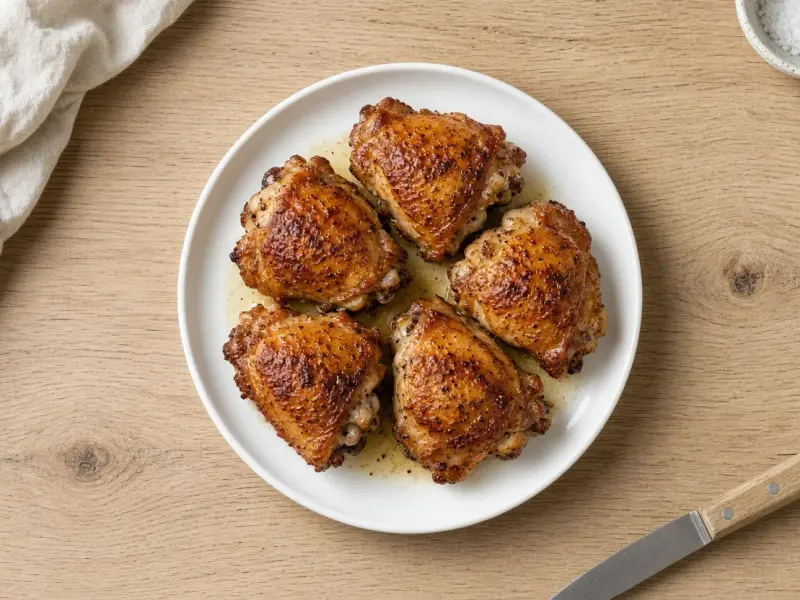 Air Fryer Chicken Thighs
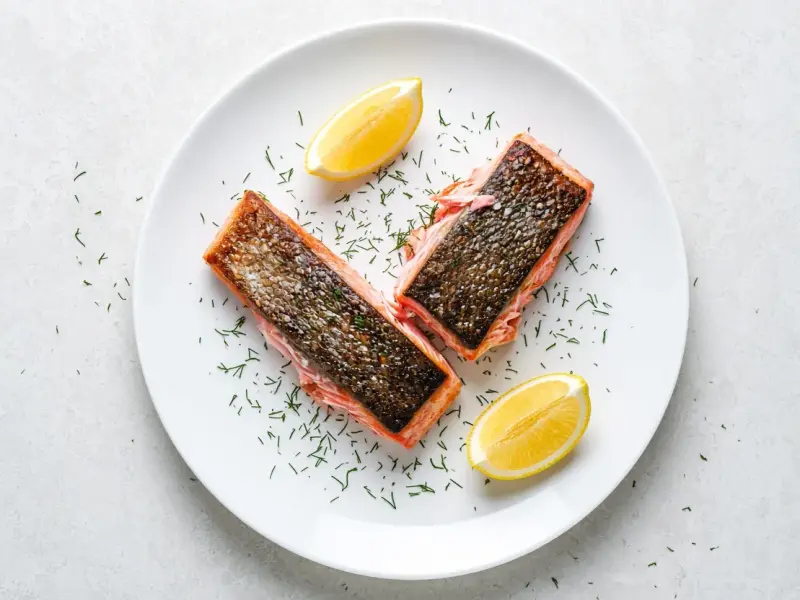 Air Fryer Salmon
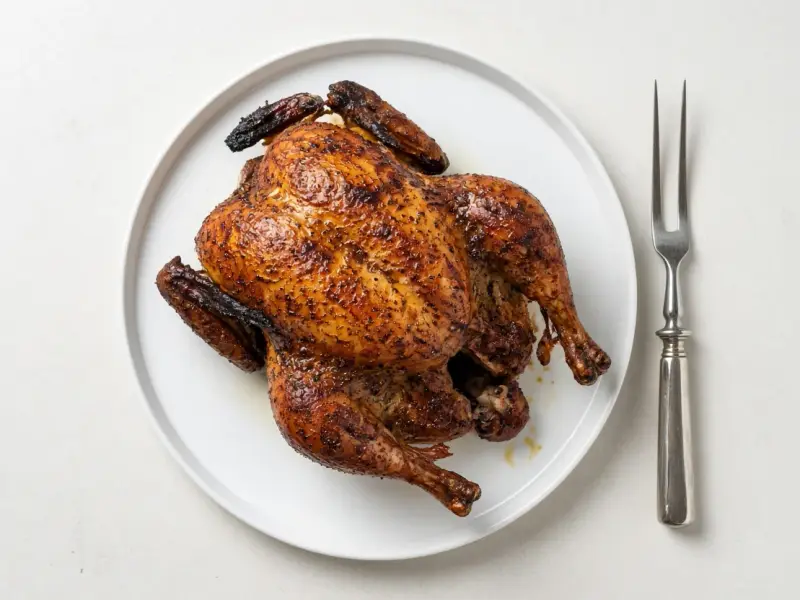 Air Fryer Whole Chicken
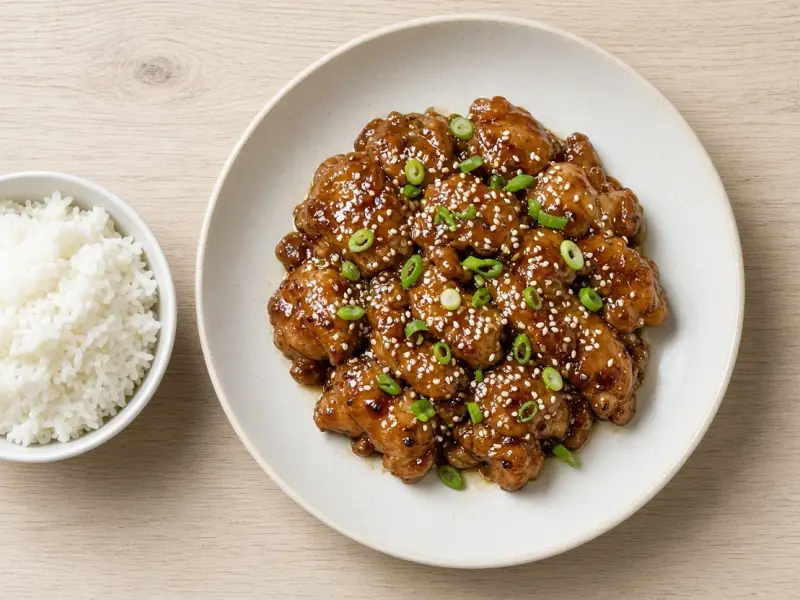 Honey Garlic Chicken
 One-Pot Creamy Chicken and Rice
 Air Fryer Chicken Wings
Categories
Courses & dish types
 Dinner
 Main courses
Main ingredients
 Chicken
Techniques & equipment
Time & effort
 30 minutes