Air Fryer Chicken Thighs
Skin side up at 200C for twenty minutes and never turned. Thighs want 80C rather than 74C, which is why they come out of this machine better than breast does.
- Prep
- 5 min
- Cook
- 20 min
- Resting
- 5 min
- Total
- 30 min
- Serves
- 4
- Revisions
- 1
Ingredients
Serves
Method
Open each thigh out flat, skin side down, and trim off any loose flaps of fat that hang past the meat. Leave the skin alone.
Pat both sides dry with kitchen paper, and the skin twice.
Rub the flesh side with the oil, then the salt, smoked paprika, thyme, garlic granules and pepper.
Turn them over and season the skin with whatever is left on your fingers. Do not oil the skin heavily — it renders plenty of its own fat and extra oil only makes it flabby.
Heat the air fryer to 200C/400F.
Lay the thighs skin side up in a single layer, opened flat rather than folded, with a gap between each one.
Do not turn them at any point. The skin sits directly under the element and the rendering fat runs down through the meat as it cooks; flip them halfway and you trade crisp skin for a wet one.
Cook for 18 to 22 minutes.
They are done when the skin is deep brown and pulled tight, and a probe in the middle of the thickest thigh reads 78 to 82C/172 to 180F.
That target is deliberately above the 74C/165F at which chicken becomes safe. Thigh is full of connective tissue that only softens in the high seventies, so a thigh pulled at 74C is perfectly safe and noticeably chewy.
Rest for 5 minutes, then serve whole or sliced across the grain.
Nobody has rated this recipe yet.
Sign in to rate this recipe. One rating per person, and you can change it.
What to expect
- Taste
Considerably more savoury than breast, and more mineral — thigh is working muscle with more myoglobin in it, and it tastes of more. Smoked paprika and thyme sit on the flesh; the skin is a separate and much more intense thing, salty and rendered and faintly bitter at the darkest points. There is a background sweetness from the rendered fat that skinless chicken does not have at all.
- Aroma
Rendering chicken fat from about six minutes, then roasting skin, then the thyme coming forward in the last five minutes as it dries and toasts. Paprika is more of a colour than a smell at this quantity.
- Texture
The reason to choose this cut. Skin that cracks like a thin sheet, then meat that gives no resistance at all and pulls into soft strands. Nothing about it is fibrous or stringy, which is the failure mode of breast, and it is genuinely difficult to make it dry — the fat inside the muscle keeps it moist several degrees past where a breast would have failed.
- Sound
Sizzling for most of the cook, louder than any other chicken recipe here because there is more fat coming out of it. The skin cracks audibly under a knife, and the sound is the quickest test of whether it is done.
- How the flavour moves
Salt and smoke off the skin first, then the fat filling the middle of the mouth, then the darker savoury meat, and a long finish that keeps going after the mouthful is gone. This is the opposite of breast, which has almost no tail at all, and it is why thigh needs less help from a sauce.
- Serve it
Hot, rested five minutes. The skin loses its crispness slowly rather than suddenly, so these hold better on a plate than most crisp things — ten minutes is fine.
- Goes with
Rice, air fryer chips, a sharp slaw, garlicky greens. Anything acidic beside it — pickled red onions, a squeeze of lemon — because the fat is high and the dish reads rich without something to cut it.
Cook's notes
- Difficulty
Easy, and the most forgiving recipe in the air fryer set — there is no narrow window to miss.
- Cost
Low. Thighs are among the cheapest cuts on the bird and six of them feed four.
- Equipment
An air fryer. A probe thermometer is useful but less critical here than for breast, because the acceptable range is wide.
- When to make it
A weeknight, or a Sunday batch cook for the week's lunches.
- Best season
None.
- You know it is done when
Skin deep brown, tight, and pulled back slightly from the edges of the meat, with the fat visibly rendered out and the surface no longer glossy. The meat around the edge should have shrunk in a little from where it started. Pale skin at twenty minutes means the basket was crowded or the machine was not up to temperature.
- And it feels like
The skin should crack rather than bend. The meat should be soft enough to cut with the side of a fork and should pull into strands rather than slicing into layers — that stranding is what tells you the connective tissue has gone, and it is the difference between a thigh at 74C and one at 80C.
- Food safety
Chicken is safe at the standard figures — 74C/165F instantaneous (USDA), or 70C for two minutes / 75C instantaneously (UK Food Standards Agency). This recipe deliberately goes past all of them for texture, so safety is not the constraint here. The usual raw-chicken hygiene applies to the board, the hands and the drawer of the machine.
- Where it goes wrong
- Turning them halfway, which trades crisp skin for a wet one.
- Pulling them at 74C because that is the number everyone knows. Safe, and chewy.
- Folding them rather than opening them flat, so the folded part steams.
- Oiling the skin heavily, which makes it flabby — it has plenty of its own fat.
- Crowding the basket, which is the universal air fryer mistake and applies here as everywhere.
- Buying skinless and expecting the same result.
- If it does go wrong
Flabby skin: they were turned, or oiled too heavily, or the basket was full. Chewy meat: it came out at 74C and wanted six more degrees. Burnt spots with raw patches: the thighs were folded rather than flat. Smoking machine: trimmed fat was left on and rendered onto the drawer — a tablespoon of water underneath fixes it.
- Making it ahead
Season up to a day ahead, uncovered in the fridge, which dries the skin and improves it. Cooked thighs are one of the better things to batch cook.
- Keeping it
Three days covered in the fridge. Thigh survives storage far better than breast.
- Reheating
Five minutes at 190C/375F in the air fryer, skin side up, brings the skin most of the way back — one of the few chicken dishes that genuinely reheats.
- Freezing
Cooked thighs freeze for up to three months and reheat well from frozen at 180C/350F for about twelve minutes.
- Leftovers
Sliced into a grain bowl, shredded into a wrap, or chopped into fried rice, where the extra fat is an advantage.
- Scaling it
Six thighs fit a 5-litre basket in one layer. More than that needs two runs, and the timing does not change — but the basket must stay in a single layer, which is the constraint on every recipe in this set.
- Substitutions
Bone-in thighs need about eight minutes longer and are, if anything, better — the bone slows the middle down and gives the skin more time. Any sugar-free dry rub works. Skinless thighs want a full tablespoon of oil rather than two teaspoons.
- Dietary swaps
No declared allergens as written. Dairy free, egg free, gluten free and nut free, subject to the manufacturer's statements on the paprika and garlic granules.
- Shopping for it
Ask the butcher for boneless thighs with the skin left on — supermarket boneless thighs are frequently sold skinless, which is the wrong version for this.
- Keeping the cost down
Thighs are typically around half the price of breast per kilo in the UK and are the better cut for this machine, which makes this the cheapest good chicken recipe in the collection.
- Sustainability
Buying thighs helps balance a supply chain skewed heavily towards breast meat, which is the part of the bird that sells and the reason the rest is under-eaten.
- Nutrition
Higher in fat than breast, and substantially more forgiving because of it. Two teaspoons of added oil across four servings.
- Worth it?
The best thing in this batch, and the one to cook if you are only going to cook one.
Where it comes from
- Origin
None.
- History
Thighs were sold as part of a whole leg or on the bone for most of the history of chicken as a domestic ingredient. The boneless skin-on thigh is a comparatively recent butchery product, driven by professional kitchens that wanted the cut's forgiveness without the bone, and it reached supermarkets widely in the last few decades. In Britain thighs remain considerably cheaper than breast, which is a pricing convention rather than a statement about the meat.
- Why it matters
Across most of the world's cooking the thigh is the preferred piece and the breast is the one that needs rescuing. The British and American preference for breast is the outlier, not the rule.
- When it is eaten
Weeknights, meal prep, feeding several people cheaply.
- How this version differs
It says not to turn them, and explains why: the skin is directly under the element and the fat renders down through the meat. Most published versions turn at the halfway point out of habit carried over from pan cooking.
Related recipes
 Air Fryer Chicken Breast
 Air Fryer Salmon
 Air Fryer Whole Chicken
 Honey Garlic Chicken
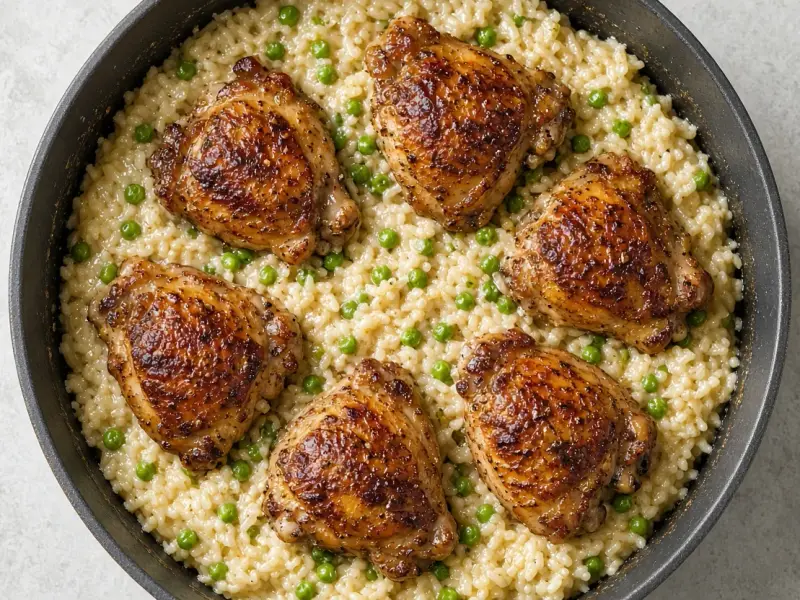 One-Pot Creamy Chicken and Rice
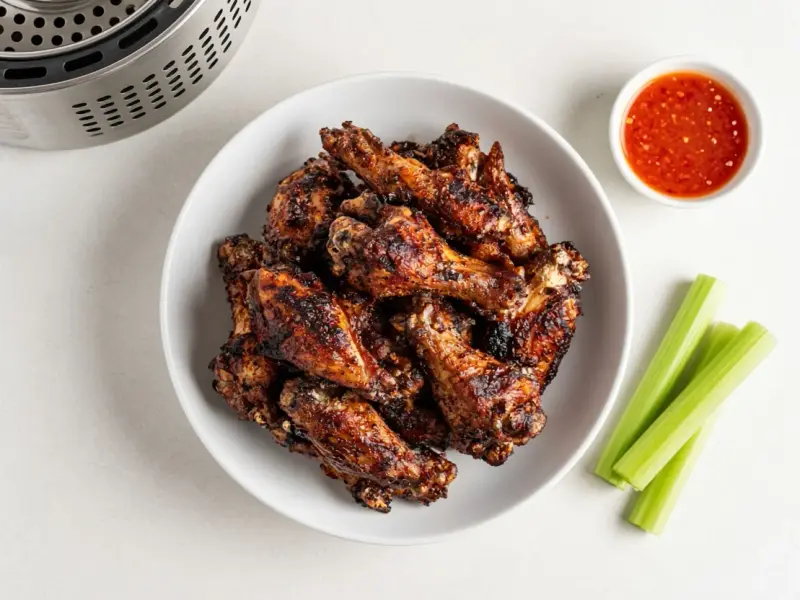 Air Fryer Chicken Wings
Categories
Courses & dish types
 Dinner
 Main courses
Main ingredients
 Chicken
Techniques & equipment
Time & effort
 30 minutes