Chicken and Mushroom Pie
The filling goes into the dish completely cold. Warm filling melts the butter in the pastry before it reaches the oven, and the base never crisps.
- Prep
- 30 min
- Cook
- 1 hr 15 min
- Resting
- 1 hr
- Total
- 2 hr 45 min
- Serves
- 6
- Revisions
- 1
Allergens
- Celery
- Cereals containing gluten
- Eggs
- Milk
- Sulphites
Named from the ingredients as written, including those carried in from sub-recipes. This is not a guarantee — check the labels on what you actually buy, and note that a product’s recipe can change.
Ingredients
Serves
Filling
Pastry
Method
Filling
Season the chicken and brown it in the oil over high heat in two batches. Lift it out.
Add the mushrooms to the same pan on high heat, spread out, and leave them undisturbed for 4 minutes before tossing.
Mushrooms hold a lot of water. Crowded or stirred too early they release it and boil grey; left alone in a hot pan they brown, and that browning is most of the flavour of the pie.
Lift them out, add the butter and cook the onion and celery for 10 minutes until soft.
Add the garlic and thyme for a minute, then the flour, and cook for 2 minutes.
Pour in the wine and let it bubble away almost completely.
Add the stock gradually, stirring, and simmer for 5 minutes until thick.
Return the chicken and mushrooms with any juices, add the cream and mustard, and simmer for 10 minutes.
Taste for salt and tip the filling into a wide dish to cool. It must be COMPLETELY cold before the pastry goes on — at least an hour, or overnight in the fridge.
Warm filling melts the layers of butter in puff pastry before it reaches the oven, and butter that has melted cannot turn to steam and lift the layers. A pie built on a warm filling has a pale, dense, greasy base and no amount of oven time fixes it.
Pastry
Heat the oven to 200C fan and put a baking tray in it.
Tip the cold filling into a 1.5 litre pie dish.
Roll the pastry to about 5mm and lay it over, pressing it onto the rim. Trim, crimp, and cut two slits in the middle for steam.
Brush with beaten egg and bake on the hot tray for 30 to 35 minutes, until deep gold and puffed and the filling is bubbling through the slits.
The hot tray transfers heat straight into the base of the dish, which is the other half of getting a crisp bottom.
Nobody has rated this recipe yet.
Sign in to rate this recipe. One rating per person, and you can change it.
What to expect
- Taste
Savoury and creamy with a real depth from the browned mushrooms, and the mustard and wine giving it enough edge not to be bland — which is the usual failing of a cream-sauce pie.
- Aroma
Butter pastry baking, which is the strongest thing, with thyme and mushroom under it.
- Texture
The contrast is the whole point: shattering pastry against a soft creamy filling with pieces of chicken and mushroom that still have some structure.
- Sound
The pastry cracking under a knife, and the filling still bubbling for a minute after it leaves the oven.
- How the flavour moves
Butter first from the pastry, then the savoury cream, then mushroom depth and a mustard finish.
- Serve it
Very hot in the middle. It benefits from five minutes of standing before it is cut.
- Goes with
Mashed potato and buttered greens, or peas. A glass of white.
Cook's notes
- Difficulty
Moderate, and the difficulty is patience rather than skill.
- Cost
Low to mid.
- Equipment
A wide pan, a 1.5 litre pie dish and a baking tray to preheat.
- When to make it
A weekend, or made ahead and frozen.
- Best season
None.
- You know it is done when
The pastry deep gold, well risen and visibly layered at the cut edge, with filling bubbling up through the slits.
- And it feels like
Pastry that shatters rather than bends, over a filling thick enough to hold its shape on a plate.
- Food safety
The chicken is cooked through in the filling long before the pie is assembled. The genuine point of care is the cooling: a large hot filling left on the side for hours sits in the range where bacteria multiply, so spread it in a wide dish to cool quickly and refrigerate it if you are leaving it more than two hours.
- Where it goes wrong
- Warm filling under the pastry, which is the single reason most homemade pies fail.
- Crowding chicken and mushrooms in one pan, so both boil grey.
- No slits in the lid, so steam lifts it off the filling and it collapses.
- A cold baking tray, so the base never crisps.
- Puff pastry made with vegetable fat, which does not behave the same way.
- Rolling the pastry too thin, so it tears when the filling bubbles.
- If it does go wrong
Pale and dense underneath: the filling was warm, or the tray was cold. Not risen: the pastry was warm when it went in, or the oven was not hot enough. Lid lifted off in a dome: no slits. Filling escaped: the lid was not pressed onto the rim.
- Making it ahead
Assemble a day ahead and refrigerate unbaked, or freeze it. Both are better than reheating a baked one.
- Keeping it
Three days in the fridge.
- Reheating
In an oven at 180C fan for 25 minutes. A microwave makes the pastry soft and there is no recovering it.
- Freezing
Freeze it assembled and unbaked for three months. Bake from frozen at 190C fan for about an hour, covering the top with foil if it colours too fast.
- Leftovers
Cold pie is good and is a proper British tradition rather than a compromise.
- Scaling it
Two smaller pies bake better than one very deep one.
- Substitutions
Chicken breast works and is drier; thighs are better and cheaper. Shortcrust instead of puff, in which case the cold-filling rule matters slightly less but still applies.
- Dietary swaps
Contains gluten, milk, eggs from the glaze, and celery and sulphites from the stock and wine. Gluten-free puff pastry exists and behaves acceptably. Nut free.
- Shopping for it
All-butter puff pastry, ready-rolled or in a block. It is one of the few bought convenience products that is genuinely as good as homemade for most purposes.
- Keeping the cost down
Thighs rather than breast, and ordinary chestnut mushrooms rather than anything exotic.
- Sustainability
Chicken is the lowest-footprint common meat and mushrooms are among the lowest-impact foods of any kind — they are grown on agricultural by-products in stacked indoor beds, use very little land or water, and the spent compost goes back to the soil. Shifting the ratio towards the mushrooms, 600g of them to 600g of chicken, makes a genuinely better pie as well as a lighter one. The butter in the pastry is the other real footprint and there is no way around it.
- Nutrition
Rich, and the pastry is most of the fat.
- Worth it?
Let the filling go cold. An hour of doing nothing is the difference between a pie and a disappointment.
Where it comes from
- Origin
Britain.
- Also called
Chicken and mushroom pie.
- Said out loud
Straightforward.
- What the name means
Descriptive.
- History
Baking meat under pastry is medieval, though the earliest pastry coffins were containers rather than food — thick flour-and-water cases that held the filling through cooking and storage and were often not eaten. Edible enriched pastry came later. Puff pastry is a French laminating technique, popularly attributed to the seventeenth-century painter Claude Lorrain during an apprenticeship, which is a story repeated everywhere and supported by nothing. The modern British pie with a puff lid over a creamy filling is a twentieth-century domestic and pub dish.
- Why it matters
One of the standard British pub pies and a fixture of the frozen aisle, which is the version most people have met.
- When it is eaten
Sunday, cold weather, and cooking for a household.
- The traditional way
Lamination — layers of butter between layers of dough that turn to steam and force the layers apart.
- How it changed
Home-made pastry gave way to bought blocks, which is a genuine improvement for most people since all-butter puff pastry is very good and making it takes a day.
- Regional variations
Countless fillings on the same construction.
- How this version differs
The cold-filling rule and the preheated tray are stated as steps with reasons rather than as tips, because between them they account for almost every soggy, pale, unrisen homemade pie.
- Sources and credit
None.
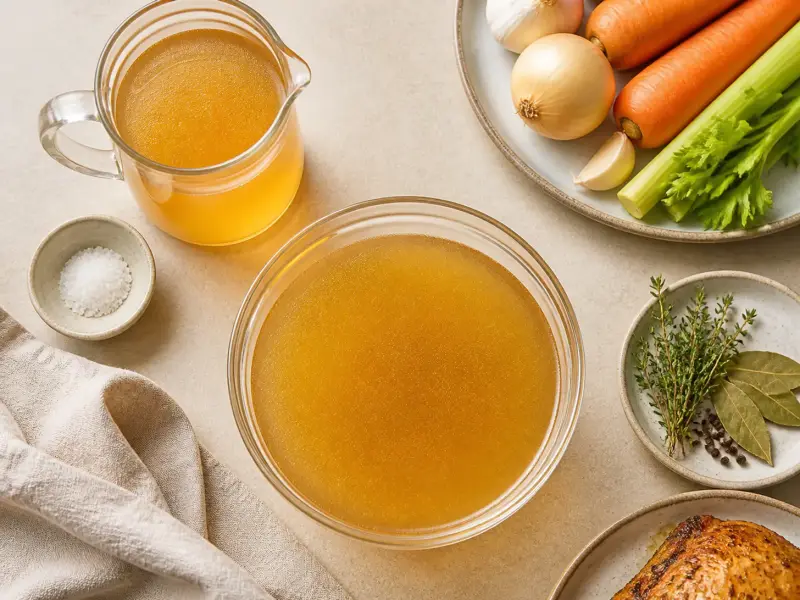 Chicken Stock
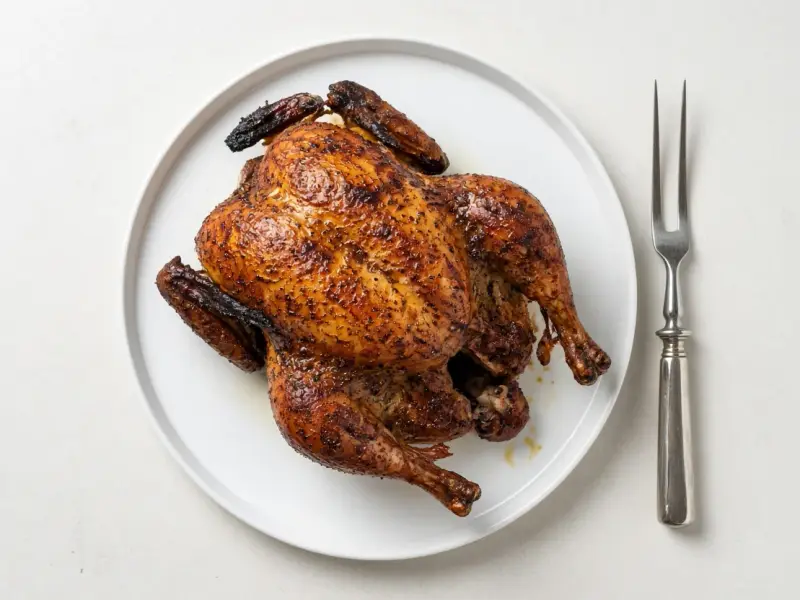 Air Fryer Whole Chicken
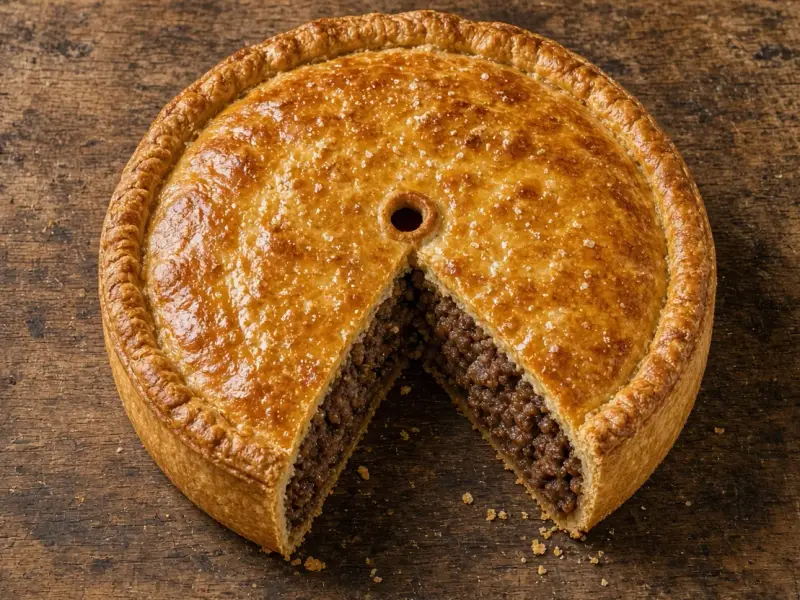 Minced Beef and Onion Pie
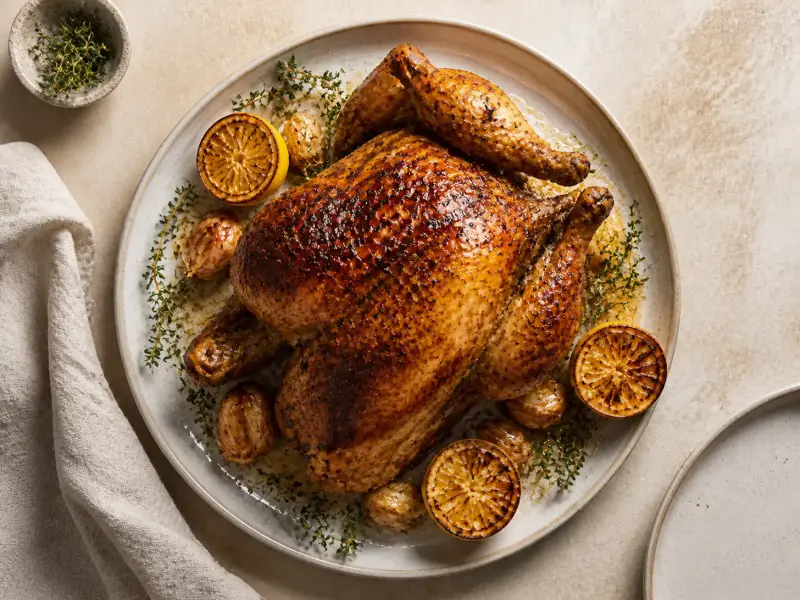 Roast Chicken with Lemon and Thyme
 Air Fryer Chicken Breast
 Air Fryer Chicken Thighs
 Butter Chicken
 British
 Main courses
 Dinner
 Baking
 Chicken