Chicken Stock
Stock from a roast carcass, held at a bare simmer for hours so it stays clear, and what the onion and tomato soups both ask for.
- Prep
- 15 min
- Cook
- 4 hr
- Total
- 4 hr 15 min
- Serves
- 8
- Revisions
- 5
Allergens
- Celery
Named from the ingredients as written, including those carried in from sub-recipes. This is not a guarantee — check the labels on what you actually buy, and note that a product’s recipe can change.
Ingredients
Serves
Method
Break the carcass into pieces small enough to sit below the water line, snapping the ribs and pulling the legs apart at the joints. This is what the roast chicken with lemon and thyme tells you to keep it for; thaw it first if it has been in the freezer since.
Put the carcass and the chicken wings into a tall, narrow pan. The wings are not optional padding — a single stripped carcass gives thin, watery stock, and it is the collagen in the wing joints that sets the finished stock to a jelly.
Pour over the 2.5 litres of cold water, which should cover everything by about 3cm.
Start from cold water rather than hot. Proteins that would seize on contact with hot water instead drift out and gather on the surface as the pan slowly warms, where a ladle can take them off.
Bring it up over about 20 minutes, to the point where the first lazy bubbles break the surface.
Skim the grey-brown foam off with a ladle as it gathers, and keep skimming for the first 10 minutes until the surface stays clear.
Drop in the onion, carrots, celery, bay leaves, thyme and peppercorns.
Adjust the heat until one bubble breaks somewhere on the surface every second or two, and no faster than that.
Never let it reach a rolling boil. A hard boil churns the rendering fat and the water together into an emulsion, and the stock goes cloudy, greasy and dull-tasting — and unlike almost everything else in cooking, this one cannot be undone. No amount of straining, chilling or skimming afterwards brings the clarity back.
Simmer uncovered, or with the lid propped ajar, for 3-4 hours, topping up with hot water if the bones ever break the surface.
Do not salt it at any point. Stock exists to be reduced and seasoned later, and salt added now concentrates along with everything else into something you cannot use.
Taste it after 3 hours. It should taste unmistakably of chicken rather than of warm water, and if it is still thin, give it another hour.
Set a sieve over a large bowl and ladle the stock through it.
Do not tip the pan out. The last of the liquid sits on a bed of sediment, and pouring drags all of it through the sieve and back into the clear stock you have spent four hours making.
Press nothing against the mesh. This is the opposite of the roast tomato soup, where forcing the pulp through is the whole point — there you want body, here you want clarity.
Discard the bones and vegetables, which have nothing left in them.
Divide the strained stock between two or three shallow containers rather than leaving the whole 2 litres in one deep bowl, where the middle of it stays warm for hours.
Stand the containers in a sink of cold water with ice in it, filled to just below their rims.
Stir the stock every few minutes and change the sink water once it has warmed through.
Aim to have it below 21C/70F within two hours of it coming off the heat, which is what the shallow containers and the ice are for.
Move it to the fridge at that point, where it should drop below 5C/41F within a further four hours.
Leave it uncovered until it is cold and cover it after that.
Lift the set disc of fat off the surface in one piece the next day and keep it for cooking.
Look at what is underneath. Good stock sets to a soft jelly that dents under a finger; if it is water-thin, the pan was too wide for the bones or the simmer ran too fast.
Keep it in the fridge for up to four days, or freeze it in portions for three months. It makes about 2 litres: one batch of the french onion soup, with enough left over for the roast tomato soup twice, or a pan of the minestrone with 500ml to spare.
Nobody has rated this recipe yet.
Sign in to rate this recipe. One rating per person, and you can change it.
What to expect
- Taste
Clean, deeply savoury chicken flavour with a rounded sweetness from the vegetables, entirely unsalted so it can be seasoned properly in whatever dish it becomes part of.
- Aroma
A gentle, savoury chicken smell with a background sweetness from the onion, carrot and celery, and a herbal lift from the bay and thyme.
- Texture
Thin and clear as a hot liquid; a soft, dense jelly once cold, which loosens back to liquid the moment it is reheated.
- Sound
A very slow, quiet bubble throughout the long simmer, with almost no other sound over the four hours.
- How the flavour moves
A clean, rounded chicken savouriness fills the whole mouthful evenly, without the sharp progression of a more highly seasoned dish, since it is designed to be a foundation rather than a dish to be tasted on its own.
- Serve it
Used hot in whatever dish it becomes part of; stored cold, where it sets to a jelly.
- Goes with
The base for the onion and tomato soups, congee, paella, chicken noodle soup and braises throughout this collection, rather than a dish eaten by itself.
Cook's notes
- Difficulty
Easy in technique, but genuinely unforgiving of a hard boil at any point.
- Cost
Very cheap — a spent roast carcass and a few chicken wings for extra collagen.
- Equipment
A tall, narrow pan, a fine sieve, and a large bowl or several shallow containers for cooling it quickly.
- When to make it
Whenever a roast chicken carcass is on hand, ideally started the same day or the next.
- Best season
None; the method works with any roast chicken carcass year round.
- You know it is done when
The stock should be clear and golden throughout the cook, never cloudy, and once chilled it should set to a soft jelly that dents under a finger.
- And it feels like
A soft, trembling jelly once cold is the sign of properly extracted collagen; a stock that stays liquid in the fridge suggests the pan was too wide for the quantity of bones or the simmer ran too fast.
- Food safety
The stock must be cooled quickly according to the schedule given — below 21C/70F within two hours and below 5C/41F within a further four — since a large volume of liquid held at a warm temperature for an extended period is a genuine food safety risk.
- Where it goes wrong
- Letting the pan reach a rolling boil at any point, which permanently clouds and dulls the finished stock.
- Skipping the chicken wings or a second carcass, giving a thin stock that never sets to a jelly.
- Salting the stock during cooking rather than leaving it for the dish it eventually goes into.
- Cooling it slowly in one large, deep container rather than dividing it into shallow ones, which risks it staying in an unsafe temperature range for too long.
- If it does go wrong
Cloudy, greasy stock: it boiled hard at some point, which cannot be corrected afterwards. Thin stock that never sets: not enough collagen-rich bones, such as wings, were used, or the simmer time was too short. Off flavours: it may have cooled too slowly, spending too long in a temperature range that allows bacteria to grow.
- Making it ahead
One of the most useful things to make and freeze ahead in portions, ready to underpin soups, braises and rice dishes at short notice.
- Keeping it
Keeps for up to four days refrigerated, or three months frozen in portions.
- Reheating
Reheat gently to a simmer as needed for whatever dish it is going into; it does not need special handling beyond standard care.
- Freezing
Freezes very well in portions, and is one of the most useful things to keep frozen and ready in a kitchen.
- Scaling it
Scales up in a larger pot, keeping the same ratio of bones to water and the same careful skimming and simmering approach regardless of quantity.
- Substitutions
A second spare carcass can replace the chicken wings if that is what is on hand, since either supplies the joint collagen the stock depends on to set.
- Dietary swaps
Contains celery. Naturally free of gluten, milk, egg and nut allergens as written.
- Shopping for it
A carcass with its skin and any set jelly from the roasting tin left on gives more flavour than a completely stripped one.
- Keeping the cost down
Essentially free, since it is built from a spent roast chicken carcass that would otherwise be thrown away, plus a small additional cost for wings.
- Sustainability
An efficient use of a carcass and bones that would otherwise be food waste, extracting real value from parts of the bird that would otherwise be discarded.
- Nutrition
Low in calories on its own, with collagen from the bones converting to gelatin, which is what sets it to a jelly in the fridge.
- Worth it?
A foundational recipe worth making from every roast chicken, and one where the single rule of never letting it boil matters more than any other detail in the method.
Where it comes from
- Origin
France, in its codified professional form; bone broths of some kind are made everywhere and predate any single origin.
- Also called
Fond blanc de volaille.
- Said out loud
fohn blahn duh voh-LYE.
- What the name means
Fond blanc means white stock, and volaille means poultry — a literal, descriptive French name.
- History
Bone broths are prehistoric and have no traceable single origin, made wherever a pot has been kept over heat. Stock as the deliberate foundation of an entire system of cooking is a specifically French development: organised by Antonin Carême in the early 19th century and later standardised by Auguste Escoffier in his 1903 Le Guide Culinaire, which fixed stock as the base from which the classical mother sauces and a huge range of dishes were built.
- Why it matters
The foundational element of French classical cooking, and, in equivalent forms, of cuisines worldwide — Chinese superior stock, Vietnamese pho broth and Jewish chicken soup are all versions of the same basic extraction, seasoned and used differently.
- When it is eaten
Not tied to any occasion; it is a foundational kitchen preparation rather than a dish served on its own.
- The traditional way
Starting from cold water, skimming carefully in the early stages, and holding the pot at the barest simmer for hours rather than a boil, which is what keeps the finished stock clear.
- How it changed
Escoffier's codification in 1903 fixed the classical method still generally taught today; the underlying practice of simmering bones for broth long predates that formalisation by an unknown but very long span of time.
- Regional variations
Every cuisine that keeps a pot makes some version: French fond blanc, Chinese superior stock, Vietnamese pho broth and Jewish chicken soup are all the same basic extraction, seasoned differently according to their own traditions.
- Sources and credit
Escoffier is credited with formally codifying stock as a foundational element of professional cooking, building on Carême's earlier classification, though the underlying practice of simmering bones for broth long predates either of them.
Related recipes
Used in 19 recipes
Where this turns up as an ingredient.
- Beef and Ale Stew with Herb Dumplings
- Beef Stroganoff
- Chicken à la King
- Chicken and Prawn Paella
- Chicken Congee
- Chicken Noodle Soup
- French Onion Soup
- Glazed Carrots
- Golubtsy
- Hot and Sour Soup
- Minestrone
- Mushroom Risotto
- Roast Leg of Lamb with Garlic and Rosemary
- Roast Tomato Soup
- Slow-Braised Beef Shin
- Slow-Cooked Beef Ragu
- Solyanka
- Sweetcorn Chowder
- Zharkoye
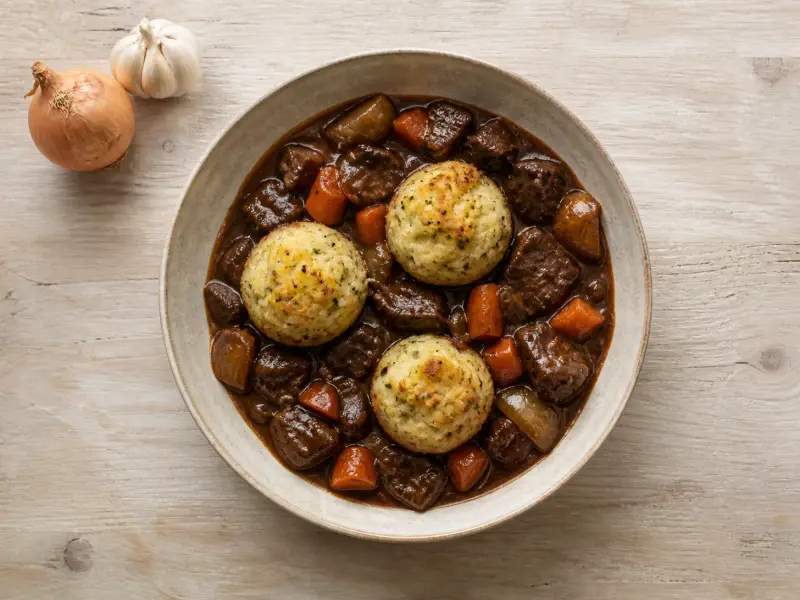 Beef and Ale Stew with Herb Dumplings
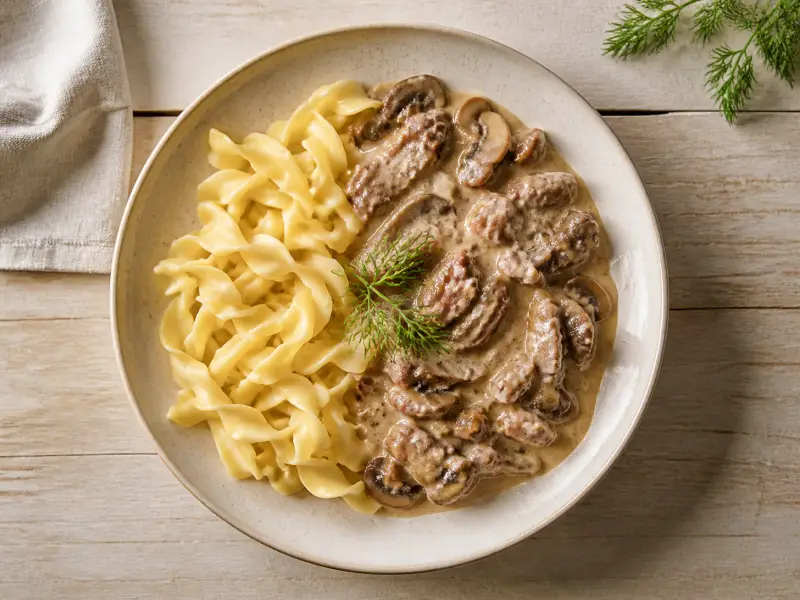 Beef Stroganoff
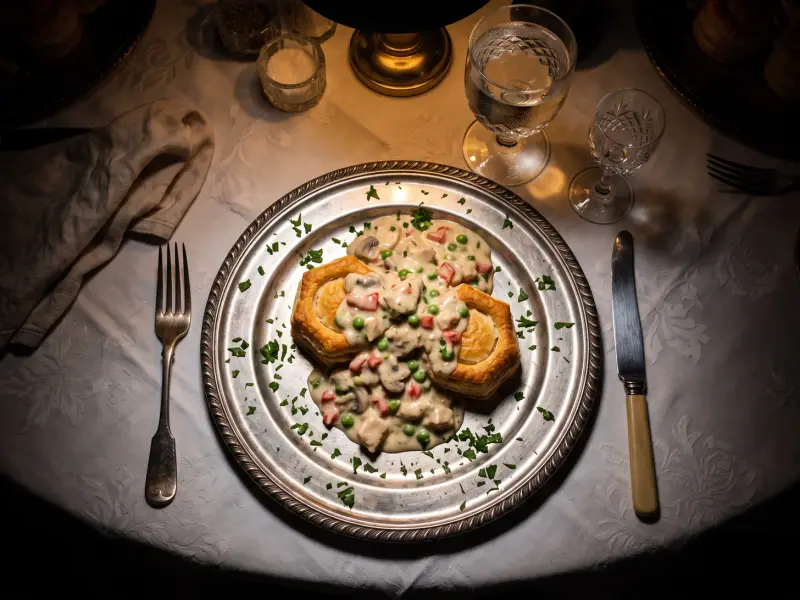 Chicken à la King
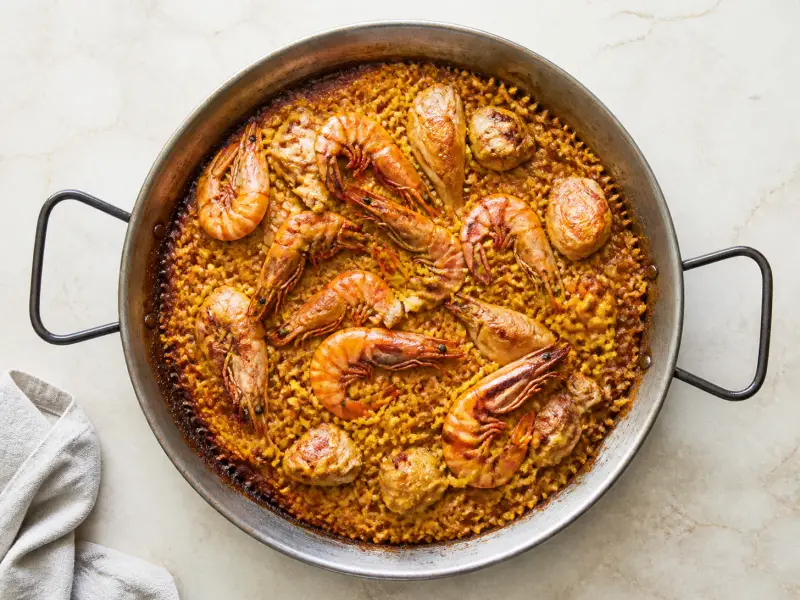 Chicken and Prawn Paella
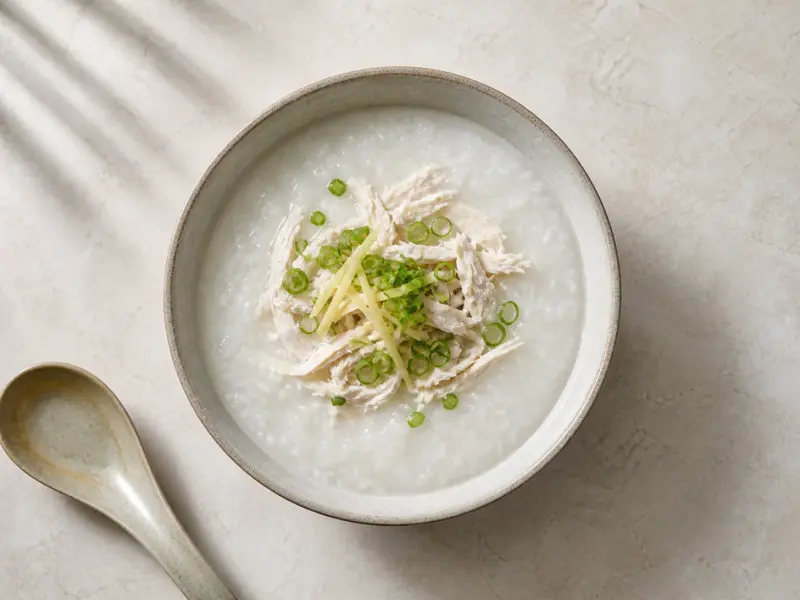 Chicken Congee
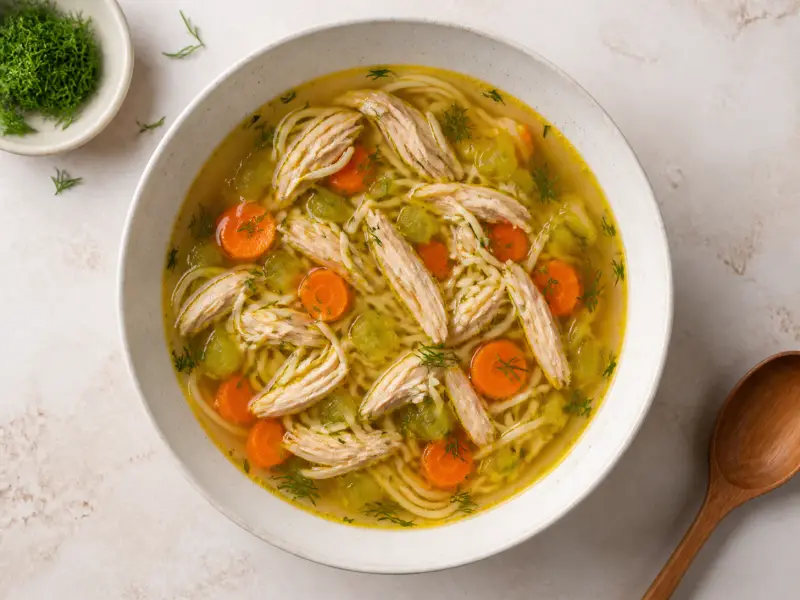 Chicken Noodle Soup
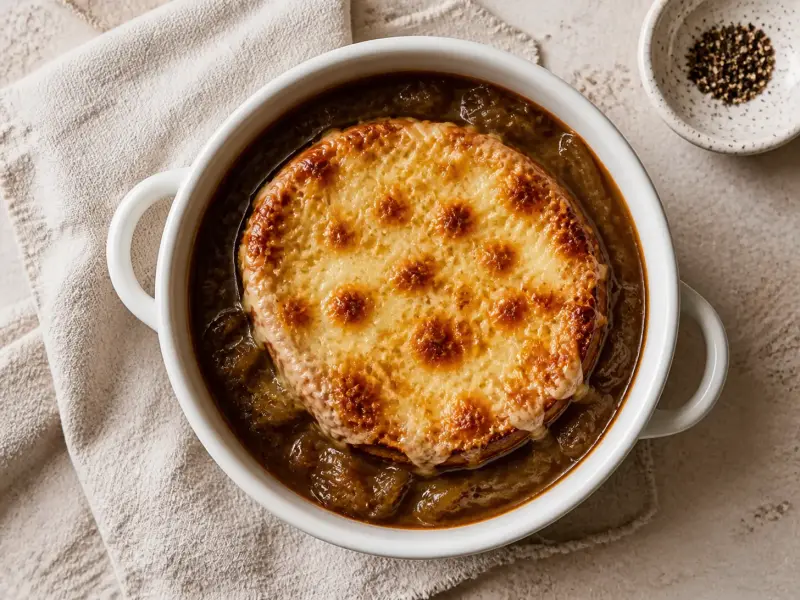 French Onion Soup
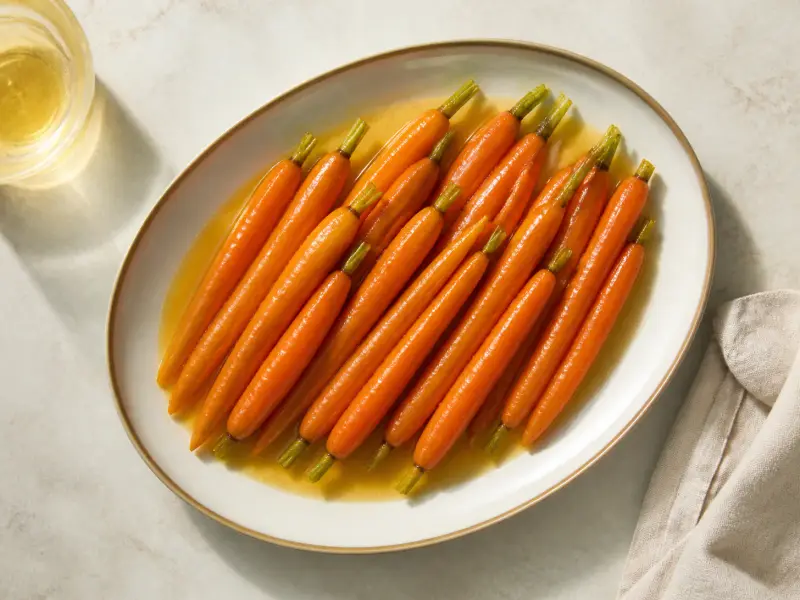 Glazed Carrots
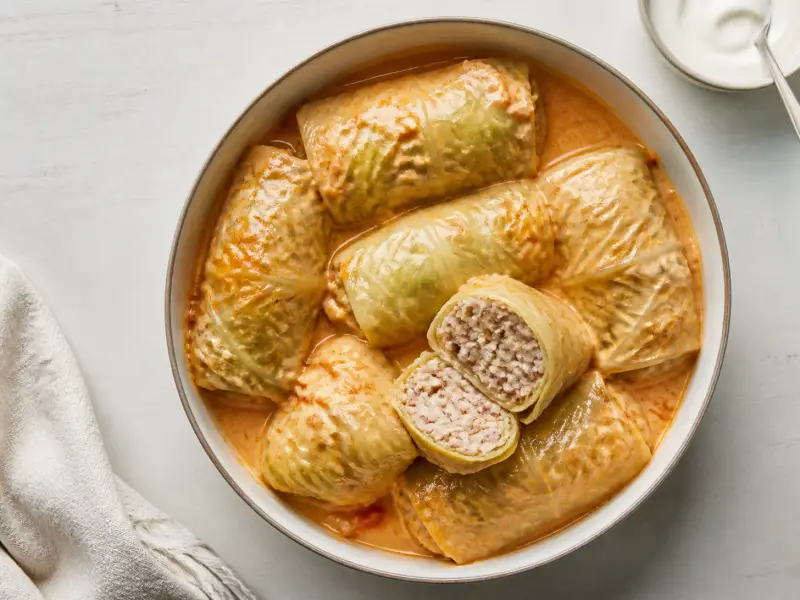 Golubtsy
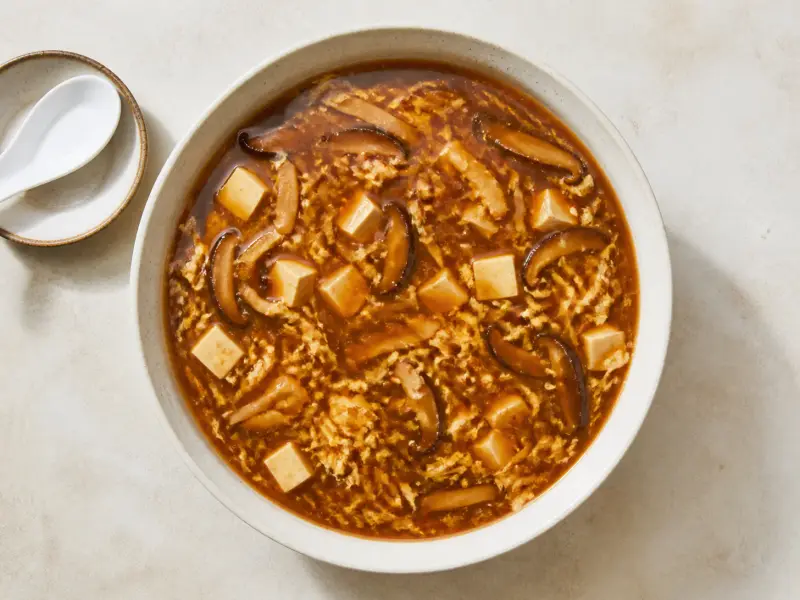 Hot and Sour Soup
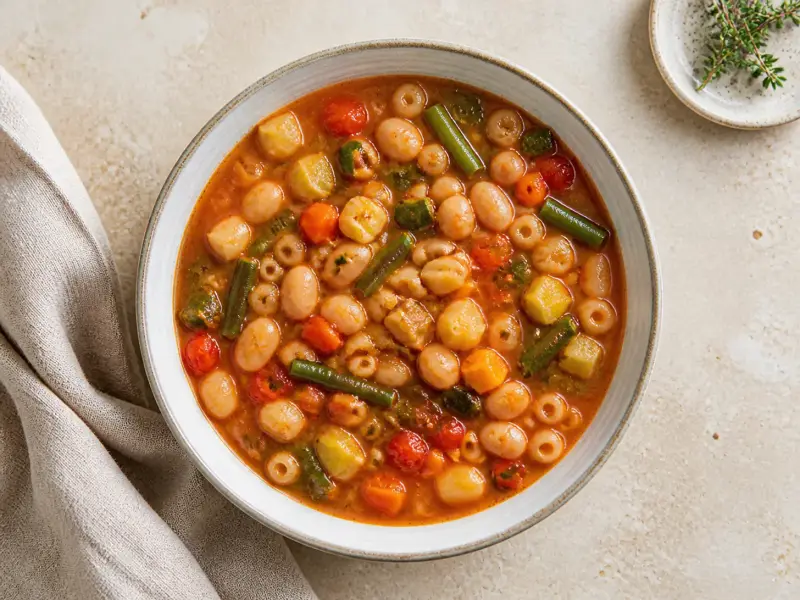 Minestrone
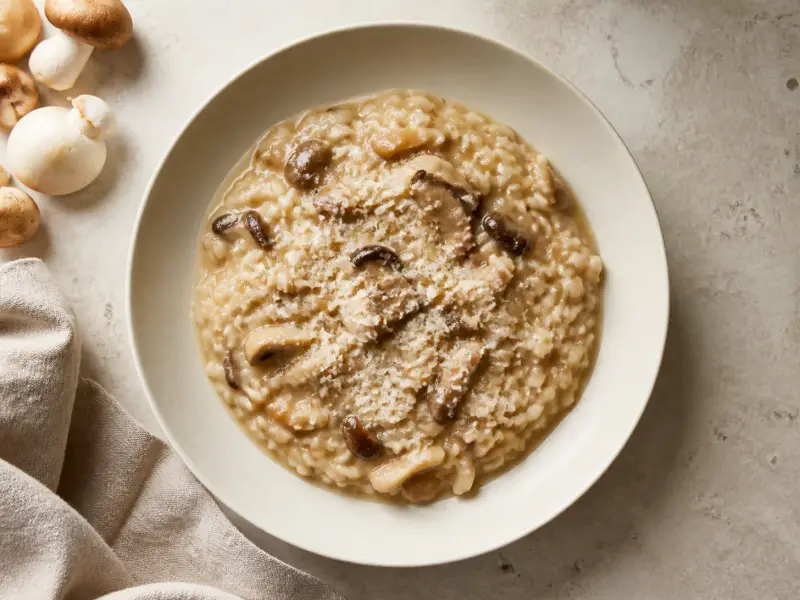 Mushroom Risotto
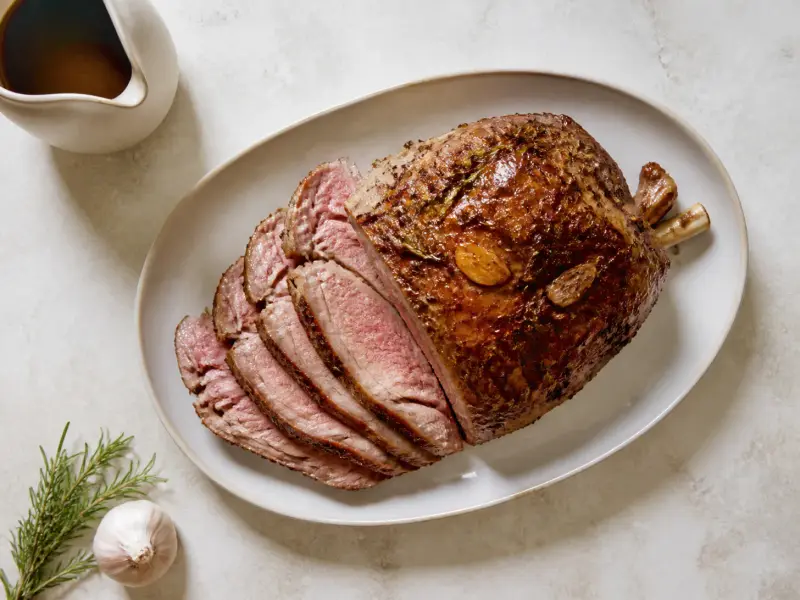 Roast Leg of Lamb with Garlic and Rosemary
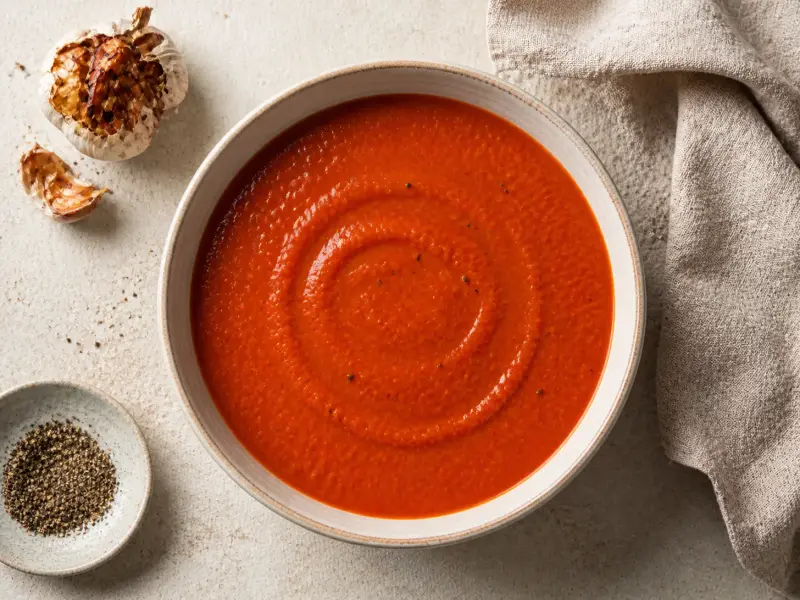 Roast Tomato Soup
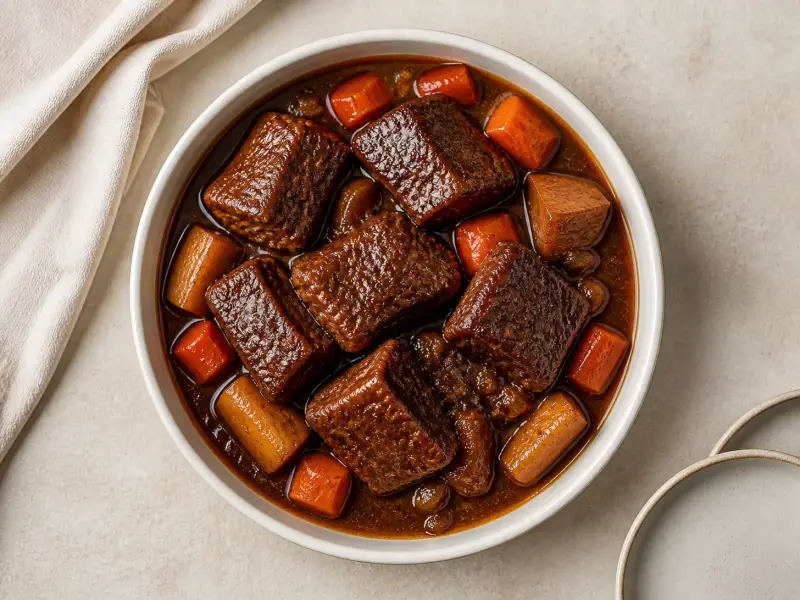 Slow-Braised Beef Shin
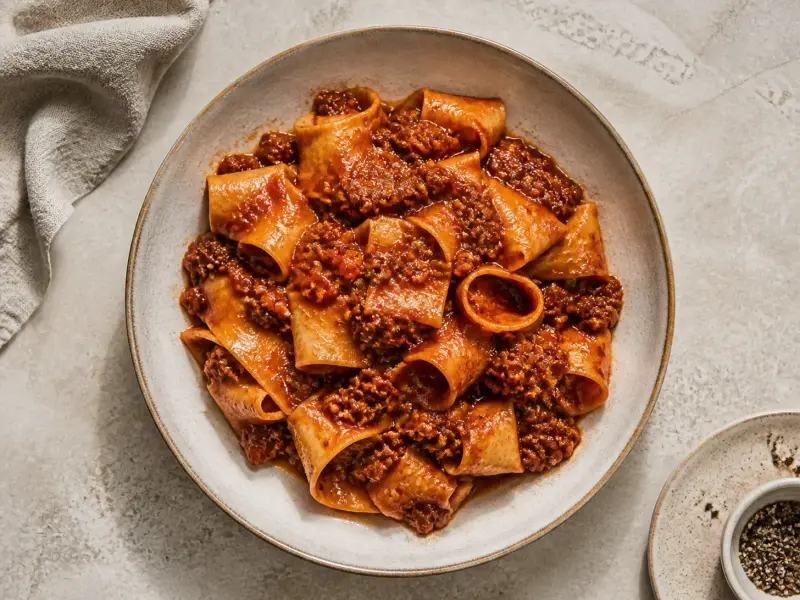 Slow-Cooked Beef Ragu
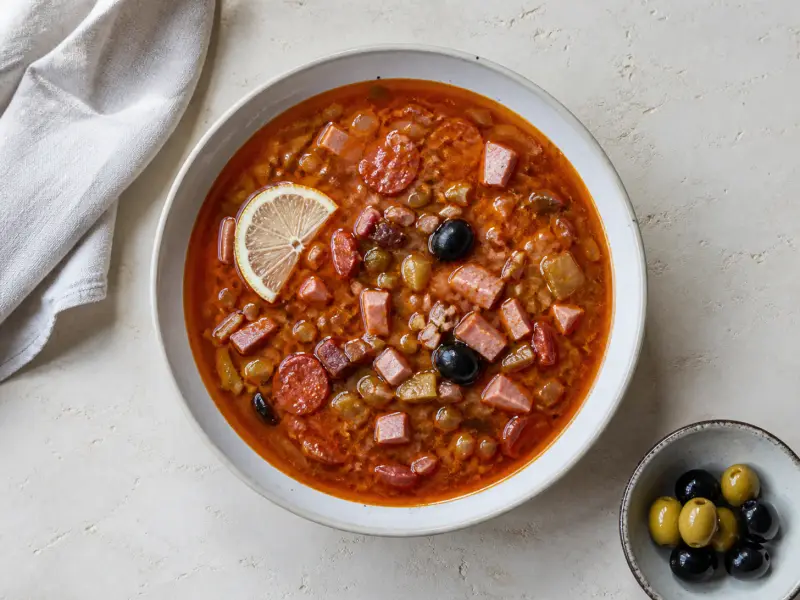 Solyanka
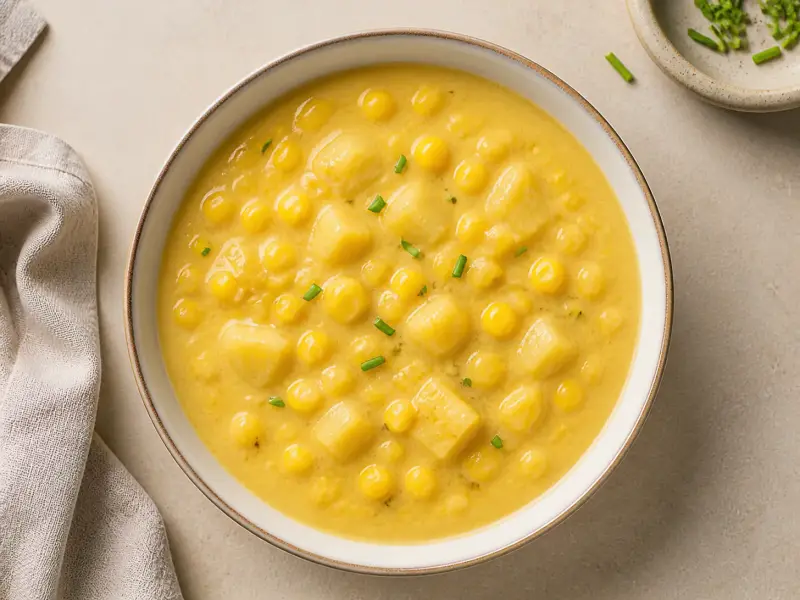 Sweetcorn Chowder
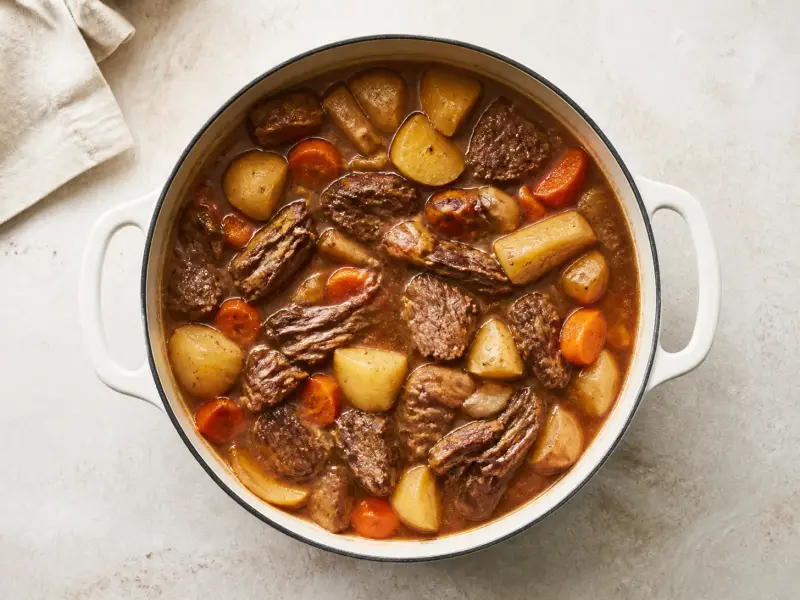 Zharkoye
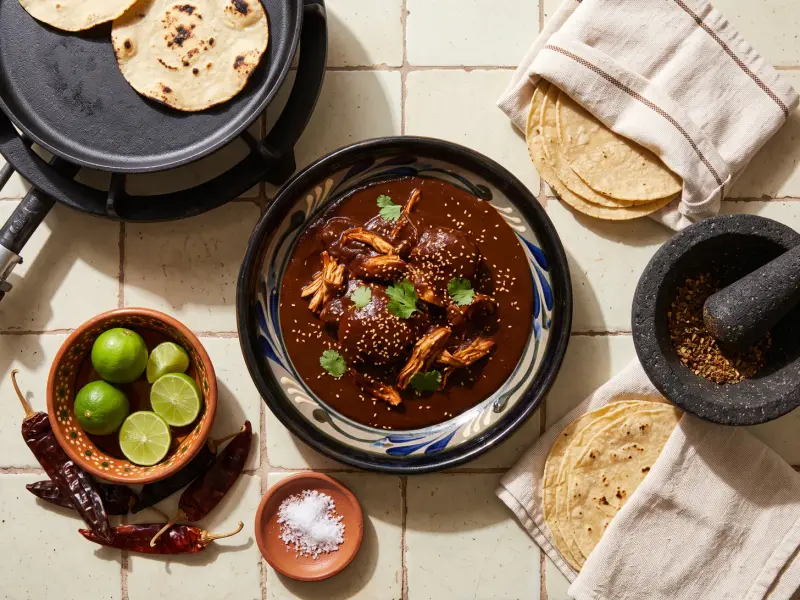 Mole Poblano
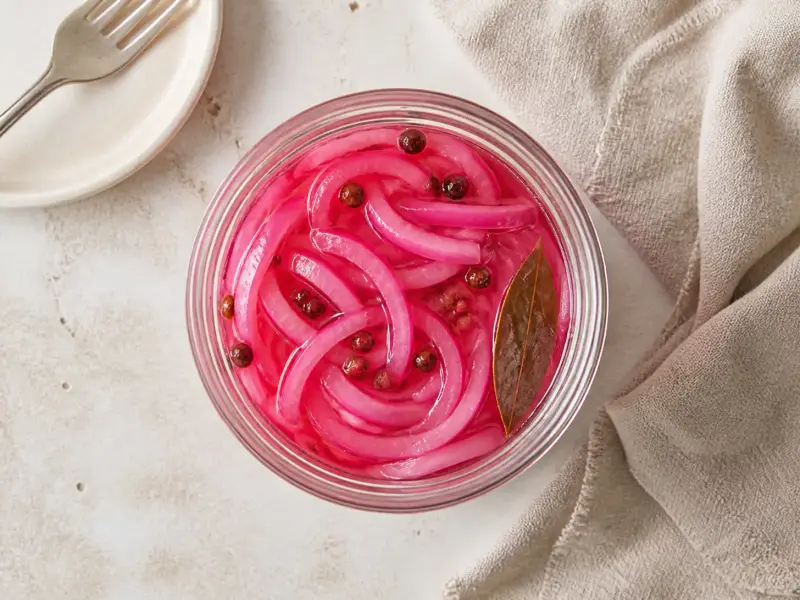 Quick Pickled Red Onions
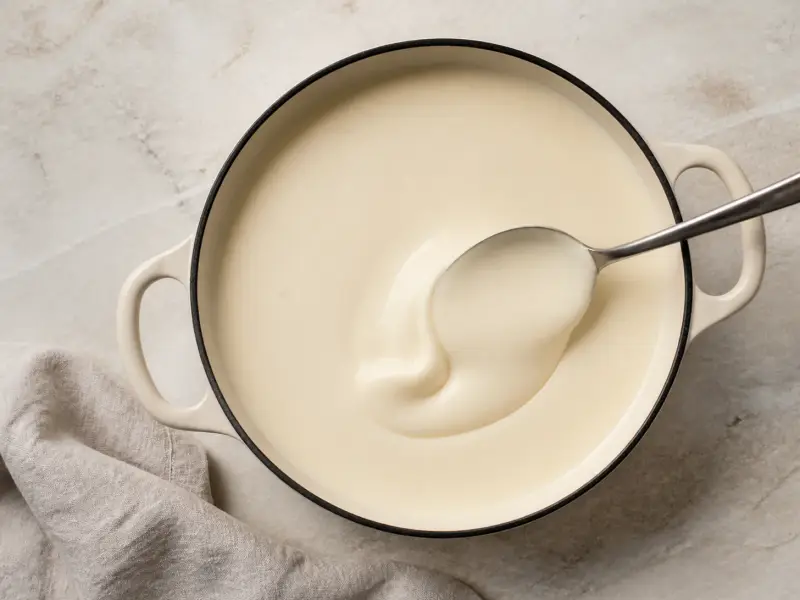 Bechamel Sauce
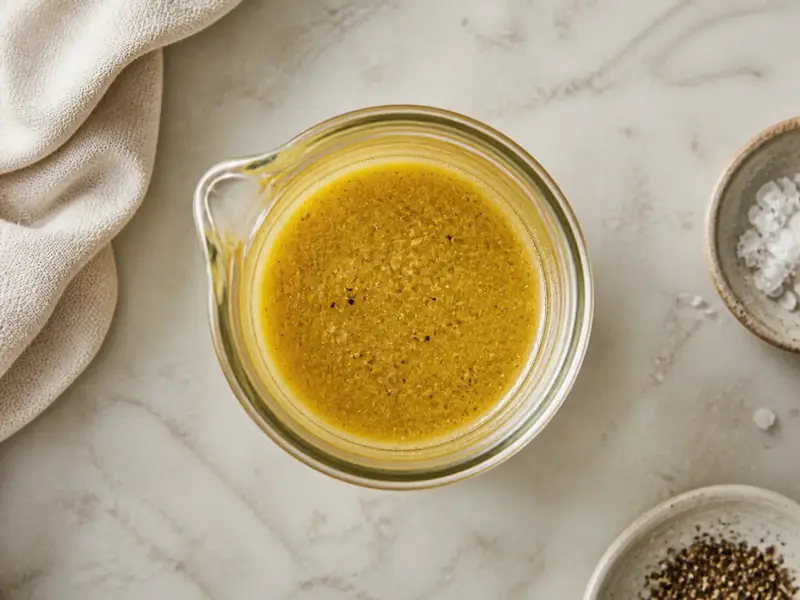 Everyday Vinaigrette
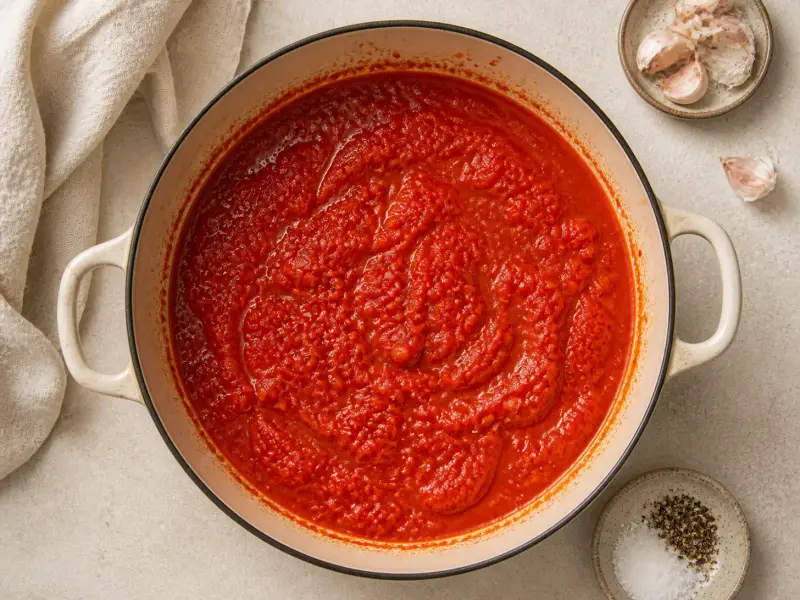 Simple Tomato Sauce
 Steamed Basmati Rice