Minced Beef and Onion Pie
Hot water crust for the base and a filling thick enough to slice. This is a pie you can pick up, which is a different construction from one you spoon.
- Prep
- 40 min
- Cook
- 1 hr 30 min
- Resting
- 1 hr 30 min
- Total
- 3 hr 40 min
- Serves
- 6
- Revisions
- 1
Allergens
- Celery
- Cereals containing gluten
- Eggs
- Sulphites
Named from the ingredients as written, including those carried in from sub-recipes. This is not a guarantee — check the labels on what you actually buy, and note that a product’s recipe can change.
Ingredients
Serves
Filling
Pastry
Method
Filling
Brown the mince hard in the oil in two batches and lift it out.
Cook the onions and celery in the fat for 12 minutes until soft and going gold.
Stir in the flour and tomato purée and cook for 2 minutes.
Return the beef with the stock, Worcestershire sauce, salt and pepper, and simmer uncovered for 30 minutes.
It needs to be thick enough to hold a spoon upright — much thicker than a stew. A loose filling turns a sliceable pie into a spillage.
Cool it completely. An hour at least, and the fridge is better.
Pastry
Heat the oven to 190C fan with a baking tray inside, and grease a 20cm loose-bottomed tin.
Put the flour and salt in a bowl and make a well.
Bring the lard and water to a rolling boil in a small pan and pour it straight into the well.
Mix quickly with a wooden spoon, then knead briefly to a smooth dough.
Hot water crust is worked warm and used warm, which is the opposite of every other pastry. The boiling fat and water gelatinise some of the starch, which is what makes the dough pliable enough to mould and strong enough to stand up as a case.
Cut off a third for the lid and keep it covered and warm.
Roll the larger piece and line the tin, pressing it up the sides with your thumbs to an even thickness, with a small overhang.
Fill with the cold beef, pressing it level.
Roll the lid, lay it on, and pinch the edges together firmly. Trim and crimp.
Cut a hole in the centre — a real hole, about 1cm — and brush the top with beaten egg.
Bake on the hot tray for 30 minutes, then brush again with egg and bake for a further 20 to 25 minutes, until deep golden all over.
Cool in the tin for 30 minutes before releasing it. Cut too soon, it collapses; cooled, it slices cleanly and can be eaten in the hand.
Nobody has rated this recipe yet.
Sign in to rate this recipe. One rating per person, and you can change it.
What to expect
- Taste
Deeply savoury and beefy, with the Worcestershire sauce and long-cooked onion giving sweetness underneath. The pastry itself is plain and slightly salty and is there as structure rather than flavour.
- Aroma
Baking pastry and beef gravy.
- Texture
The reason for hot water crust: a crisp, firm, slightly dense pastry that holds together in the hand, against a soft filling. It does not flake and is not supposed to.
- Sound
The crust under a knife.
- How the flavour moves
Pastry and salt first, then beef, then a long savoury finish.
- Serve it
Good hot, and genuinely good cold, which few pies are.
- Goes with
Gravy and mash if hot; pickle, brown sauce and a sharp salad if cold. A pint of bitter.
Cook's notes
- Difficulty
Moderate. Hot water crust is easier than shortcrust and behaves in a way that surprises people.
- Cost
Low.
- Equipment
A 20cm loose-bottomed tin, a small pan for the fat and water, and a baking tray to preheat.
- When to make it
A weekend, and it is worth the afternoon.
- Best season
None.
- You know it is done when
Deep golden all over, sides included, and firm to a tap. The hole in the middle should be clear rather than sealed over.
- And it feels like
A crust that is crisp and sturdy rather than flaky, and a filling that holds a clean cut face.
- Food safety
As with any pie, the cooling of the filling is the point of care rather than the cooking: spread it in a wide dish so it cools quickly, and refrigerate it if it is standing for more than two hours. The hole in the lid is functional — it lets steam out, and a sealed pie can build enough pressure to split.
- Where it goes wrong
- A filling that is too loose, which makes the pie unsliceable.
- Letting the pastry go cold before lining the tin, when it cracks instead of moulding.
- Warm filling in a warm case, which makes the base heavy.
- No hole in the lid, so steam builds and splits it.
- An uneven case, which is where it leaks.
- Releasing it from the tin straight from the oven, when it collapses.
- If it does go wrong
Pastry cracking as you line the tin: it has cooled; warm it briefly and press the cracks together. Leaked at the seam: the edges were not pinched firmly enough. Soggy base: the filling was warm or the tray was not preheated. Collapsed on release: it needed the 30 minutes of cooling.
- Making it ahead
Better made a day ahead and eaten cold, which is how this pastry is meant to be met.
- Keeping it
Three days in the fridge. It is arguably better cold on day two.
- Reheating
An oven at 170C fan for 25 minutes.
- Freezing
Freezes well baked, whole or in wedges, for three months.
- Leftovers
Cold, with brown sauce or piccalilli, which is what this pastry was built for.
- Scaling it
One 20cm pie is a comfortable size. Individual raised pies are the traditional shape and take about 35 minutes.
- Substitutions
Lard gives the best texture and beef dripping gives the best flavour; butter alone makes a softer, less sturdy crust that is harder to raise. Shortcrust can be used but it is a different, more fragile pie that will not stand on its own.
- Dietary swaps
Contains gluten, eggs from the glaze, and celery and sulphites from the stock. Not vegetarian, and the pastry is not either, since lard and dripping are both animal fats. Nut free and dairy free as written, which is unusual for a pie.
- Shopping for it
Lard is with the butter in most supermarkets. Beef dripping is worth asking a butcher for and tastes considerably better.
- Keeping the cost down
Very cheap. Mince, onions, flour and lard, and it feeds six.
- Sustainability
Beef is the heaviest protein there is and 700g feeds six here, which is a modest amount by the standards of a beef dish — the pastry and onions are doing a lot of the work. Lard and dripping are rendered by-products that would otherwise be waste, so using them is a small argument in the other direction. The filling takes a substitution well: 500g of mince with 200g of finely chopped mushrooms is not detectable in a pie this densely seasoned.
- Nutrition
Substantial, and the pastry carries a lot of fat.
- Worth it?
Warm pastry, cold filling. Get those two the right way round and the rest is straightforward.
Where it comes from
- Origin
England.
- Also called
Minced beef and onion pie.
- Said out loud
Straightforward.
- What the name means
Descriptive.
- History
Hot water crust is one of the oldest surviving English pastry techniques. Medieval pies were built as 'coffins' — the word meant a box or case — with a thick flour-and-water crust that acted as a cooking vessel and a storage container, and which was frequently discarded rather than eaten. As pastry became richer and more edible the technique survived where its strength was still needed: the pork pie, the raised game pie, and the sort of pie meant to be carried and eaten in the hand. The minced beef version belongs to the bakery counter and the football ground.
- Why it matters
Working food, and strongly regional in its associations — the pie shop, the market stall, the ground on a Saturday.
- When it is eaten
Lunch, packed food, and cold weather.
- The traditional way
Raising a hot water crust by hand — moulding the warm dough up the sides of a tin or around a wooden dolly.
- How it changed
The crust went from inedible container to part of the food, which is the single biggest change in English pastry.
- Regional variations
The Scotch pie is a smaller raised mutton pie with a distinctive dished lid. Pork pies use the same pastry and are the technique's best-known survivor.
- How this version differs
Hot water crust rather than shortcrust, which most modern recipes for this pie use. It is the older and more appropriate pastry for something meant to be picked up, and it is easier to handle than shortcrust once you know it is supposed to be warm.
- Sources and credit
None.
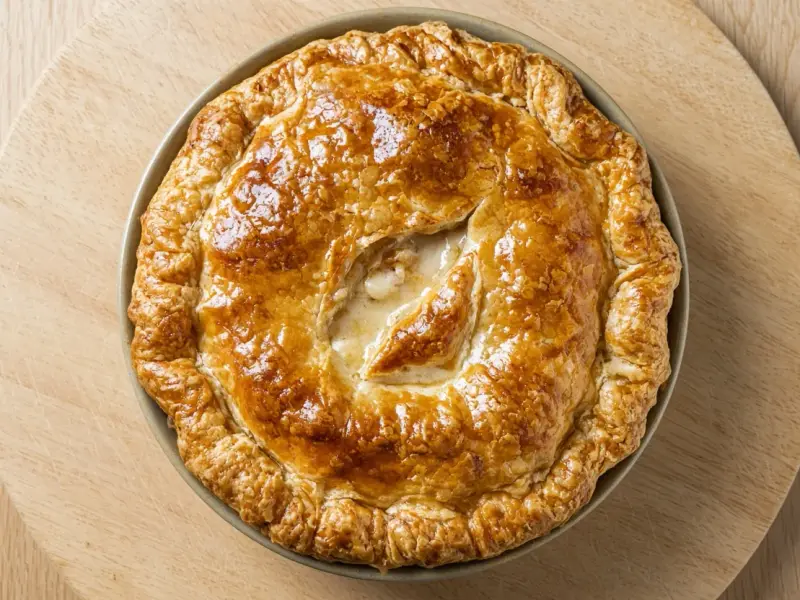 Chicken and Mushroom Pie
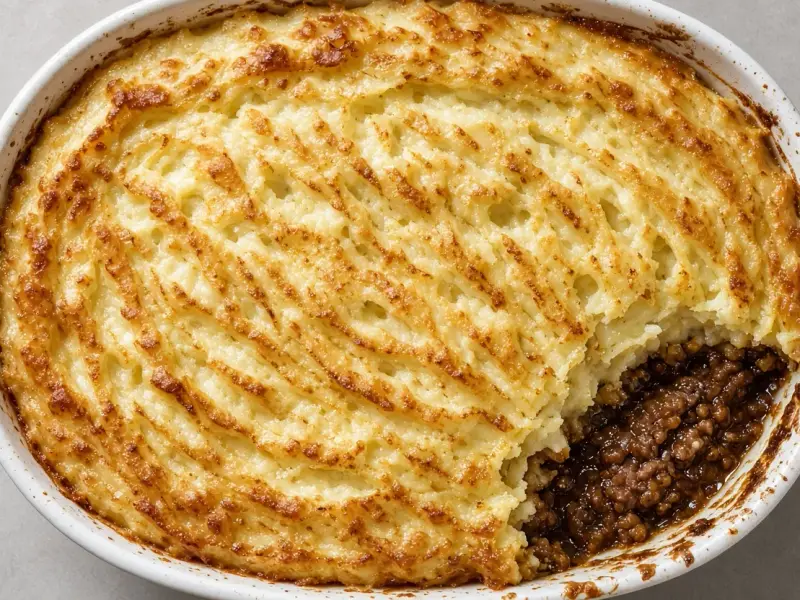 Cottage Pie
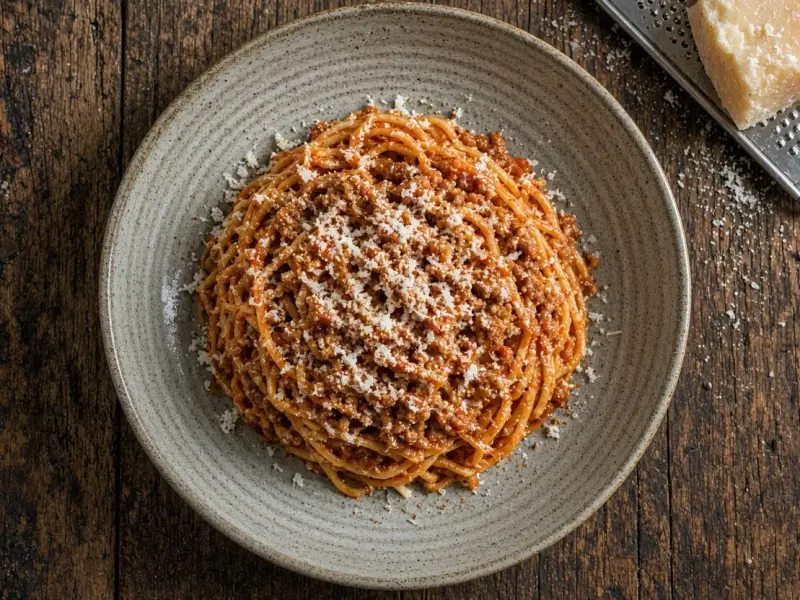 Spaghetti Bolognese
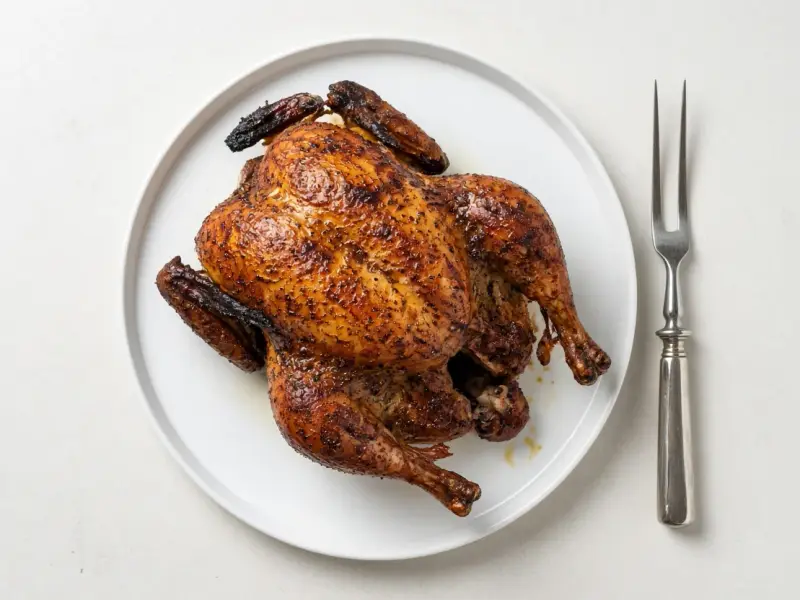 Air Fryer Whole Chicken
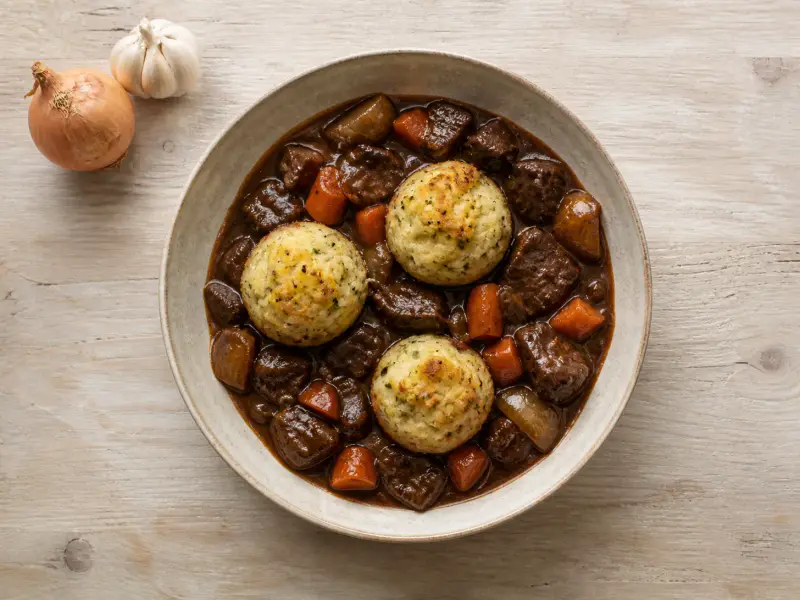 Beef and Ale Stew with Herb Dumplings
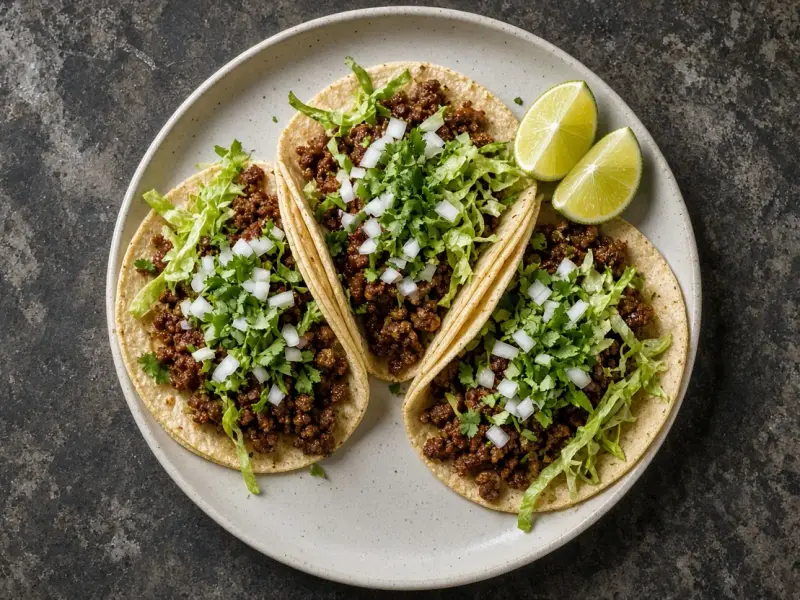 Beef Tacos
 British
 Main courses
 Dinner
 Baking
 Beef