Slow-Braised Beef Shin
Beef shin browned hard then cooked for hours at a bare simmer, until the collagen melts and the meat falls apart under a fork.
- Prep
- 25 min
- Cook
- 3 hr 35 min
- Resting
- 30 min
- Total
- 4 hr 30 min
- Serves
- 4
- Revisions
- 5
Ten seconds, if you are in a hurry
The whole dish, carried in and set down, with the one thing worth knowing about it said out loud. No method, no measuring — just what it should look like when it arrives.
Watch on YouTubeAllergens
- Celery
- Cereals containing gluten
- Sulphites
Named from the ingredients as written, including those carried in from sub-recipes. This is not a guarantee — check the labels on what you actually buy, and note that a product’s recipe can change.
Ingredients
Serves
Method
Heat the oven to 150C/300F.
Pat the beef dry on every side with kitchen paper.
Season the pieces all over with the 6g of fine salt.
Heat the oil in a heavy casserole over medium-high heat until it shimmers and runs thin across the base.
Brown the beef in three or four batches, leaving a couple of centimetres of bare metal around every piece. Crowding the pan is the one thing that ruins this dish before it starts: the steam coming off the meat cannot escape, the pan drops below browning temperature and the beef goes grey and leaks its juice instead of crusting.
Give each piece 3-4 minutes a side, until it has a deep brown crust and lifts off the base without tearing.
Move each batch to a plate as it browns.
Turn the heat to medium and add the onions, carrots and celery to the same pan.
Cook for 8-10 minutes, stirring, until the onions have softened and gone translucent at the edges.
Stir in the garlic and cook for 1 minute, until it smells sweet.
Add the tomato puree and cook for 2 minutes, stirring constantly, until it darkens from bright red to brick and stops smelling raw.
Pour in the wine.
Scrape the base of the pan clean with a wooden spoon while the wine bubbles, until nothing is left stuck to the metal. That brown film is the whole flavour base of the braise, and anything still welded to the pan now will still be there when you serve.
Simmer for 4-5 minutes, until the wine has reduced by about half and no longer smells sharp.
Return the beef and any juice on the plate to the pan.
Pour in the hot stock, which should come about two-thirds of the way up the meat rather than covering it. A batch of the chicken stock in this collection covers this pot with plenty to spare.
Tuck in the bay leaves and the thyme sprigs.
Bring it to a bare simmer on the hob, where a bubble breaks somewhere on the surface every second or two. The slow-cooked beef ragu in this collection is held at exactly the same heat for the same reason.
Cover with a tight lid and slide the pot into the oven.
Look at the liquid after 20 minutes. It should barely be moving, and if it is bubbling steadily, turn the oven down to 140C/275F. A braise held at a boil squeezes the fibres tight and dry however long you leave it.
Cook for 3 to 3.5 hours in total, turning the pieces over once at the halfway point.
Expect the meat to feel tough at the two-hour mark, tighter than when it went in. Shin is dense with collagen and it seizes before it gives, so that stage is the middle of the process rather than a sign to stop, and a pot pulled out then leaves you with dry meat sitting in thin liquid.
Test with a fork rather than a clock: push it into the thickest piece and twist. Done shin shreds apart with no resistance at all, and anything that springs back wants another 30 minutes.
Lift the pot out of the oven and stand it, lid on, for 30 minutes.
Leave it the full half hour. Meat straight from the oven is drier than the same meat rested, because it draws the liquid back in as it cools.
Tilt the pot so the fat gathers at one side and spoon it off.
Fish out the bay leaves and thyme stalks.
Look at the sauce, which should coat the back of a spoon and slide slowly off it.
Lift the meat onto a warm plate and boil the liquid down for 5-10 minutes if it is any thinner than that.
Slide the meat back into the sauce.
Season the sauce with the ground peppercorns.
Taste and add fine salt, bearing in mind the reduction has already concentrated whatever the stock brought.
Scatter over the parsley.
Serve in shallow bowls with thick slices of bread. The everyday white tin loaf in this collection is the right thing for mopping the pot out.
Nobody has rated this recipe yet.
Sign in to rate this recipe. One rating per person, and you can change it.
What to expect
- Taste
Deep and savoury, built on the browned meat and the reduced wine, with the vegetables largely dissolving into sweetness rather than remaining a separate element. The long cook draws real, gelatinous richness from the shin's own connective tissue, giving the sauce a body and a mouthfeel that a leaner cut of beef, cooked the same way, simply could not produce.
- Aroma
Deep, roasted, savoury notes from the browned meat and reduced wine, with thyme and bay contributing a herbal warmth underneath.
- Texture
Meat that shreds under the lightest pressure, almost gelatinous from the rendered collagen, sitting in a sauce with real body and cling.
- Sound
A sharp, steady sizzle while browning, then near silence through the long, covered braise, with only an occasional soft bubble breaking the surface.
- How the flavour moves
Deep, savoury browned-meat flavour arrives first, the reduced wine's acidity and the vegetables' sweetness fill out the middle, and the finish is rich and lingering from the gelatin the long cook has drawn out of the shin — a dish with more weight at the back of the palate than at the front.
- Serve it
Served hot, and it holds its heat well thanks to the sauce's thickness and the meat's own fat content.
- Goes with
Buttery mashed potato, crusty bread, or a simple green vegetable — anything plain enough to let the rich sauce be the focus of the plate.
Cook's notes
- Difficulty
Moderate. Nothing in it is technically hard, but it genuinely cannot be rushed and demands patience through a discouraging middle stage.
- Cost
Low. Shin is one of the cheapest cuts of beef precisely because it needs this much time.
- Equipment
A heavy casserole or Dutch oven that can go from a hard sear on the hob straight into a slow oven.
- When to make it
Cold weather, Sunday cooking, and any occasion where the meal can be started well ahead of when it is served.
- Best season
None in the ingredients themselves, though the dish is strongly associated with cold-weather cooking.
- You know it is done when
The sauce should be dark, glossy, and thick enough to coat the back of a spoon and slide slowly off it, with the meat visibly starting to come apart at the edges.
- And it feels like
The meat shreds apart with no resistance under a fork twisted into the thickest piece; anything that springs back needs more time, not more heat.
- Food safety
Standard care browning raw beef and handling the hot casserole in and out of the oven; the long, low cook comfortably exceeds any safe temperature threshold well before the meat is actually tender.
- Where it goes wrong
- Crowding the pan while browning, which steams the meat instead of crusting it.
- Stopping at the two-hour mark because the meat feels tough, rather than recognising that stage as the middle rather than the end.
- Simmering too hard rather than at a bare bubble, which toughens the meat rather than helping it.
- Serving straight from the oven without resting, which leaves the meat drier than it needs to be.
- If it does go wrong
Meat still tough: keep going — shin passes through a genuinely tough middle stage before it gives, and this is not a sign anything has gone wrong. Sauce too thin: reduce it further once the meat is out and resting, then return the meat to it. Meat tastes flat: it likely was not seasoned or browned properly at the start, since a braise this long cannot make up for a weak base.
- Making it ahead
Genuinely better made a day ahead and reheated gently, since the sauce continues to develop as it sits.
- Keeping it
Keeps 3-4 days refrigerated, and the flavour genuinely improves on the second day.
- Reheating
Gently, covered, over low heat or in a low oven, with a splash of water or stock if the sauce has thickened too far in the fridge.
- Freezing
Freezes very well for up to 3 months — this is one of the better dishes in the whole collection for making a double batch specifically to freeze.
- Leftovers
Excellent shredded into a pie filling, or stirred through pasta the next day.
- Scaling it
Scales up well in a wider, rather than deeper, pot, so the meat sits in a single layer during braising.
- Substitutions
Beef shank, gravy beef or leg — regional names for essentially the same cut — all work identically. A robust stout or dark ale can replace the red wine for a different but equally valid braise.
- Dietary swaps
Contains celery, gluten (from the bread served alongside, and possibly the stock) and sulphites (from the wine). Dairy free and nut free as written; gluten free if served without the bread and using a certified gluten-free stock.
- Shopping for it
Ask a butcher for shin, shank or gravy beef specifically — it is not always displayed at the counter under a single consistent name.
- Keeping the cost down
Beef shin is one of the least expensive cuts available specifically because of the time it demands, making this an economical dish for the amount of meat it produces.
- Sustainability
Braising cuts like shin makes use of parts of the animal that would otherwise be undervalued, which is a genuinely lower-waste way of eating beef relative to focusing only on prime cuts.
- Nutrition
A protein- and gelatin-rich dish; shin carries meaningful connective tissue that converts to collagen-derived protein over the long cook, alongside moderate fat from the browning and the cut itself.
- Worth it?
One of the most reliably rewarding dishes for the time it costs, and a genuine lesson in trusting the fork over the clock.
Where it comes from
- Origin
Not tied to a single place; braising tough cuts is an ancient, widespread technique, and this specific dish reflects British home cooking.
- History
Shin's fall from and return to British tables tracks a broader economic and cultural story: cheap, plentiful prime cuts after the war made tougher cuts unfashionable for decades, and the nose-to-tail movement — with Fergus Henderson's St. John as its most cited landmark — restored interest in cuts like shin on both economic and flavour grounds.
- Why it matters
Shin and shank are braised in comparable ways wherever cattle are raised for work rather than solely for meat: osso buco in Lombardy, bo kho in Vietnam, birria in Mexico, and any number of stews across northern and eastern Europe, making this a genuinely global technique applied to a genuinely global cut.
- When it is eaten
Cold-weather Sunday cooking, and any meal where the cook has the better part of a day free and wants the result to improve on standing.
- The traditional way
Hard browning in batches, a wine and stock braise reduced from a properly deglazed pan, and hours at a bare simmer in a low oven rather than on the hob, where temperature is much harder to hold steady.
- Regional variations
The same cut is sold as shank, gravy beef or leg depending on the country, and each of the braising traditions named above treats it with its own spicing and liquid, though the underlying logic — long, gentle, moist heat — is identical throughout.
- Sources and credit
No individual is credited with the dish; it belongs to a long, widely shared braising tradition rather than a single named recipe.
Related recipes
 Chicken Stock
 Slow-Cooked Beef Ragu
 Beef and Ale Stew with Herb Dumplings
 Classic Margherita Pizza
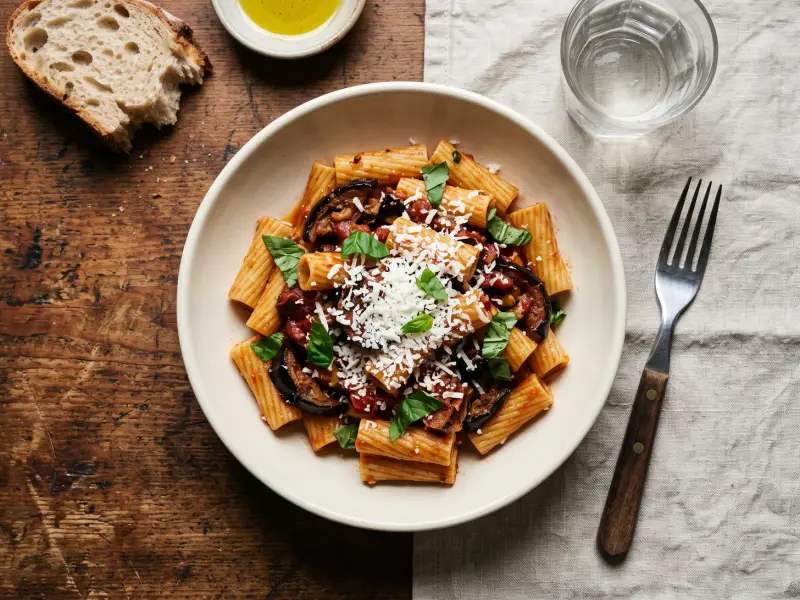 Pasta alla Norma
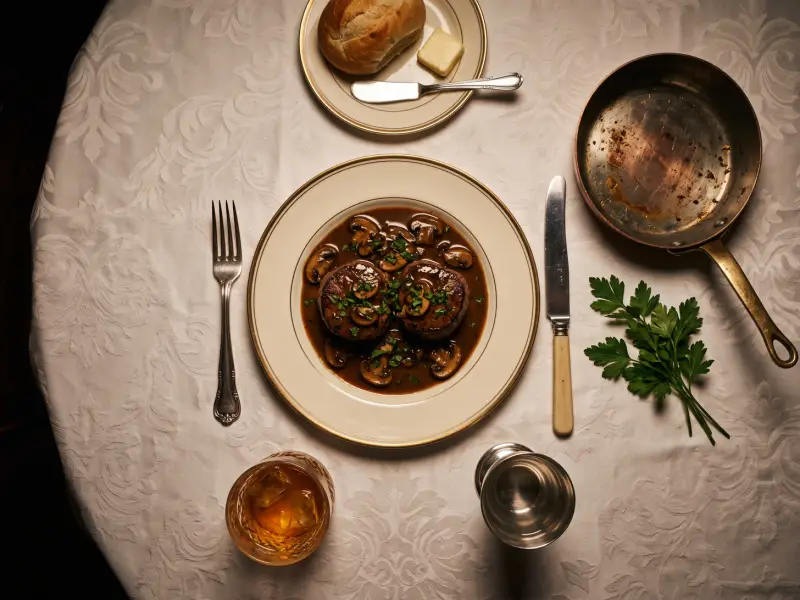 Steak Diane
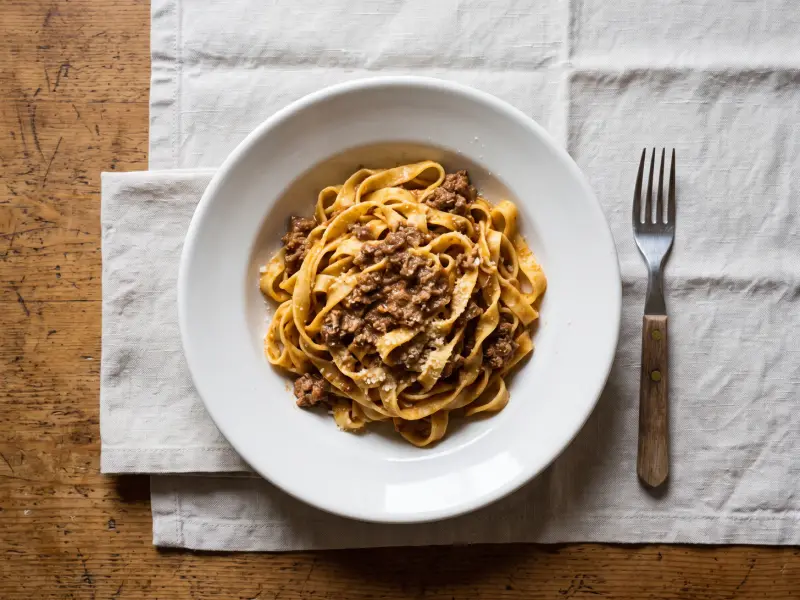 Tagliatelle al Ragù
Categories
Courses & dish types