Beef Tacos
The weeknight kind, with seasoned beef in warm corn tortillas. Tex-Mex rather than Mexican, and better for admitting it — the seasoning is made from whole spices rather than a sachet.
- Prep
- 20 min
- Cook
- 30 min
- Total
- 50 min
- Serves
- 4
- Revisions
- 1
Ingredients
Serves
Seasoning
Beef
To serve
Method
Seasoning
Toast the cumin and coriander seeds in a dry pan for a minute until they pop and darken, then grind them and mix with the two paprikas, the oregano and the cayenne.
Beef
Heat the oil in a wide frying pan over high heat and add the mince in one layer.
Leave it undisturbed for 4 minutes, until the underside is properly browned, then break it up.
Push the meat to one side, add the onion to the clear space and cook for 6 minutes until soft.
Add the garlic and the ground spice mix and stir everything together for 90 seconds. Toasting the spices in the fat is what separates this from a sachet stirred into water.
Stir in the tomato purée and cook for 1 minute more.
Pour in the stock, add the salt and simmer for 12 to 15 minutes, until the liquid has reduced to a glaze that clings to the meat with nothing loose in the pan.
Add the vinegar off the heat and taste for salt.
To serve
Warm the tortillas one at a time in a dry pan for 20 seconds a side, until they are soft and freckled, and keep them stacked under a clean tea towel.
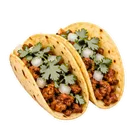
Double up the tortillas if they are thin, fill with the beef, and top with raw onion, coriander, lettuce and a squeeze of lime.
Nobody has rated this recipe yet.
Sign in to rate this recipe. One rating per person, and you can change it.
What to expect
- Taste
Warm and earthy rather than hot — cumin leads, the two paprikas give sweetness and smoke, and the cayenne sits behind them. Salty and savoury, cut sharply by lime and raw onion.
- Aroma
Toasting cumin, which is the strongest smell in the recipe and lasts under a minute, then frying spice in beef fat.
- Texture
Soft tortilla, soft meat, and then the crunch of raw onion and lettuce, which is why they are not optional.
- Sound
The tortillas puffing slightly in the dry pan, and the sizzle when the spices hit the fat.
- How the flavour moves
Earthy cumin first, then fat and salt, then the lime arriving at the end and resetting the palate for the next bite. It is designed to be eaten repeatedly rather than savoured.
- Serve it
Hot filling in a warm tortilla with cold toppings. Three temperatures in one mouthful, deliberately.
- Goes with
Rice and black beans, or nothing. A cold lager with lime, or a Paloma.
Cook's notes
- Difficulty
Easy.
- Cost
Low.
- Equipment
A wide frying pan, a dry pan for the spices and tortillas, and a spice grinder or pestle and mortar.
- When to make it
A weeknight, twenty minutes of actual attention.
- Best season
None.
- You know it is done when
The meat dark and glossy, coated rather than sitting in sauce. Tilt the pan: nothing should run.
- And it feels like
Soft separate grains of meat, moist but not wet.
- Food safety
Mince must be cooked through and is here by a wide margin. Nothing else unusual.
- Where it goes wrong
- Not reducing far enough, so the filling is wet and the tortilla falls apart.
- Adding ground spice to liquid rather than frying it in the fat first.
- Stirring the mince as soon as it goes in, so it steams instead of browning.
- Cold tortillas straight from the packet, which crack.
- Skipping the lime and the raw onion, which are what make it taste finished.
- If it does go wrong
Wet: keep reducing, uncovered, on a higher heat. Bland: salt, then acid. Harsh or dusty: the spices were not toasted, or too much cayenne. Tortillas cracking: they were not warm enough; 20 seconds a side in a dry pan.
- Making it ahead
The filling and the spice mix, both up to three days ahead. Make double the spice mix; it keeps a month in a jar.
- Keeping it
Three days in the fridge for the filling. Tortillas are best warmed fresh.
- Reheating
A pan with a splash of water, two minutes.
- Freezing
The filling freezes for three months.
- Leftovers
Over rice with beans, in a baked potato, or under cheese in a quesadilla.
- Scaling it
Doubles well. Brown the meat in two batches rather than one deep pan.
- Substitutions
Ground cumin and coriander work at 1½ tsp and ¾ tsp respectively, and are noticeably duller. Flour tortillas instead of corn, which adds gluten. Turkey or pork mince both work; lamb does not.
- Dietary swaps
No declared allergens as written with corn tortillas, which makes this one of the few gluten-free dishes here that needs no substitution at all. Dairy free and egg free unless cheese or soured cream go on top. Check the stock, which is where celery and sulphites usually enter.
- Shopping for it
Good corn tortillas are worth seeking out from a Mexican grocer or the world food aisle; they are a different product from the supermarket wheat 'tortilla wrap'.
- Keeping the cost down
Whole cumin and coriander seed cost less per use than a sachet and last a year.
- Sustainability
Beef again, and 150g a head. This is one of the easier dishes to reduce it in, because the filling is already a strongly seasoned glaze rather than the centre of attention: 400g of mince with a drained tin of black beans added at the reduction stage fills twelve tacos and tastes of the same spice mix. Corn tortillas are also the low-impact half of the plate and the better product; there is no trade-off there at all.
- Nutrition
Reasonable, and made better by the amount of raw vegetable that goes on top.
- Worth it?
Four minutes of toasting and grinding, and it stops tasting like a packet.
Where it comes from
- Origin
Texas and the American southwest.
- Also called
Tacos de carne molida — ground meat tacos — in Spanish.
- Said out loud
TAH-koh.
- What the name means
Taco in Mexican Spanish means a plug or wad, and its application to food is documented from the nineteenth century, when it referred to what silver miners used the word for.
- History
The taco is a Mexican form with enormous regional variety — al pastor, carnitas, birria, barbacoa, pescado — and almost none of it involves seasoned ground beef. The version in this recipe is Tex-Mex: it develops in Texan Mexican-American cooking and reaches the wider United States and then Britain through mid-century restaurants and, decisively, through commercial taco kits with hard shells and seasoning sachets from the 1960s onwards.
- Why it matters
The taco is central to Mexican food culture and the ground-beef version is central to American home cooking. Both things are true and they are not the same claim.
- When it is eaten
Weeknight family dinner, and the sort of meal people assemble at the table.
- The traditional way
Corn tortillas, warmed on a comal, filled and eaten immediately.
- How it changed
Whole spices became a sachet, corn tortillas became a hard shell, and cheese and lettuce were added.
- Regional variations
This site has Carnitas, Tacos al Pastor and Birria de Res, all of which are Mexican and all of which are different dishes rather than variants of this one.
- How this version differs
Whole spices toasted and ground rather than a sachet, soft corn tortillas rather than hard shells, and the liquid reduced to a glaze rather than left loose. It is still the Tex-Mex dish and does not pretend otherwise.
- Sources and credit
None.
 Chilli con Carne
 Classic Beef Burger
 Meatloaf
 Steak Diane
 Chicken à la King
 Chicken Burger
 American
 Mexican
 Main courses
 Dinner
 Beef