Chicken Parmigiana
The sauce goes on the middle of the cutlet and nowhere near the edge, and the oven only melts the cheese. Both rules exist to keep the crumb crisp.
- Prep
- 25 min
- Cook
- 30 min
- Resting
- 5 min
- Total
- 1 hr
- Serves
- 4
- Revisions
- 1
Allergens
- Cereals containing gluten
- Eggs
- Milk
Named from the ingredients as written, including those carried in from sub-recipes. This is not a guarantee — check the labels on what you actually buy, and note that a product’s recipe can change.
Ingredients
Serves
Tomato sauce
Cutlets
Topping
Method
Tomato sauce
Heat the tablespoon of olive oil in a small pan, add the garlic and cook for 30 seconds, until it smells sweet and has barely coloured.
Add the tomatoes, sugar and half teaspoon of salt and simmer for 15 minutes, until the sauce is thick enough to hold a line drawn through it with a spoon. A loose sauce is the single biggest cause of a soggy parmigiana.
Tear half the basil into the pan and take it off the heat.
Cutlets
Lay each chicken breast flat and cut it horizontally into two thin cutlets.
Put each between two sheets of clingfilm and beat it with a rolling pin to an even 1cm. Even thickness is what keeps breast juicy: the thin end of a tapered cutlet is dry long before the thick end is safe.
Season both sides with the teaspoon of salt and the pepper.
Set out three trays: the flour, the beaten eggs, and the breadcrumbs mixed with the 40g of parmesan and the oregano.
Coat each cutlet in flour and shake off the excess, then egg, then press it firmly into the crumb on both sides.
Heat the 150ml of olive oil in a wide frying pan over medium-high heat to 175C, at which point a dropped crumb sizzles steadily straight away.
Fry two cutlets at a time for 3 minutes a side, until deep golden.
Check for 74C/165F in the middle of the cutlet, pushing the probe in from the side. The grill stage only melts cheese, so the chicken has to be cooked now.
Drain the cutlets on a wire rack. Kitchen paper traps steam underneath and softens the crust you have just made.
Topping
Heat the grill to high.
Put the cutlets on a baking tray with a gap between them.
Spoon 2 tablespoons of sauce onto the middle of each one, leaving a 2cm border of bare crumb all the way round. That border is the part that stays crisp, and it is why this is better than a dish flooded with sauce.
Scatter over the mozzarella and the 20g of parmesan.
Grill for 3 to 4 minutes, until the cheese is molten and blistered brown in patches.
Rest for 5 minutes, scatter with the remaining basil, and serve.
Nobody has rated this recipe yet.
Sign in to rate this recipe. One rating per person, and you can change it.
What to expect
- Taste
Salt first, from the parmesan in the crumb and the parmesan on top, and it is a saltier dish than people expect. The tomato is sweet and sharp against it and has been reduced far enough to taste concentrated rather than fresh. Mozzarella brings very little flavour and a great deal of texture, which is its job. Oregano in the crumb is the only dried herb note and it should be faint. The chicken itself is mild and clean and functions as a canvas, which is fine and is what a cutlet is for.
- Aroma
Frying breadcrumbs and olive oil first, which is a warm, biscuity, slightly nutty smell. Then, under the grill, the specific smell of browning mozzarella, which is sweeter and more milky than any other melted cheese. Basil torn over the finished plate is the last thing and it is short-lived.
- Texture
The whole dish is a texture argument between crisp and molten. The crust should crack; the cheese should stretch; the chicken should be juicy and fine-grained; the sauce should cling rather than run. The bare border stays crisp for the entire meal and the sauced centre softens progressively, which is intentional — you get both textures on one plate.
- Sound
The knife going through the border, which should be audible. Before that, the steady bubbling of a shallow fry, and the cheese under the grill, which starts to hiss faintly in the last thirty seconds as its fat renders.
- How the flavour moves
Crunch and salt first, then the tomato arrives sweet and sour in the middle, then the cheese coats everything and lengthens the finish. It ends rich and slightly heavy, which is exactly why a sharply dressed salad beside it does more than a plate of pasta would.
- Serve it
Very hot from the grill, and molten cheese holds heat unreasonably well, so it wants two or three minutes on the plate before anyone eats it. The five-minute rest is as much about not burning a mouth as about the meat.
- Goes with
A green salad with a hard vinaigrette, or spaghetti with a plain tomato sauce beside rather than beneath. Red wine. In Australia, chips and a beer, which is not a joke and is the standard pub serving.
Cook's notes
- Difficulty
Easy to moderate. The crumbing and frying are routine; the assembly is where it is usually lost.
- Cost
Cheap to mid.
- Equipment
A wide frying pan, three trays for crumbing, a wire rack, a grill and a probe thermometer.
- When to make it
A weeknight, or the kind of Sunday where a fried cutlet is the answer.
- Best season
None.
- You know it is done when
The crust should be deep even gold before any sauce goes near it. Under the grill, look for the mozzarella molten and blistered brown in patches, and stop there.
- And it feels like
The crumb should crack under a knife at the bare border. If the whole thing yields softly the sauce was too loose or the grilling ran long.
- Food safety
74C/165F reached during the frying. The grill stage is too short to bring the chicken up to temperature and should never be relied on to do so.
- Where it goes wrong
- Flooding the cutlet with sauce, edge to edge.
- Baking rather than grilling, which softens the crust from underneath.
- Using fresh mozzarella, which releases water onto the crumb.
- Not reducing the sauce far enough.
- Frying a whole unflattened breast, which is dry at one end.
- Draining on kitchen paper rather than a rack.
- Serving it on top of pasta, which softens the base within two minutes.
- If it does go wrong
Soggy underneath: it was drained on paper, or served on pasta, or the sauce was loose. Cheese browned but not melted: the grill was too close. Chicken dry: it was cooked past 74C/165F, most likely because the cutlet was uneven. Crumb falling off: the cutlet went into the egg still wet with flour, or the crumb was not pressed on.
- Making it ahead
Sauce two days ahead. Cutlets can be crumbed several hours ahead and kept on a rack in the fridge, which actually helps the crumb adhere.
- Keeping it
Two days in the fridge, though the crust does not survive.
- Reheating
Oven at 200C/400F on a rack for 10 minutes. Never a microwave.
- Freezing
Crumbed uncooked cutlets freeze well for a month. Assembled parmigiana does not.
- Leftovers
Cold in a roll with more sauce is a genuinely good sandwich and is what most of southern Italy's American descendants do with it.
- Scaling it
Fry in batches and hold on a rack in a low oven. The grilling can be done all at once.
- Substitutions
Panko instead of dried breadcrumbs gives a lighter, shardier crust; dried breadcrumbs give the denser traditional one. Veal escalope in place of chicken is the older version of this dish. The tomato sauce can be replaced by the simple tomato sauce in this collection, reduced further than that recipe leaves it.
- Dietary swaps
Contains cereals containing gluten, egg and milk. None of the three can be removed without changing what the dish is.
- Shopping for it
Low-moisture mozzarella is sold as block or grating mozzarella and is not the same product as the balls in brine.
- Keeping the cost down
Make the breadcrumbs from stale bread in a food processor. Two breasts feed four.
- Nutrition
Shallow-fried and cheese-topped, so substantial. Draining properly makes a real difference to how much oil ends up on the plate.
- Worth it?
Leave the border bare and use the grill, not the oven.
Where it comes from
- Origin
Italian-American, from the vegetable dish melanzane alla parmigiana of southern Italy.
- Also called
Chicken parmigiana. Parmigiana in Italy refers to the aubergine dish.
- Said out loud
par-mi-JAH-na.
- What the name means
Disputed, and the dispute is interesting. One account derives it from Parmesan cheese. Another derives it from the Sicilian word parmiciana, meaning the overlapping wooden slats of a shutter, which describes how the aubergine slices are layered. Neither is settled and both are commonly asserted as fact.
- History
Melanzane alla parmigiana is a southern Italian dish claimed by Campania, Sicily and Calabria, in which fried aubergine is layered with tomato and cheese and baked. The breaded meat cutlet version appeared among Italian communities in the United States, where meat was cheap and plentiful in a way it had not been in the south of Italy, and veal parmigiana preceded the chicken version. It is not a dish of Italy and asking for it there will mark you out.
- Why it matters
A defining dish of Italian-American cooking, and separately a fixture of Australian pub menus, where it arrived through post-war Italian migration and became something else again.
- When it is eaten
Restaurant food, family food, and in Australia a Tuesday night pub special.
- The traditional way
Breading and shallow frying, then a short bake or grill only to melt the cheese.
- How it changed
The most common drift is towards more sauce and longer baking, which is what produces the soft, wet version most people have eaten.
- Regional variations
In Australia it is called a parma in Victoria and a parmi in much of the rest of the country, and the naming split is a genuine and well-worn national argument. The Australian version is typically served on chips with a slice of ham under the cheese, which the Italian-American version does not have.
- How this version differs
It is grilled rather than baked, and sauced only in the centre. Both choices exist to protect the crust.
- Sources and credit
None to an individual. The aubergine original is southern Italian and old; the meat version is a diaspora dish.
 Chicken à la King
 Chicken Alfredo
 Chicken Burger
 Classic Margherita Pizza
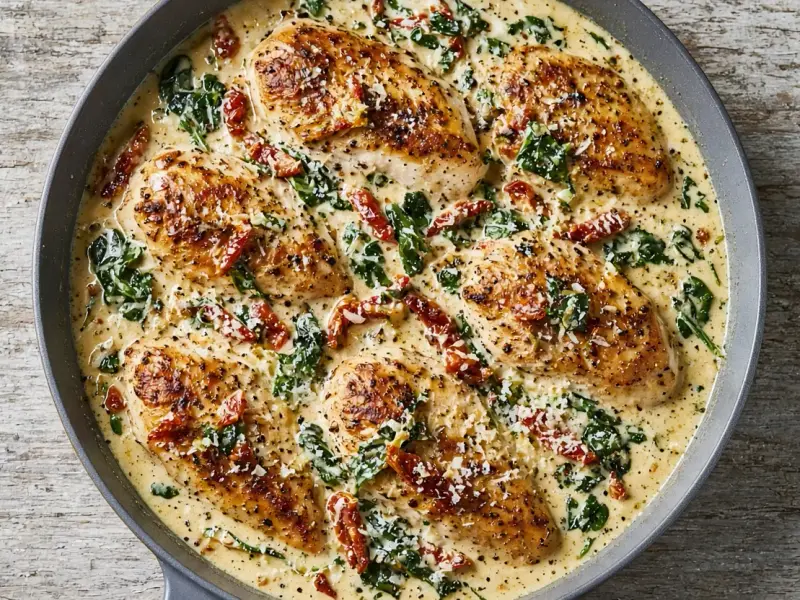 Creamy Tuscan Chicken
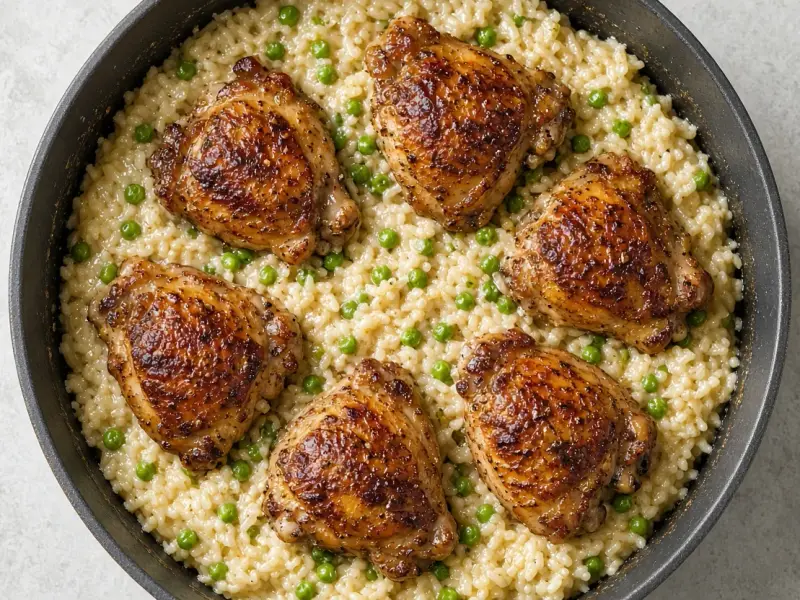 One-Pot Creamy Chicken and Rice
 American
 Main courses
 Dinner
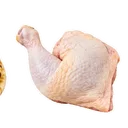 Chicken
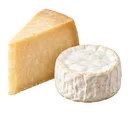 Cheese
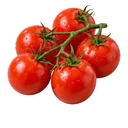 Tomatoes