Chicken Caesar Salad
The Caesar is already on this site; what this adds is the chicken, brined for half an hour so it stays juicy and sliced across the grain so it does not chew.
- Prep
- 15 min
- Cook
- 15 min
- Resting
- 35 min
- Total
- 1 hr 5 min
- Serves
- 4
- Revisions
- 1
Allergens
- Cereals containing gluten
- Eggs
- Fish
- Milk
- Mustard
Named from the ingredients as written, including those carried in from sub-recipes. This is not a guarantee — check the labels on what you actually buy, and note that a product’s recipe can change.
Ingredients
Serves
Chicken
Brine
Chicken
Salad
Method
Brine
Stir the salt and sugar into the cold water until dissolved.
Butterfly each breast so it is an even 2cm thick, and submerge both in the brine for 30 minutes.
Half an hour is enough and two hours is too much — beyond about an hour the texture turns spongy and faintly ham-like. Chicken breast is the leanest thing in this collection and brining is the one reliable way of stopping it going dry.
Chicken
Lift the chicken out, rinse it briefly and pat it completely dry.
Rub with the oil and pepper. No salt: the brine has done it.
Heat a heavy pan over medium-high heat and cook for 5 to 6 minutes a side, until deep gold and 74C/165F at the thickest point.
Rest on a board for 5 minutes.
Salad
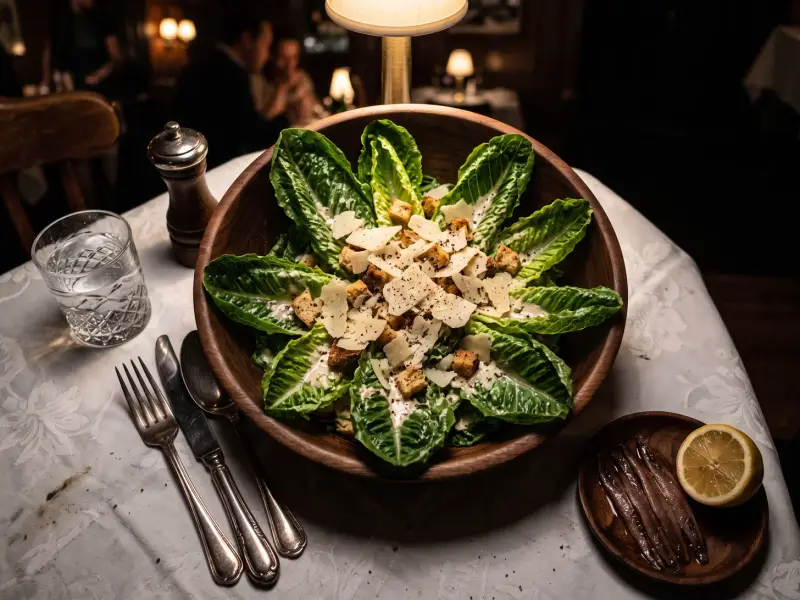
Make the Caesar Salad as in that recipe while the chicken rests — the leaves, the croutons and the anchovy dressing are all as written there.
Slice the chicken across the grain into 1cm strips.
Lay the slices over the dressed leaves rather than tossing them through, so the chicken stays warm and the leaves stay crisp.
Finish with the Parmesan shavings and more black pepper.
Nobody has rated this recipe yet.
Sign in to rate this recipe. One rating per person, and you can change it.
What to expect
- Taste
Salt, anchovy and Parmesan doing the work, with the chicken mild against them. The dressing is the loudest thing on the plate and should be — a Caesar that tastes only of mayonnaise has gone wrong somewhere.
- Aroma
Garlic and anchovy from the dressing, and toasted bread from the croutons.
- Texture
The reason the salad works: crisp cos, crunchy crouton, creamy dressing and tender chicken. Four textures, and the croutons are the one people skimp on.
- Sound
The crunch of the croutons.
- How the flavour moves
Salt and umami first from the anchovy and cheese, then the chicken, then a long savoury finish with lemon behind it.
- Serve it
Warm chicken on cold leaves, which is correct and deliberate.
- Goes with
Nothing needed. A crisp white.
Cook's notes
- Difficulty
Beginner.
- Cost
Low to mid.
- Equipment
A heavy frying pan and a probe thermometer.
- When to make it
Lunch, or a weeknight.
- Best season
None.
- You know it is done when
Deep gold crust and no pink at the centre when cut. The juices should run clear.
- And it feels like
Firm but yielding. A brined breast stays noticeably juicier and is slightly springier in a way that is easy to mistake for undercooked.
- Food safety
Chicken at 74C/165F instantaneous (USDA), or 70C for two minutes / 75C instantaneously (UK Food Standards Agency). The brine is a raw-chicken liquid and goes down the sink immediately, with the sink rinsed after. Do not reuse it. The dressing contains raw egg — see the Caesar Salad recipe, which addresses that directly.
- Where it goes wrong
- Brining for hours, which makes the texture spongy.
- Salting after brining, which makes it inedibly salty.
- Not drying the chicken, so it steams instead of browning.
- Cooking a whole unbutterflied breast, which is dry at one end.
- Tossing the chicken through the leaves, which wilts them.
- Skipping the croutons, which are half the texture.
- If it does go wrong
Dry: it was overcooked, or not butterflied. Too salty: the brine was too strong or too long, or salt was added afterwards. Pale: the chicken was wet or the pan not hot enough. Soggy leaves: dressed too early, or the chicken was tossed through.
- Making it ahead
The chicken can be cooked a few hours ahead and served at room temperature. The salad is assembled at the last minute.
- Keeping it
Poorly. The chicken keeps two days; a dressed salad does not keep at all.
- Reheating
No. Leftover chicken is better cold.
- Freezing
No.
- Leftovers
The chicken in a sandwich the next day.
- Scaling it
Cook the chicken in batches so the pan stays hot.
- Substitutions
Thighs are more forgiving and need no brine at all, though the slices are less tidy. Leftover roast chicken works and should be brought to room temperature rather than used fridge-cold.
- Dietary swaps
Contains fish and eggs from the anchovy dressing, milk from the Parmesan, gluten from the croutons and mustard from the dressing. All of those come through the Caesar Salad rather than from anything added here. Nut free.
- Shopping for it
Nothing unusual. Good anchovies matter more than the chicken does.
- Keeping the cost down
Thighs instead of breast, which are cheaper and more forgiving.
- Sustainability
Chicken has the lowest footprint of the common meats, and this is a salad with chicken on it rather than a meat dish with salad — the leaves, bread and dressing are most of the plate. Thighs, suggested above for cost, are also the less-demanded part of the bird. The croutons are a use for stale bread, which is worth saying: bread is one of the most-wasted foods in British households and this is one of the better answers to it.
- Nutrition
High protein, and lighter than it looks apart from the dressing.
- Worth it?
Half an hour in salted water is the difference between chicken worth putting on a salad and chicken that is there to bulk it out.
Where it comes from
- Origin
Tijuana, Mexico, in an Italian-run restaurant serving Americans.
- Also called
Caesar salad; the chicken version has no separate name.
- Said out loud
Straightforward.
- What the name means
After Caesar Cardini, not the Roman.
- History
The salad is generally credited to Caesar Cardini, who ran a restaurant in Tijuana during American Prohibition, when Californians crossed the border to drink. The usual account has him improvising it from what was left in the kitchen on a busy Fourth of July in 1924 and finishing it at the table. His brother Alex is sometimes credited instead, and the details vary between tellings. The original is said to have used whole leaves eaten by hand, a coddled egg and no anchovy — the anchovy arriving via Worcestershire sauce.
- Why it matters
One of the most-ordered salads in the world and, with chicken added, one of the most-ordered lunches.
- When it is eaten
Lunch, and a main course that does not feel heavy.
- The traditional way
An emulsified dressing built around egg, garlic and hard cheese, tossed with cos and croutons.
- How it changed
Chicken made it a main course. Anchovies became explicit rather than arriving through Worcestershire sauce. Bottled dressings made it ubiquitous and much worse.
- Regional variations
Endless, and mostly additions — bacon, avocado, kale.
- How this version differs
It does not repeat the Caesar Salad already on this site. That recipe is the leaves, the croutons and the coddled-egg dressing; this one is the chicken, done so it is worth putting on top of them. Cooking both from one page rather than duplicating a dressing keeps the two from drifting apart.
- Sources and credit
Caesar Cardini, Tijuana.
 Caesar Salad
 Chicken Burger
 One-Pot Creamy Chicken and Rice
 Air Fryer Chicken Breast
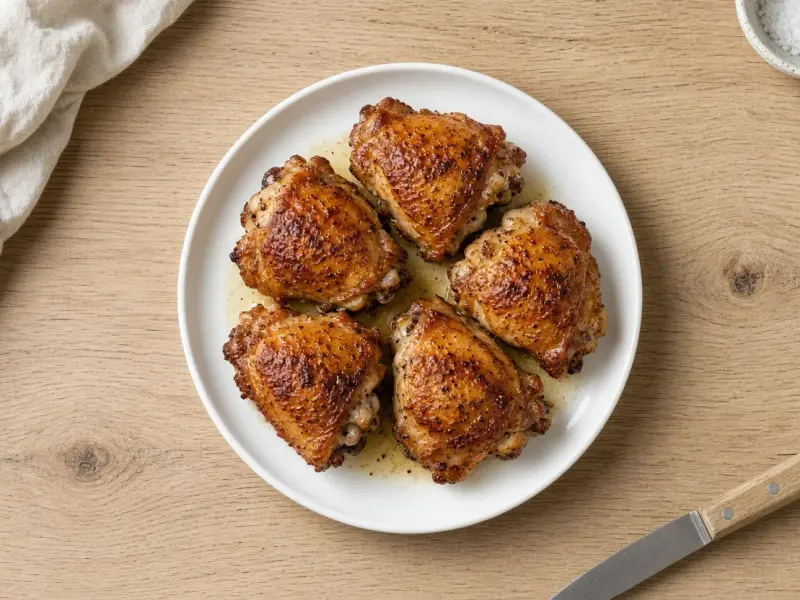 Air Fryer Chicken Thighs
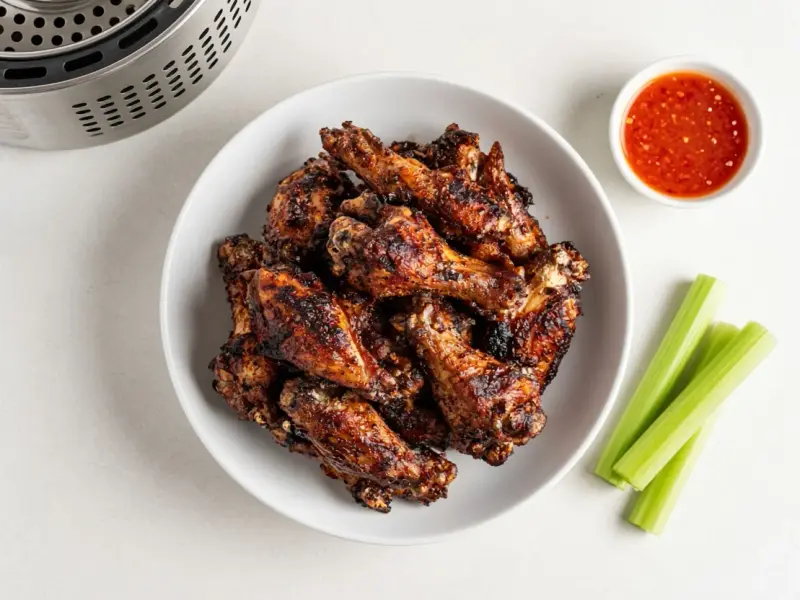 Air Fryer Chicken Wings
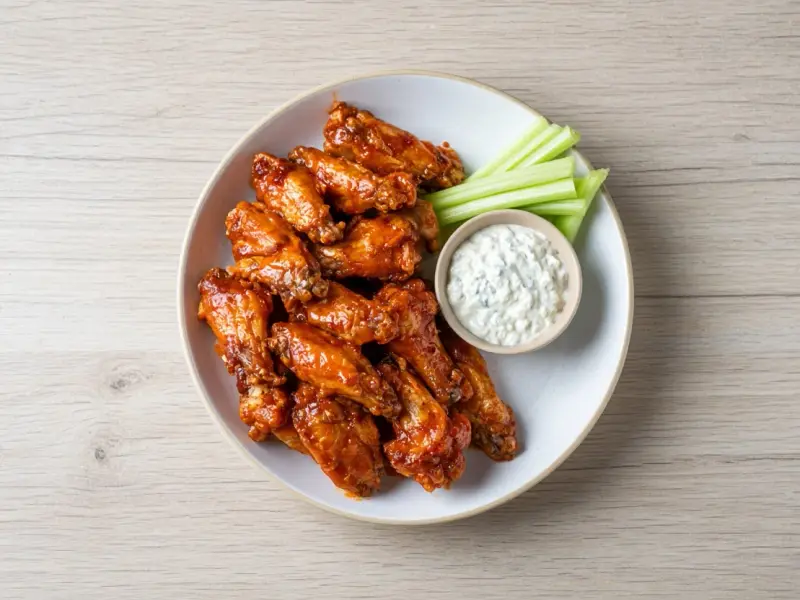 Buffalo Wings
 American
 Main courses
 Lunch
 Chicken
 30 minutes