Cottage Pie
Beef under mashed potato. The filling is cooked down until it is thick enough to stand a spoon in, because a loose one boils up through the mash and makes it grey.
- Prep
- 25 min
- Cook
- 1 hr 50 min
- Resting
- 10 min
- Total
- 2 hr 25 min
- Serves
- 6
- Revisions
- 1
Allergens
- Celery
- Cereals containing gluten
- Milk
- Sulphites
Named from the ingredients as written, including those carried in from sub-recipes. This is not a guarantee — check the labels on what you actually buy, and note that a product’s recipe can change.
Ingredients
Serves
Filling
Topping
Method
Filling
Heat the oil in a wide casserole over high heat and brown the mince in two batches, pressing each flat and leaving it undisturbed for 3 minutes before stirring.
Lift the meat out with a slotted spoon and leave the fat in the pan.
Turn the heat down to medium, add the onion, carrot and celery and cook for 12 minutes until soft.
Add the garlic and cook for 1 minute.
Stir in the flour and tomato purée and cook for 2 minutes, until the mixture looks dry and sandy and smells of biscuit rather than raw flour.
Pour in the wine, scraping the base hard, and let it bubble down to almost nothing.
Return the beef with the stock, Worcestershire sauce, bay and thyme, and bring to a simmer.
Cook uncovered at a lazy simmer for 45 minutes, until the sauce is thick enough that a spoon dragged across the base leaves a channel.
Stir in the peas, take out the bay and thyme stalks, and taste for salt.
Topping
Tip the filling into a 2.5 litre dish and leave it to cool for 20 minutes. Warm mash on hot filling sinks into it and you lose the line between the two.
Heat the oven to 200C fan.
Spoon the mash over in heaps, starting at the edges and working in, then join the heaps together so the surface is sealed to the rim of the dish. Sealed edges are what stop the filling bubbling up the sides.
Drag a fork across the top in ridges, scatter over the cheese if using and dot with the butter.
Bake for 35 to 40 minutes, until the ridges are deep gold and the filling is bubbling at the corners.
Rest for 10 minutes before serving, or the first spoonful will slump.
Nobody has rated this recipe yet.
Sign in to rate this recipe. One rating per person, and you can change it.
What to expect
- Taste
Savoury and rounded rather than sharp — beef, sweet root vegetable and the tang of Worcestershire sauce under it. The mash is buttery and mild and exists to be the calm half.
- Aroma
Roasting beef and browning butter, with a background of thyme. The smell in the last ten minutes of baking is the point at which people come into the kitchen.
- Texture
Three textures on one fork: the crisp ridge, the soft mash and the coarse, soft filling. It stops being a good dish when the middle two merge.
- Sound
The crackle of the crisp top under a spoon, and the filling still bubbling audibly for a minute after it comes out.
- How the flavour moves
Butter and salt first from the top, then the meat, then a long savoury finish with the sweetness of the carrot arriving late.
- Serve it
Very hot in the middle for a long time; the rest is not a nicety, it is what stops the first mouthful burning.
- Goes with
Buttered greens, cabbage or green beans. Brown sauce, if that is how you were raised. A pint of bitter.
Cook's notes
- Difficulty
Easy, with one thing to get right: how thick the filling is when it goes into the dish.
- Cost
Low.
- Equipment
A wide casserole, a 2.5 litre baking dish, and whatever you make mash with.
- When to make it
A weeknight if the mash is already made, otherwise a weekend.
- Best season
Autumn and winter by temperament.
- You know it is done when
The ridges of the mash deep gold and slightly crisp, and the filling bubbling at the corners of the dish. If nothing is bubbling at the edges after 40 minutes it went in too cold and needs another 10.
- And it feels like
The filling should hold a cut edge when served, not run into the space. The mash should have a crisp top and stay soft underneath.
- Food safety
Nothing unusual, and everything is cooked twice. If the filling is made in advance, cool it quickly and refrigerate; assembling with a warm filling and then chilling the whole dish leaves a large mass cooling slowly, which is the one thing to avoid.
- Where it goes wrong
- A filling that is still loose when it goes in the dish, which floods the mash from below.
- Topping a hot filling with warm mash, so the two merge before they reach the oven.
- Leaving a gap between the mash and the rim, which lets the filling boil up the sides.
- Mash made too soft, which cannot hold a ridge and will not crisp.
- Serving it straight out of the oven, when the first spoonful slumps.
- If it does go wrong
Watery: it needed longer at the simmer; next time reduce further, and this time tip the dish and spoon liquid off. Grey merged layers: the filling was hot when topped. Pale top after 40 minutes: put it under the grill for 3 minutes and watch it. Mash sliding off the spoon while topping: it is too wet, beat in a little more potato or dry it in the pan.
- Making it ahead
Assemble a day ahead and refrigerate unbaked; add 10 minutes to the bake. It also freezes assembled.
- Keeping it
Three days in the fridge, covered.
- Reheating
Covered, at 180C fan for 25 minutes, then uncovered for 10 to bring the top back. The microwave works and softens the crust completely.
- Freezing
Freezes well assembled and unbaked for three months. Bake from frozen, covered, at 180C fan for an hour, then uncovered at 200C for 20 minutes.
- Leftovers
Good cold, genuinely, and better fried in a pan in slabs until crisp on both sides.
- Scaling it
Halves and doubles cleanly. A deeper dish needs a longer bake, not a hotter one.
- Substitutions
Cornflour can replace the flour if gluten is a problem: use 1 tbsp slaked in cold water and add it with the stock rather than frying it. Stout instead of red wine is very good. The peas can be sweetcorn or nothing.
- Dietary swaps
Contains milk from the mash, gluten from the flour, celery, and sulphites from the wine and stock. Gluten free with cornflour and a checked stock. Not sensibly dairy free, since the mash is the point, though it can be made with olive oil.
- Shopping for it
Nothing unusual.
- Keeping the cost down
One of the cheapest ways to feed six people. Stock cubes are fine here; the Worcestershire sauce is doing the flavour work.
- Sustainability
The beef is the whole of the footprint here; potatoes, onions and carrots are among the lowest-impact things you can eat. That imbalance is also the opportunity: this dish carries a reduction in meat better than almost anything else on the site, because the potato layer is half of what people are eating. 500g of mince with 250g of brown lentils cooked in with the stock makes a filling that behaves identically and costs less. Green lentils hold their shape better if you would rather not have them disappear.
- Nutrition
Substantial and balanced enough with a green vegetable. Most of the fat is in the mash and the mince.
- Worth it?
Two extra steps — reduce further, cool before topping — turn the most disappointing version of this dish into the best one.
Where it comes from
- Origin
Britain, late eighteenth century.
- Also called
Cottage pie.
- Said out loud
Straightforward.
- What the name means
A cottage was a labourer's dwelling, and the name marks the dish as the version with a potato crust instead of a pastry one.
- History
The dish belongs to the period when the potato became a staple of the rural poor in Britain and Ireland, and the earliest uses of the name are from the 1790s. It was a leftovers dish before it was a mince dish: cold roast beef, chopped, under mash. Mincing machines and cheap mince made the modern version, and the leftover-meat original has largely disappeared.
- Why it matters
One of the small number of dishes that reads as British home cooking without qualification, and a fixture of pub menus, school dinners and family kitchens.
- When it is eaten
Midweek family food and Sunday food alike. Also the classic dish to make for somebody else and hand over in a dish.
- The traditional way
Chopped cooked meat under mashed potato, browned in the oven.
- How it changed
From leftover roast to raw mince, and from plain mash to mash with cheese and a forked pattern.
- Regional variations
Cumberland pie has a breadcrumb or cheese crust over the potato. Some versions layer sliced potato rather than mash.
- How this version differs
The filling is reduced further than most recipes ask for, and the mash is deliberately stiffer, because the fault in nearly every homemade cottage pie is the two layers merging. The 20-minute cool before topping is the other half of that.
- Sources and credit
None.
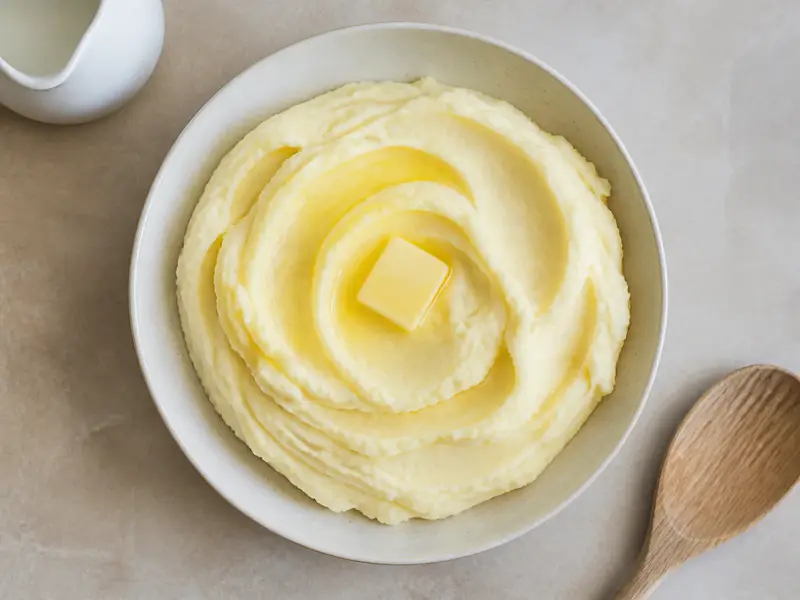 Buttery Mashed Potato
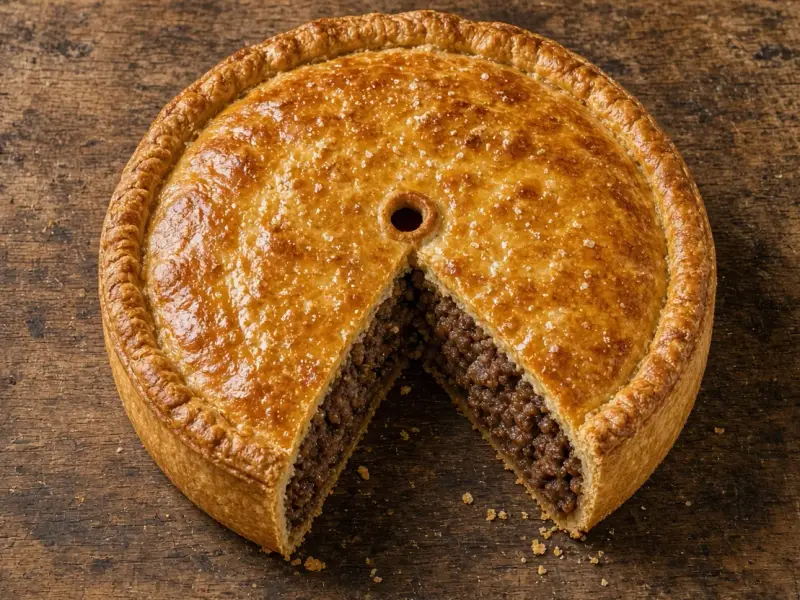 Minced Beef and Onion Pie
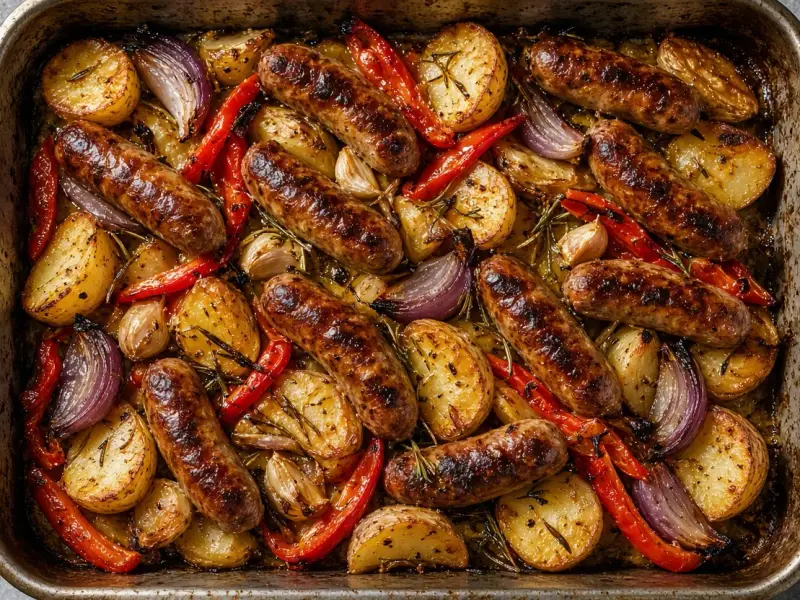 Sausage and Potato Traybake
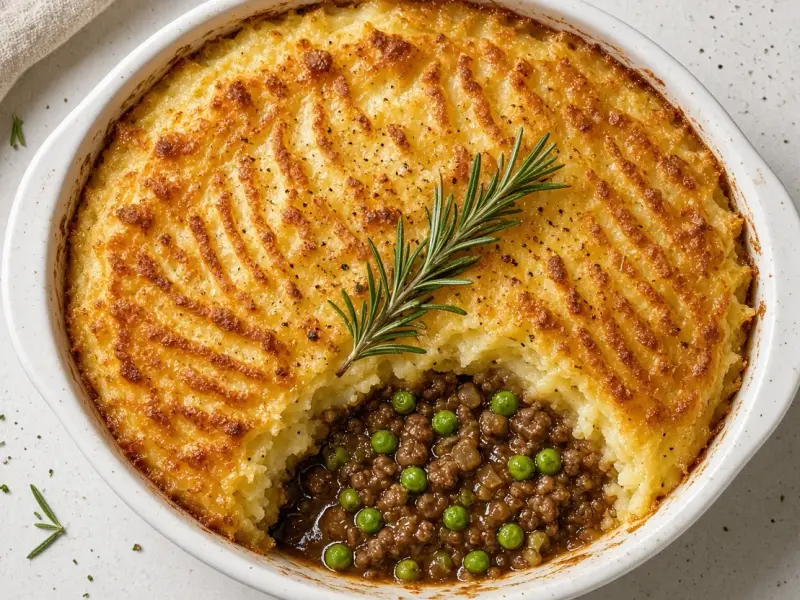 Shepherd's Pie
 Spaghetti Bolognese
 Air Fryer Whole Chicken
 Beef and Ale Stew with Herb Dumplings
 British
 Main courses
 Dinner
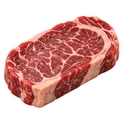 Beef
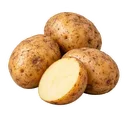 Potatoes