Prawn Linguine
Prawns take two minutes. They go in at the very end, and the sauce is made and finished before they ever see the pan.
- Prep
- 10 min
- Cook
- 20 min
- Total
- 30 min
- Serves
- 4
- Revisions
- 1
Allergens
- Cereals containing gluten
- Crustaceans
- Sulphites
Named from the ingredients as written, including those carried in from sub-recipes. This is not a guarantee — check the labels on what you actually buy, and note that a product’s recipe can change.
Ingredients
Serves
Pasta
Sauce
To finish
Method
Pasta
Put the linguine on in well-salted water and cook to 1 minute short of the packet time.
Sauce
Meanwhile, heat the oil in a wide pan over medium-low heat and add the garlic and chilli flakes.
Cook them gently for 2 minutes until the garlic is pale gold at the edges and no further. Browned garlic is bitter and there is nowhere for it to hide in a sauce this plain.
Add the tomatoes and salt and cook for 5 minutes, pressing them with a spoon until they collapse.
Pour in the wine and simmer for 4 minutes, until the harsh smell has gone.
Save two mugfuls of pasta water and drain the linguine.
To finish
Turn the heat to high and add the prawns in one layer.
Cook for 1 minute a side, until they have just turned pink and curled into a loose C.
A prawn curled into a tight O is overcooked and rubbery, and it happens in seconds. This is why they go in last and why nothing else is still to be done.
Add the pasta, the cold butter, the lemon zest and juice and a splash of pasta water, and toss hard for 30 seconds until the sauce turns glossy and clings.
Off the heat, stir in the parsley and serve immediately. No cheese — it would bury the prawns.
Nobody has rated this recipe yet.
Sign in to rate this recipe. One rating per person, and you can change it.
What to expect
- Taste
Sweet prawn against sharp lemon and the warmth of chilli, with garlic underneath and a saline note from the prawns themselves. It is a clean, direct dish with very little richness.
- Aroma
Garlic in warm oil, then the sea when the prawns hit the pan. The lemon zest at the end is the last thing you smell.
- Texture
Firm prawns with a slight snap, pasta with a bite, and a sauce that clings rather than pools.
- Sound
The prawns hitting a hot pan, which is the loudest and shortest moment in the recipe.
- How the flavour moves
Sweetness first from the prawns, then acid from the lemon and wine, then chilli warmth building at the back. Very little length, which suits it.
- Serve it
Hot and immediate.
- Goes with
Bread to finish the oil. A crisp white — Vermentino, Greco di Tufo, or a dry Sicilian white.
Cook's notes
- Difficulty
Beginner, with one moment of attention at the end.
- Cost
Mid to high. The prawns are the whole cost.
- Equipment
A wide pan and a pasta pan.
- When to make it
A weeknight when you want something that does not feel like one.
- Best season
None meaningful for farmed or frozen prawns.
- You know it is done when
The prawns turn from grey and translucent to pink and opaque and curl into a loose C. Stop there.
- And it feels like
A cooked prawn is firm and gives; an overcooked one squeaks against the teeth. There is no recovery from the second.
- Food safety
Prawns are cooked when opaque throughout with no grey translucency at the thickest part. Raw prawns should be kept cold and used the day they are bought, or thawed in the fridge rather than on the counter if frozen. Crustacean allergy is severe and common; this dish should be declared clearly to anyone eating it.
- Where it goes wrong
- Cooking the prawns first and returning them at the end, by which point they have cooked twice.
- Pre-cooked prawns, which cannot be improved.
- Wet prawns, which steam grey instead of colouring.
- Browning the garlic, which is bitter in a sauce with nothing to hide behind.
- Adding cheese, which buries the prawns.
- Crowding the pan, so the prawns poach in their own liquid.
- If it does go wrong
Rubbery: overcooked, and there is no fix; next time take them out at the loose C. Watery: the prawns were wet or the pan was crowded. Bitter: the garlic browned. Thin sauce: more tossing with pasta water and cold butter.
- Making it ahead
The tomato and wine base can be made an hour ahead. Nothing else.
- Keeping it
Not really. Two days at most and the prawns will be tough on reheating.
- Reheating
Poorly, and it is worth eating it cold instead.
- Freezing
No.
- Leftovers
Cold, with more lemon, as a pasta salad.
- Scaling it
The prawns need a single layer. Beyond four portions, sear them in two batches and add the pasta after.
- Substitutions
Spaghetti for linguine. Frozen raw prawns are entirely fine and often better than fresh, which are usually previously frozen anyway — thaw them fully and dry them well. Squid rings work with the same timing.
- Dietary swaps
Contains gluten, crustaceans and sulphites from the wine. Dairy free if the butter is left out, at the cost of some gloss. Egg free with dried pasta, and nut free. No cheese, which is both traditional here and the right call.
- Shopping for it
Look for the species and the source. Cold-water prawns from the north Atlantic and MSC-certified fisheries are the straightforward choice; warm-water farmed king prawns vary enormously.
- Keeping the cost down
Frozen raw prawns cost considerably less than chilled ones and are usually the same product thawed. Buy them frozen.
- Sustainability
This is the dish here where sourcing matters most and the label is worth reading. Farmed warm-water prawns have been associated with mangrove clearance in parts of south-east Asia, with the worst of that historic rather than current, and standards now vary widely by country and farm — ASC certification is the most useful signal available to a shopper. Wild tropical prawn trawling has among the highest bycatch ratios of any fishery. Cold-water prawns from certified north Atlantic fisheries are the least complicated choice. None of this makes prawns unusable; it makes the label worth reading, and 450g feeding four is a modest quantity to start with.
- Nutrition
Lean and high in protein, and the lightest pasta dish in this batch.
- Worth it?
Finish everything else first. The prawns get two minutes and they get them last.
Where it comes from
- Origin
Coastal Italy, no single place.
- Also called
Linguine ai gamberi.
- Said out loud
lin-GWEE-neh eye gam-BEH-ree.
- What the name means
Linguine means little tongues, describing the flattened strand.
- History
Pasta with shellfish is standard the length of the Italian coast, and the combination of garlic, oil, chilli, white wine and whatever came out of the sea that morning is more a method than a recipe. Tomato appears in southern versions and not in others, and both are traditional in their own places.
- Why it matters
Restaurant seafood pasta is one of the most-ordered dishes in Italian restaurants outside Italy, and one of the most often overcooked.
- When it is eaten
A quick dinner that feels like more than it was. Also a good dish to cook for two.
- The traditional way
Cooking the aromatics gently in oil, deglazing with wine, and finishing the pasta in the pan with its own water — mantecatura, the same emulsion move as Alfredo and cacio e pepe.
- How it changed
Cream appears in non-Italian versions. The rule about no cheese with seafood has largely held everywhere.
- Regional variations
With tomato in the south, without in much of the north. Linguine allo scoglio uses a mixture of shellfish; alle vongole uses clams and nothing else.
- How this version differs
The order is written so that everything is finished before the prawns go in, which most recipes do not enforce and which is the only way to hit a two-minute window reliably.
- Sources and credit
None.
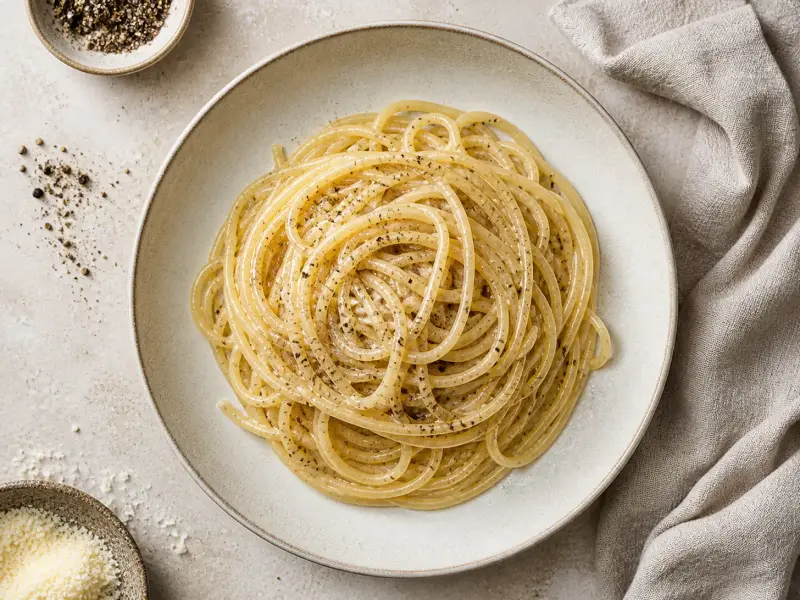 Cacio e Pepe
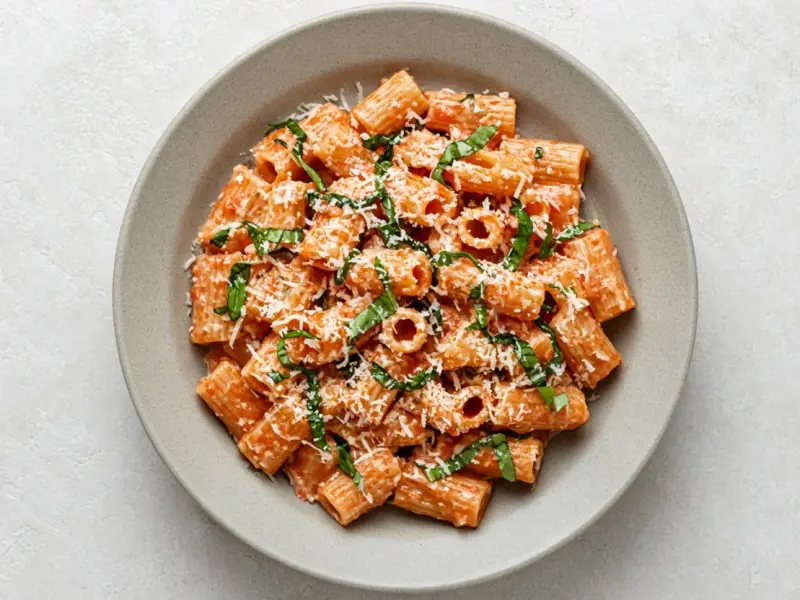 Creamy Tomato Pasta
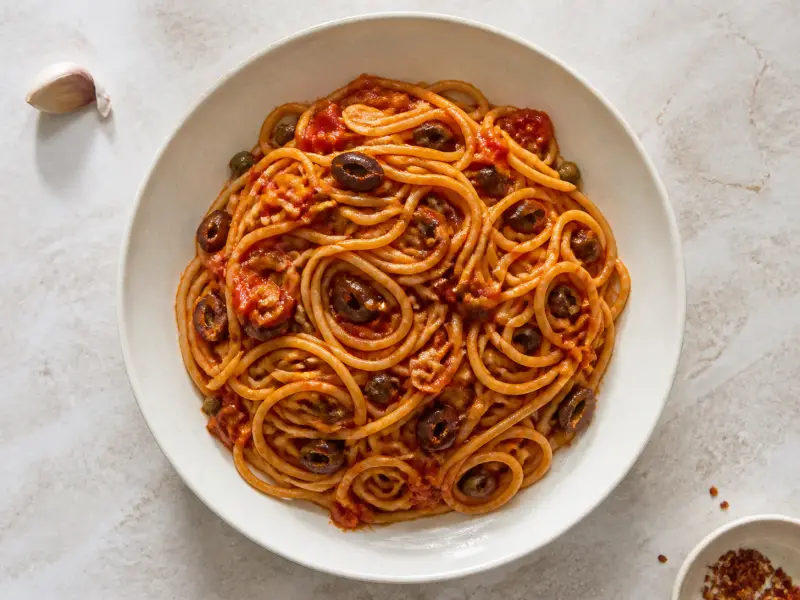 Spaghetti alla Puttanesca
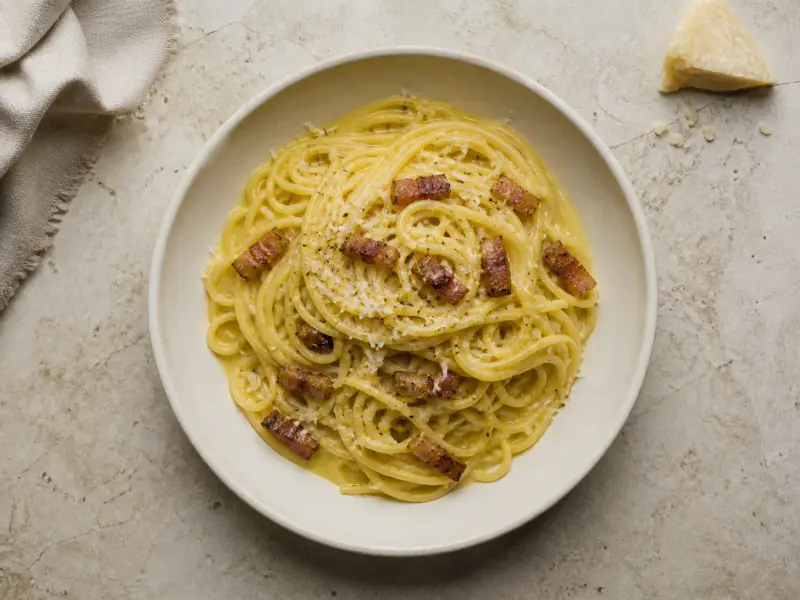 Spaghetti Carbonara
 Air Fryer Salmon
 Baked Lasagne
 Italian
 Pasta
 Main courses
 Pescatarian
 30 minutes