Creamy Tomato Pasta
Tomato purée fried in butter until it turns from red to brick, which is where the depth comes from. Twenty minutes, and no cream needed until the last one.
- Prep
- 5 min
- Cook
- 25 min
- Total
- 30 min
- Serves
- 4
- Revisions
- 1
Allergens
- Cereals containing gluten
- Milk
Named from the ingredients as written, including those carried in from sub-recipes. This is not a guarantee — check the labels on what you actually buy, and note that a product’s recipe can change.
Ingredients
Serves
Sauce
Pasta
To finish
Method
Sauce
Heat the butter and oil in a wide pan and cook the onion over medium-low heat for 10 minutes, until soft and translucent with no colour.
Add the garlic and chilli flakes and cook for 1 minute.
Add the tomato purée and fry it, stirring, for 3 full minutes.
Watch it change from bright red to a deep brick colour and start to catch slightly on the base. That colour change is the whole reason this sauce tastes of more than twenty minutes of work — raw purée stirred into liquid stays sharp and metallic.
Add the crushed tomatoes, the salt and 100ml of water, and simmer for 12 minutes.
Taste, and add the sugar only if it needs it. Good tinned tomatoes usually do not.
Pasta
Put the pasta on in well-salted water and cook it 1 minute short of the packet time.
Save a mugful of the pasta water before draining.
To finish
Stir the cream into the sauce and let it bubble for 1 minute.
Add the drained pasta and a splash of the water, and turn it over the heat for a minute until every piece is coated and nothing sits in a puddle.
Off the heat, stir in the Parmesan and the basil, and serve at once.
Nobody has rated this recipe yet.
Sign in to rate this recipe. One rating per person, and you can change it.
What to expect
- Taste
Sweet and rounded, with a low chilli warmth and a savoury depth that people usually assume came from long cooking. The cream softens the acidity rather than adding much flavour of its own.
- Aroma
Sweet cooked tomato and garlic, with a distinct change of smell at the moment the purée caramelises.
- Texture
Smooth and coating, with the pasta still firm. Rigatoni is used because the sauce collects inside it.
- Sound
Very little. The purée hissing as it fries is the only distinct moment.
- How the flavour moves
Sweetness first, then a savoury depth, then chilli warmth arriving at the back of the throat and staying.
- Serve it
Hot, and served immediately — a cream and cheese sauce stiffens fast on a cold plate.
- Goes with
Green salad, garlic bread. A light red, or a rosé.
Cook's notes
- Difficulty
Beginner.
- Cost
Very low.
- Equipment
A wide pan and a pasta pan.
- When to make it
A weeknight, in the time the pasta takes.
- Best season
None; tinned tomatoes make it a year-round dish and a better one than most fresh-tomato versions.
- You know it is done when
The purée goes from bright pillar-box red to a dull brick and begins to leave a film on the base of the pan. The finished sauce should be a soft orange rather than red.
- And it feels like
Thick enough to coat the pasta with nothing pooling in the bowl.
- Food safety
Nothing unusual.
- Where it goes wrong
- Not frying the purée long enough, which leaves the sauce sharp and metallic.
- Burning it, which is bitter — three minutes on medium, not high.
- Adding the cream too early and boiling it hard, which can split it.
- Draining the pasta without saving the water.
- Adding the Parmesan on the heat, where it strings.
- If it does go wrong
Sharp: it needed longer on the purée and a longer simmer; a pinch of sugar will patch it. Thin: keep simmering, or add less pasta water. Split: off the heat, a splash of cold cream and vigorous stirring.
- Making it ahead
The sauce, up to three days ahead, cream added on reheating.
- Keeping it
The sauce keeps three days in the fridge. Cooked pasta does not keep well in it.
- Reheating
Gently, with a splash of water.
- Freezing
The sauce freezes for three months, best frozen before the cream goes in.
- Leftovers
As the sauce for a baked pasta with mozzarella over the top.
- Scaling it
Doubles easily.
- Substitutions
Passata instead of tinned tomatoes, in which case use 350g and skip the water. Crème fraîche instead of cream is sharper and very good. Mascarpone, 3 tbsp, makes it richer.
- Dietary swaps
Contains gluten and milk. Gluten free with gluten-free pasta. Vegetarian if the Parmesan is a rennet-free hard cheese. A dairy-free version with oat cream works better here than in most cream sauces because the tomato carries it.
- Shopping for it
Nothing unusual. Double-concentrated purée in a tube is more intense than the tinned sort and worth using.
- Keeping the cost down
One of the cheapest meals here. Tinned plum tomatoes are better than chopped and cost the same.
- Sustainability
Almost entirely plant-based already, and among the lowest-impact meals in this collection. The dairy is the only significant part of its footprint, and the dish takes an oat or soya cream better than most cream sauces do because the tomato is carrying the flavour rather than the dairy. Tinned tomatoes have a low footprint and, out of season, are a better ingredient than fresh ones grown under heat or flown in.
- Nutrition
Moderate, and mostly carbohydrate. The cream is the fat.
- Worth it?
Three minutes of frying a tube of tomato purée, and a cupboard sauce tastes like it took the afternoon.
Where it comes from
- Origin
Italian restaurant cooking of the later twentieth century.
- Also called
Closest is penne alla vodka.
- Said out loud
Straightforward.
- What the name means
Descriptive.
- History
Cream in a tomato pasta sauce is a modern restaurant convention rather than an old regional practice, and penne alla vodka is the version that made it famous. Its origin is genuinely disputed between Italy and Italian-America, with claims for a Roman restaurant, a Bolognese chef and several New York restaurants in the 1970s and 80s, and no account is settled.
- Why it matters
Modest. It belongs to the category of dishes that are cooked constantly and written about rarely.
- When it is eaten
A weeknight, and one of the better things to cook from a cupboard.
- The traditional way
Frying tomato purée to caramelise it — soffritto with concentrate — which is a standard Italian move and the only real technique in the dish.
- How it changed
The vodka fell away in most home versions, which is reasonable given how little it contributes.
- Regional variations
With vodka, with mascarpone, with pancetta, and with the tomatoes blended smooth rather than crushed.
- How this version differs
More tomato purée than usual and three full minutes of frying it, which is where the flavour comes from. This site also has Simple Tomato Sauce, which is a component recipe and a plainer thing.
- Sources and credit
None that can be relied on.
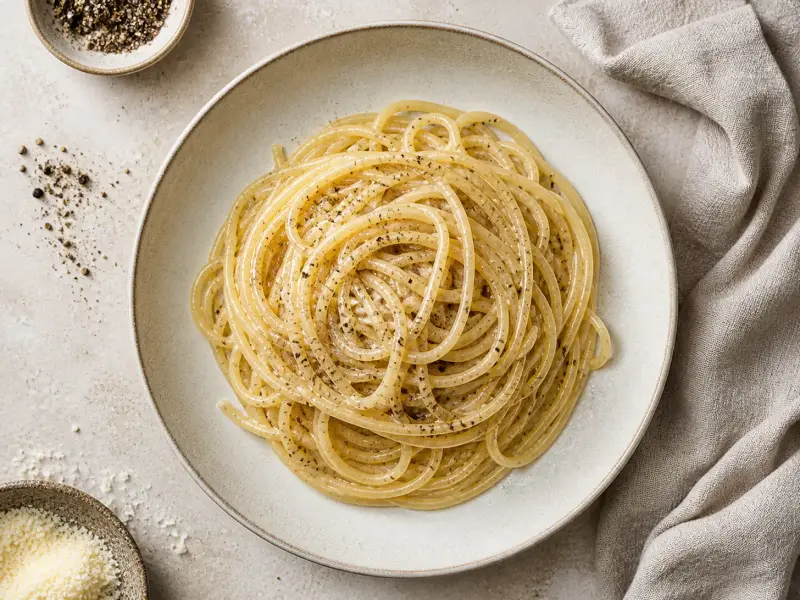 Cacio e Pepe
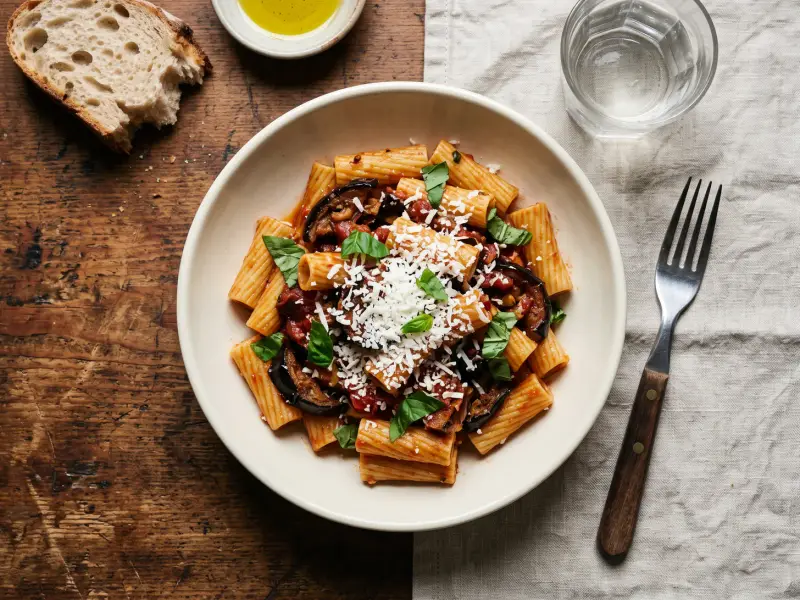 Pasta alla Norma
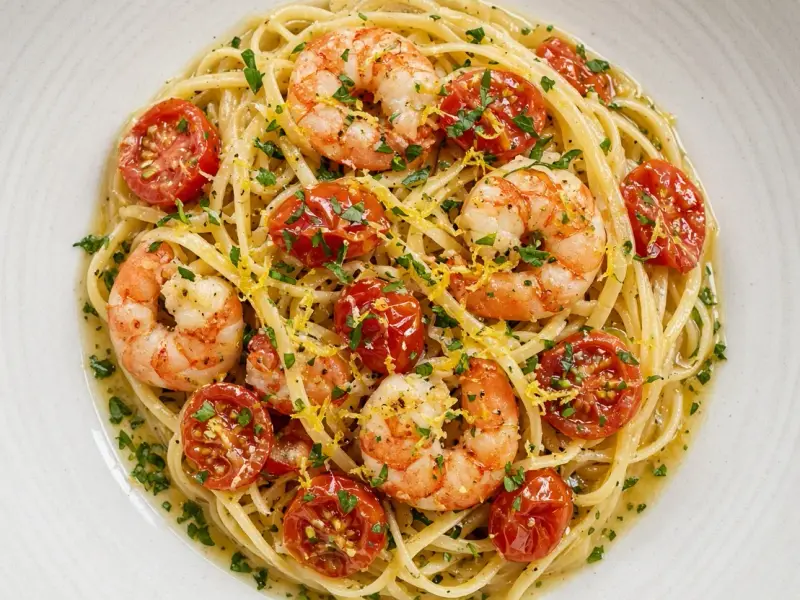 Prawn Linguine
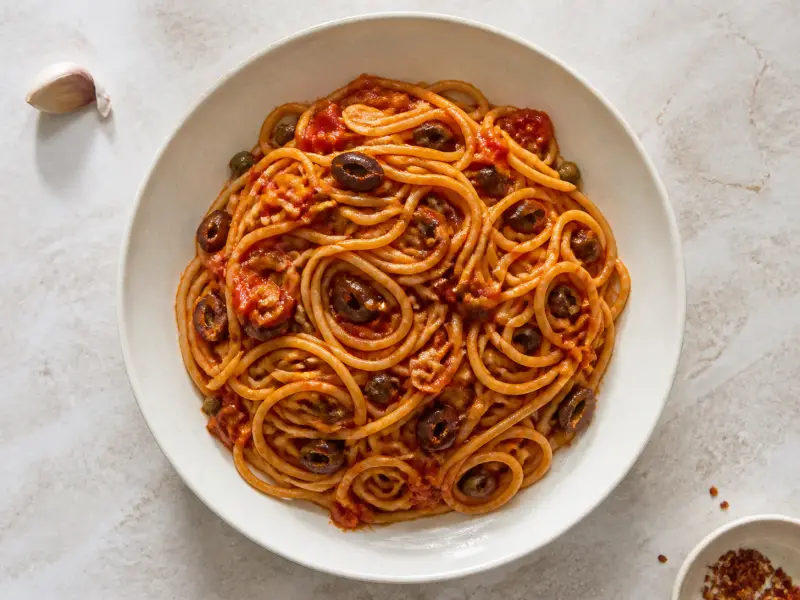 Spaghetti alla Puttanesca
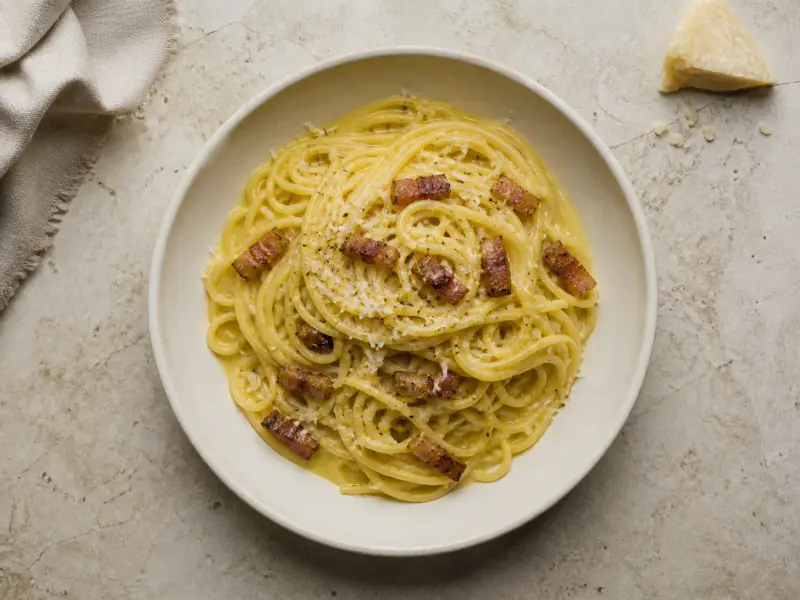 Spaghetti Carbonara
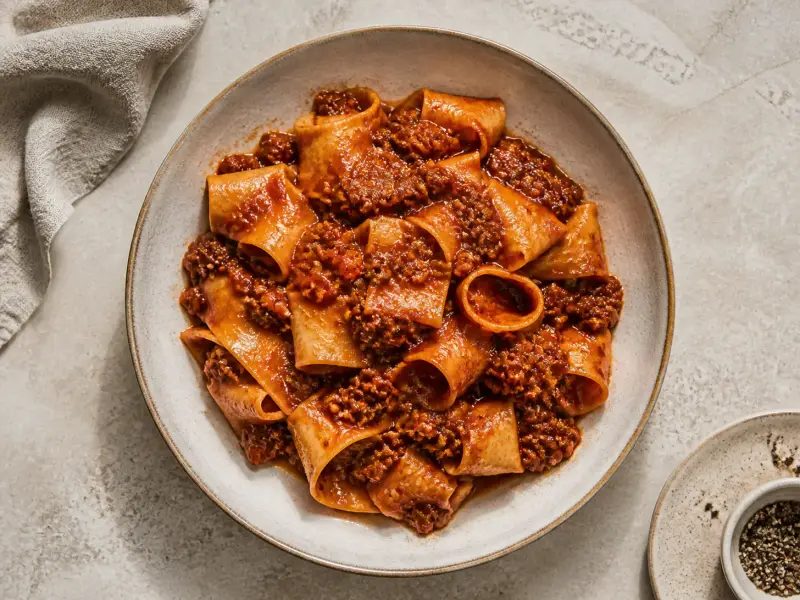 Slow-Cooked Beef Ragu
 Italian
 Pasta
 Main courses
 Tomatoes
 30 minutes