Potato Salad
Dress the potatoes while they are hot with vinegar, and add the mayonnaise only when they are cold. Hot potatoes absorb; cold ones are coated.
- Prep
- 15 min
- Cook
- 25 min
- Resting
- 1 hr
- Total
- 1 hr 40 min
- Serves
- 6
- Revisions
- 1
Allergens
- Celery
- Eggs
- Mustard
- Sulphites
Named from the ingredients as written, including those carried in from sub-recipes. This is not a guarantee — check the labels on what you actually buy, and note that a product’s recipe can change.
Ingredients
Serves
Potatoes
Dressing
Method
Potatoes
Put the potatoes whole and unpeeled into cold salted water and bring to the boil.
Starting them in cold water is what cooks them evenly. Dropped into boiling water, the outside is falling apart before the middle is done.
Simmer for 18 to 22 minutes, until a knife slides in with no resistance.
Drain and leave until just cool enough to handle, then cut into 2cm chunks. Skins on or off as you like; on is easier and better.
While they are still hot, pour over the vinegar and the half-teaspoon of salt and turn them gently.
A hot potato absorbs; a cold one only gets coated. This is the entire difference between a potato salad that tastes seasoned all the way through and one that tastes of mayonnaise sitting on plain potato.
Leave to cool completely, at least an hour.
Dressing
Mix the mayonnaise, soured cream, mustard and pepper.
Fold this through the cold potatoes with the celery, spring onions, gherkins and dill.
Add the mayonnaise only when the potatoes are cold. Mayonnaise is an emulsion and heat splits it into oil and water, which is why warm potato salad so often looks curdled.
Taste for salt and pepper and chill for 30 minutes before serving.
Nobody has rated this recipe yet.
Sign in to rate this recipe. One rating per person, and you can change it.
What to expect
- Taste
Creamy and tangy, with the mustard and vinegar cutting the mayonnaise and the gherkin providing sharp bursts. The dill is what makes it taste finished.
- Aroma
Dill and vinegar. Mild.
- Texture
The point. Soft potato against crunchy celery, spring onion and gherkin. Without something crunchy in it, a potato salad is uniformly soft and dull.
- Sound
None.
- How the flavour moves
Acid first, then creaminess, then the crunch and sharpness of the gherkin, then a herbal finish.
- Serve it
Cold from the fridge, but taken out fifteen minutes before serving — fridge-cold mutes everything.
- Goes with
Anything barbecued, cold ham, or a burger. It is a side and does not want to be anything else.
Cook's notes
- Difficulty
Beginner, with two rules about temperature.
- Cost
Very low.
- Equipment
A large pan and a bowl.
- When to make it
Summer, and any time there is something cold or barbecued to eat it with.
- Best season
New potatoes in early summer are noticeably better and need no peeling at all.
- You know it is done when
A knife should slide into a potato with no resistance. Undercooked potato in a cold salad is unpleasant and cannot be fixed later.
- And it feels like
Chunks that hold their shape with soft edges, in a dressing that clings without pooling.
- Food safety
Mayonnaise-dressed potato salad left in the sun is the textbook picnic hazard, and the risk is real though usually overstated for shop-bought mayonnaise, which is acidic enough to inhibit growth. The potatoes are the actual concern: cool them quickly, keep the salad refrigerated until it is served, and do not leave it out for more than two hours.
- Where it goes wrong
- Floury potatoes, which collapse.
- Dropping potatoes into already-boiling water, so the outside disintegrates before the middle cooks.
- Mayonnaise on warm potatoes, which splits it.
- No vinegar at all, which is why most homemade potato salad tastes flat.
- Nothing crunchy in it.
- Under-seasoning: cold food needs more salt than hot food to taste the same.
- If it does go wrong
Bland: it needed the vinegar step, and now needs salt and a splash of gherkin brine. Sloppy: floury potatoes, or overcooked. Split and oily: the mayonnaise went on warm. Dry the next day: potatoes keep absorbing; stir in another spoonful of mayonnaise.
- Making it ahead
Ideal. Better on day two, and it wants to be made ahead.
- Keeping it
Three days in the fridge and better on day two.
- Reheating
No.
- Freezing
No. The mayonnaise splits and the potatoes go grainy.
- Leftovers
Fried in a pan until the edges crisp, which is a different and very good dish.
- Scaling it
Doubles cleanly.
- Substitutions
Soured cream can be Greek yogurt or more mayonnaise. Dill can be chives or parsley; dill is the one that makes it taste like a deli potato salad.
- Dietary swaps
Contains eggs, mustard and sulphites from the mayonnaise, and celery. Gluten free, dairy free if the soured cream is left out or replaced, and nut free. Vegan with a vegan mayonnaise, which works well here.
- Shopping for it
Salad potatoes, and the smaller the better.
- Keeping the cost down
One of the cheapest things in the collection.
- Sustainability
Potatoes are among the lowest-impact staples there is, and this dish is essentially potatoes with a small amount of dressing. The eggs in the mayonnaise are the only animal product, and a vegan mayonnaise works genuinely well here rather than as a compromise. Cooking the potatoes whole and unpeeled also means no waste at all, which is a small thing that adds up given how much of a potato ordinary peeling throws away.
- Nutrition
Mostly potato and mayonnaise. The vegetables in it are doing texture rather than nutrition.
- Worth it?
Two temperature rules pointing in opposite directions, and they are the whole recipe.
Where it comes from
- Origin
Germany for the idea, the United States for this version.
- Also called
Kartoffelsalat in German.
- Said out loud
Straightforward.
- What the name means
Descriptive.
- History
Potato salads with vinegar and stock are long-standing in German and Austrian cooking and are often served warm. German immigration to the United States brought them across, where mayonnaise — which became a commercial product in America in the early twentieth century — replaced the vinaigrette and produced the cold, creamy version that is now the default at American picnics and barbecues.
- Why it matters
A fixture of American summer eating, and in Germany a subject of strong regional loyalty between the vinegar and mayonnaise camps.
- When it is eaten
Barbecues, picnics, cold buffets, and alongside anything.
- The traditional way
Boiling whole and dressing warm, which both traditions share even though their dressings differ.
- How it changed
Vinaigrette became mayonnaise as it crossed the Atlantic.
- Regional variations
Southern German versions use warm stock and vinegar and no mayonnaise at all. Northern German ones do use mayonnaise. American versions vary mainly in whether egg and how much mustard.
- How this version differs
It keeps the German habit of dressing the potatoes warm with vinegar and then adds the American mayonnaise cold, which is the best of both and is why it tastes seasoned rather than coated.
- Sources and credit
None.
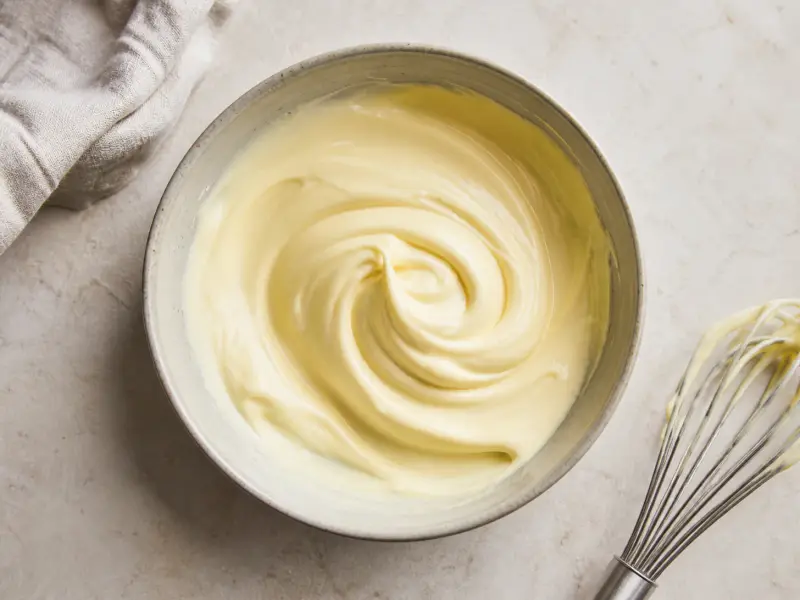 Mayonnaise
 Sweet Potato Fries
 Air Fryer Chips
 Air Fryer Roast Potatoes
 Chopped Salad
 Creamed Spinach
 Crisp Hash Browns
 American
 Side dishes
 Potatoes
 Vegetarian