Air Fryer Roast Potatoes
Parboiled and roughed up as usual, then thirty minutes at 200C in two tablespoons of fat instead of an oven's worth. It will not do Sunday lunch for six.
- Prep
- 15 min
- Cook
- 30 min
- Total
- 45 min
- Serves
- 4
- Revisions
- 1
Ingredients
Serves
Method
Cut the potatoes into 4cm pieces — smaller than you would for the oven, because the basket is shallow and a 5cm piece browns hard on top before its middle is done.
Put them into a pan of cold water with the fine salt and the bicarbonate of soda and bring to the boil.
Simmer for 7 to 8 minutes, until a knife tip slides 5mm in and then meets firm resistance.
Drain them and leave them in the colander for 2 minutes, until the steam has stopped rising and the surfaces have gone matt and chalky.
Tip them back into the dry pan, put the lid on and shake it hard three times, until the outsides are ragged and pasted with their own starch.
Stop shaking there. Those ragged edges are the whole surface you are about to crisp, and two more shakes turns them into rubble that browns to nothing.
Heat the air fryer to 200C/400F.
Turn the potatoes through the melted dripping until every face carries a film of it. Two tablespoons is genuinely enough — the fan does the work an oven needs a tin of hot fat to do.
Tip them into the basket in as close to a single layer as you can get.
Two layers deep is where this stops working. There is no room for air to move, and the pieces underneath boil in the steam coming off the ones above. Cook in two batches and hold the first in a low oven rather than crowding one.
Cook for 15 minutes, then shake the basket hard to turn the pieces onto fresh faces.
Tuck the rosemary sprigs in and cook for a further 12 to 18 minutes, shaking once more partway.
They are done when they are deep gold on every face and rasp audibly when pushed with a spoon. Listen rather than look: the tops brown first in a basket and the undersides always lag behind, so the sound is the more honest test.
Tip them into a warm bowl, scatter with the flaky salt and serve straight away. Never cover them — steam from the potatoes underneath softens the crust within two minutes.
Nobody has rated this recipe yet.
Sign in to rate this recipe. One rating per person, and you can change it.
What to expect
- Taste
Savoury from the fat above all, and the choice of fat is most of the flavour — dripping and goose fat carry a meaty richness into the craggy surface that a neutral oil simply does not. Underneath that, the plain slightly sweet taste of a floury potato. Rosemary arrives late and reads as resinous and piney rather than herbal, because it has been in dry heat rather than in liquid. Salt on the outside, and it needs to be flaky rather than fine so that some of it stays as distinct crystals.
- Aroma
Almost nothing for the first ten minutes. Then a smell of hot fat and browning starch, and finally, once the rosemary goes in, a sharp resinous note that dominates the last third of the cook and is a decent cue that the end is near.
- Texture
The whole point of the dish, and it is a two-part answer. A brittle, ragged crust that shatters rather than yields, and a soft, floury, almost powdery interior behind it. The air fryer version has a slightly thinner crust than a tray of potatoes in a hot oven full of fat, and a slightly drier interior; what it gains is evenness, because every face gets moving air rather than only the ones touching the tin.
- Sound
The rasp against a spoon is a doneness cue in its own right, listed as such in the method. Shaking the basket at fifteen minutes gives a dull heavy sound; the same shake at thirty gives something lighter and harder.
- How the flavour moves
The crust hits first with fat and salt, then the interior arrives soft and much milder, and the rosemary lingers at the back. Across a plateful the last pieces are noticeably softer than the first, which is a fact about the dish rather than a fault — it is why they go on the table last.
- Serve it
Straight from the basket. The crust starts softening within two minutes of steam being trapped, which is why they go into an open dish and never under foil.
- Goes with
A roast chicken, a joint, gravy. Braised red cabbage and glazed carrots on the same plate. In this machine the honest use is a weeknight one: four portions beside a chicken thigh rather than a Sunday for six.
Cook's notes
- Difficulty
Easy. The details matter more than they look as though they should — the bicarbonate quantity, how hard you shake, and not filling the basket.
- Cost
Low. Potatoes, and two tablespoons of fat.
- Equipment
An air fryer, a pan for parboiling with a lid that fits, and a colander. No roasting tin, and no preheating a tin of fat.
- When to make it
A weeknight roast. For Sunday lunch for six, use the oven — this is a capacity limit and no technique gets round it.
- Best season
Main-crop potatoes from autumn onward. New potatoes in early summer are waxy and wrong for this.
- You know it is done when
Deep gold on every face, with the craggy points visibly darker than the flats. The top faces will be ahead of the bottom ones for most of the cook, which is why the shake matters. Anything still pale after the shake needs longer, not hotter.
- And it feels like
The crust should rasp audibly against the back of a spoon and give a definite resistance before it breaks, and the inside should be soft enough to collapse under a fork. This is the test worth trusting — the sound is more reliable than the colour, because the basket colours unevenly by design.
- Food safety
Nothing unusual. Melted fat at 200C is hot and the basket is heavier than it looks when full; use both hands on the drawer. One thing worth knowing about any potato cooked hot: acrylamide forms in starchy food at high temperatures, and the UK Food Standards Agency advises cooking chips and roast potatoes to the lightest gold colour you find acceptable rather than to a deep brown. That advice is precautionary — acrylamide is classed as a probable human carcinogen largely on animal evidence, and the human evidence at the levels found in food is much less settled than the firmness of the advice suggests. It is worth following because it costs nothing and the colour it asks for is the better chip anyway.
- Where it goes wrong
- Filling the basket. Two layers deep is the point at which this stops being roasting and becomes steaming, and it is the single most common failure.
- Cutting the pieces oven-sized. 5cm is too big for a shallow basket.
- Using twice the bicarbonate, which collapses the pieces and tastes faintly soapy.
- Shaking the pan too many times, so the ragged edges become rubble that browns to nothing.
- Adding more fat on the assumption that oven quantities apply. It pools in the basket and fries the bottom pieces.
- Covering the finished potatoes, which softens the crust within two minutes.
- If it does go wrong
Pale and soft: the basket was too full, or they went in wet from the colander. Tops dark, bottoms pale: they were not shaken at the halfway point. Fell apart in the pan: over-parboiled, or too much bicarbonate. Greasy: too much fat. No crust at all: the shake was skipped, and the surface is the thing the shake creates.
- Making it ahead
Parboil and roughen up to a day ahead and keep covered in the fridge, then cook from cold with two extra minutes. The final stage does not wait.
- Keeping it
A day or two in the fridge, though the crust does not survive it.
- Reheating
Six minutes at 200C/400F in the air fryer recovers a surprising amount, which is one genuine advantage over the oven version.
- Freezing
They can be frozen after roasting and reheated from frozen at 200C for about twelve minutes. The crust is diminished but present.
- Leftovers
Better chopped into a hash with an egg than reheated whole and expected to be the same thing.
- Scaling it
Strictly by batch. A 4-litre basket takes about 450g in a workable layer; 900g is two runs on most machines. Hold the first batch in a low oven and give both two minutes together at the end.
- Substitutions
Floury varieties only. Maris Piper, King Edward, Rooster and Agria all work; waxy salad potatoes stay smooth in the shaking pan and never build the ragged surface the method depends on. Beef dripping and goose fat both hold up at 200C and bring a meaty richness a neutral oil does not; sunflower or rapeseed oil is a perfectly good everyday substitute and makes the dish suitable for a vegan diet.
- Dietary swaps
No declared allergens. Vegan and vegetarian when made with a neutral oil rather than dripping or goose fat, both of which are animal products. Gluten free, dairy free, egg free and nut free as written.
- Shopping for it
Ask for a floury variety by name. Maris Piper is the most widely available good one in the UK.
- Keeping the cost down
A neutral oil costs a fraction of goose fat and produces a genuinely crisp result; the fat's role here is heat and coating more than flavour, and the flavour difference is smaller than in the oven version because there is so much less of it.
- Sustainability
Heating a few litres for half an hour uses considerably less energy than an oven at 220C for an hour and a quarter, and uses a fraction of the fat.
- Nutrition
Two tablespoons of fat across four servings, against roughly 150g in the oven version — a real and large difference, and the clearest nutritional argument for the appliance in this collection.
- Worth it?
As good as the oven version for four people, better on energy and fat, and completely unable to do Sunday lunch for six. All three of those are worth saying together.
Where it comes from
- Origin
Britain.
- Also called
Roast potatoes.
- What the name means
Descriptive.
- History
Potatoes reached Europe from the Andes in the second half of the sixteenth century and were not widely eaten in Britain until the eighteenth. Roasting them in the fat rendered from a joint has no traceable origin — it is the obvious use for fat already in a tin. The parboil-with-bicarbonate and shake-to-roughen refinement is twentieth-century British recipe writing, spread widely through television cooking from the 1970s onward rather than inherited from any older tradition.
- Why it matters
The default potato of the British and Irish Sunday roast and a fixture of Christmas dinner in Britain, Australia and New Zealand.
- When it is eaten
Sunday lunch and Christmas — though not in this machine, which cannot hold enough. This version is for a weeknight roast for four.
- The traditional way
Parboil, roughen, and roast in fat that is already smoking hot in a preheated tin.
- How it changed
The basket removes the preheated fat stage entirely, which is the single biggest practical difference and the reason the fat quantity drops from about 150g to two tablespoons.
- Regional variations
Dripping and goose fat are both traditional British choices, goose fat particularly at Christmas. Semolina or flour dusted onto the roughened surface is a common modern addition to the oven version; it works less well in a basket, where loose powder blows around and scorches on the metal.
- How this version differs
Smaller pieces, far less fat, and an explicit instruction to cook in two batches rather than filling the basket — which is the constraint the appliance imposes and which most versions of this recipe leave unsaid.
- Sources and credit
The parboil-and-roughen method has no single credited author; it spread through British recipe writing and television cooking.
Related recipes
 Air Fryer Chips
 Buttery Mashed Potato
 Air Fryer Frozen Chips
 Air Fryer Halloumi
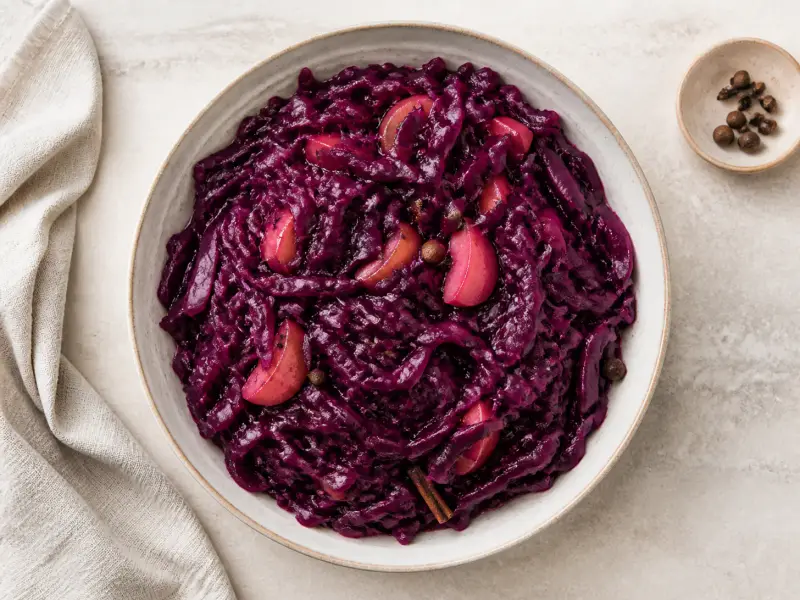 Braised Red Cabbage
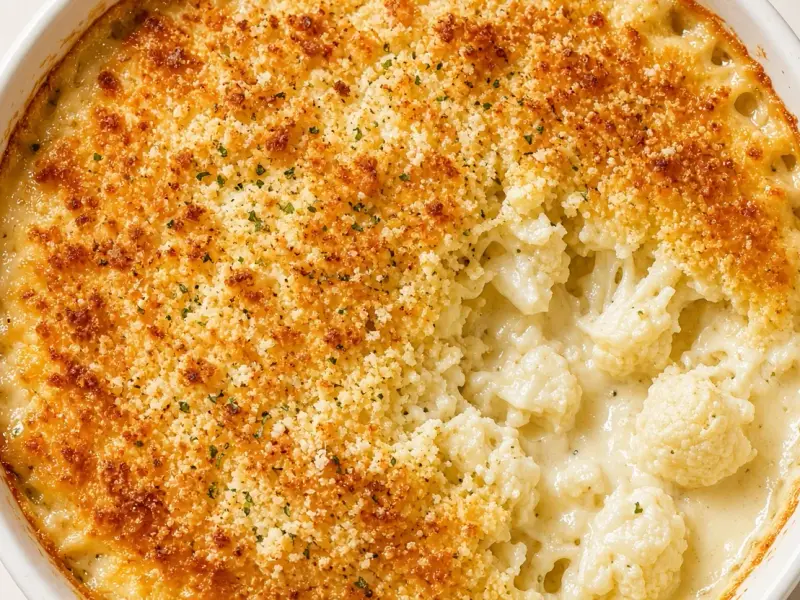 Cauliflower Cheese
Categories
Cuisines
 British
Courses & dish types
 Side dishes
Main ingredients
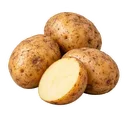 Potatoes
Diets
 Vegetarian
Techniques & equipment