Air Fryer Chips
Cut, soaked, dried, then two stages — 160C to cook the inside and 200C to colour the outside. One tablespoon of oil for 800g of potatoes.
- Prep
- 15 min
- Cook
- 22 min
- Resting
- 30 min
- Total
- 1 hr 7 min
- Serves
- 4
- Revisions
- 1
Ingredients
Serves
Method
Cut the potatoes into 1cm batons, skin on or off as you prefer, keeping them as even as you can manage.
Evenness matters more here than in a deep-fat fryer. Oil surrounds a chip; moving air does not, so a thin baton beside a thick one is burnt by the time the thick one is cooked.
Put the batons in a bowl, cover them with cold water and leave them for 30 minutes.
The soak pulls off the loose surface starch. That starch is what glues chips to each other and to the basket, and what turns gummy rather than crisp.
Drain the batons and dry them thoroughly in a clean tea towel, pressing rather than rubbing so they do not break.
Turn them in a dry bowl with the oil until every baton carries a faint sheen and there is no oil pooled in the bottom.
Heat the air fryer to 160C/320F.
Tip the chips in and cook for 12 minutes, shaking the basket twice. Nothing much appears to happen in this stage — it is cooking the middles through so the hot stage only has to deal with the outside.
Raise the heat to 200C/400F and cook for a further 8 to 12 minutes, shaking every 4 minutes.
They are ready when they are golden with darker edges and clatter against the side of the basket rather than thudding. If they are still bending under their own weight they need another three minutes.
Aim for gold rather than brown. Starchy food taken past golden develops acrylamide, and the standing UK advice on chips and roast potatoes is the palest gold that still tastes cooked.
Tip them into a bowl and toss with the flaky salt. Salt at the end and not before: salt draws water to the surface, and it will soften a crust that took twenty minutes to build.
Nobody has rated this recipe yet.
Sign in to rate this recipe. One rating per person, and you can change it.
What to expect
- Taste
Potato, salt and very little else, which is the whole appeal and also why the potato variety matters more than any seasoning. A floury potato cooked through tastes faintly sweet and nutty; the browned edges add a toasted, almost biscuity note. There is no fried flavour here and it is honest to say so — deep frying contributes flavour compounds from the oil itself, and one tablespoon in a fan oven does not.
- Aroma
Very little for the first twelve minutes, then a distinct smell of baking potato as the starch gelatinises, and finally a toasted, faintly sweet smell in the last few minutes of the hot stage. That last change is a reasonable cue to start checking.
- Texture
Thinner-crusted than a chip-shop chip and noticeably drier. The crust is a shell rather than a layer, so it cracks instead of crunching, and it goes soft faster. Inside is floury and light if the potato was right and the low stage was long enough. The contrast between shell and interior is the thing being aimed at, and it is at its sharpest in the first two or three minutes out of the basket.
- Sound
The basket is the instrument. Raw batons thud when shaken; finished chips clatter, high and light, and that change is more reliable than looking at them through a steamed window. A finished chip snaps audibly when broken in half.
- How the flavour moves
Salt first, since it is sitting on the outside, then the crust's toasted note, then the plain sweetness of the interior. There is almost no finish, which is why chips are eaten with vinegar or something rich — the dish is built to be interrupted.
- Serve it
Eaten within minutes, hot enough to need a moment before the first bite. They lose their crust noticeably within five minutes and entirely within fifteen, so this is not a dish to hold.
- Goes with
Malt vinegar and more salt; mayonnaise, which is the Belgian answer; patatas bravas sauce if you want them to be something else. Anything fried and white — fish above all.
Cook's notes
- Difficulty
Easy, with two steps that feel skippable and are not: the soak and the drying.
- Cost
Very low. 800g of potatoes and a tablespoon of oil.
- Equipment
An air fryer, a sharp knife, a large bowl for soaking, and a clean tea towel for drying. A crinkle cutter or a chip cutter helps with evenness if you own one.
- When to make it
Whenever there are potatoes and twenty minutes.
- Best season
Main-crop potatoes from autumn onward are floury and right for this. New potatoes in early summer are waxy and are not.
- You know it is done when
Golden with darker edges and corners, and a slightly shrunken, faceted look rather than the smooth surface of a raw baton. Nothing should be dark brown. If they bend under their own weight when lifted, they are not there.
- And it feels like
A thin dry crust that gives way to a soft floury interior. A finished chip snaps rather than bends, and the break should reveal a paler, dry-looking crumb rather than something dense and translucent.
- Food safety
Nothing unusual. Soaked potatoes should not be left out at room temperature for hours before cooking; if the soak is extended, do it in the fridge. One thing worth knowing about any potato cooked hot: acrylamide forms in starchy food at high temperatures, and the UK Food Standards Agency advises cooking chips and roast potatoes to the lightest gold colour you find acceptable rather than to a deep brown. That advice is precautionary — acrylamide is classed as a probable human carcinogen largely on animal evidence, and the human evidence at the levels found in food is much less settled than the firmness of the advice suggests. It is worth following because it costs nothing and the colour it asks for is the better chip anyway.
- Where it goes wrong
- Skipping the soak, so surface starch glues the chips to each other and to the basket.
- Not drying them properly afterwards, which is the same mistake with an extra step.
- Using more oil, on the assumption that more oil means more like frying. It pools and fries the bottom layer only.
- Using a waxy potato, which never goes fluffy inside however long it cooks.
- One temperature throughout, giving a brown outside and an underdone middle.
- Salting before cooking, which draws water to the surface and softens the crust.
- Filling the basket, which is the difference between chips and steamed potato batons.
- If it does go wrong
Pale and bendy: overcrowded, or the potatoes went in wet. Stuck together in a mass: the soak was skipped. Dark outside, firm inside: it all ran at 200C. Leathery rather than crisp: too long at the high stage, or the batons were cut too thin for their cooking time. Greasy: too much oil.
- Making it ahead
The batons can soak for up to four hours in the fridge, and can be cut and held in water rather than cut to order. Cooked chips do not wait.
- Keeping it
Not worth storing. Chips are a dish with a fifteen-minute life.
- Reheating
Four minutes at 200C/400F in the air fryer recovers a fair amount, and nothing else does.
- Freezing
Blanched batons can be frozen after the 160C stage and cooked from frozen at 200C for about fifteen minutes, which is a home version of what commercial frozen chips are.
- Leftovers
Chop them into a hash with eggs the next morning rather than trying to bring them back as chips.
- Scaling it
By batch, strictly. A 4-litre basket handles about 400g in a workable layer; 800g is two runs on most machines, and the first batch can be held after the low stage and finished with the second at 200C, which is the neatest way to do it.
- Substitutions
Floury varieties are not interchangeable with waxy ones here. Maris Piper, King Edward, Rooster and Agria are all floury enough; Charlotte and other salad potatoes stay dense and never go fluffy inside. Any neutral oil with a smoke point above 200C works — sunflower, rapeseed, groundnut. Olive oil is fine at 160C and marginal at 200C.
- Dietary swaps
No declared allergens. Vegan, vegetarian, dairy free, egg free, gluten free and nut free as written.
- Shopping for it
Ask for a floury variety by name rather than buying a bag labelled only 'potatoes'. Maris Piper is the most widely available good one in the UK.
- Keeping the cost down
Among the cheapest things it is possible to cook. Buy loose potatoes rather than pre-cut anything.
- Sustainability
A small chamber heated for twenty minutes uses considerably less energy than an oven, and far less oil than a fryer, which also has to be disposed of.
- Nutrition
One tablespoon of oil across four servings, against the considerable amount a chip absorbs in a fryer. This is the case where the appliance's headline claim is genuinely true.
- Worth it?
Not a chip-shop chip and it is dishonest to claim otherwise, but a very good baked chip made with a spoonful of oil, and better than the oven version.
Where it comes from
- Origin
Contested between Belgium and France for the fried potato itself. The chip as a British object belongs to the fish-and-chip shop.
- Also called
Chips in Britain and Ireland; frites in France and Belgium; fries in North America, where the word usually means something thinner.
- What the name means
A chip is a piece chipped off something larger, which is a description of the cut rather than the cooking.
- History
Who first fried a potato in this shape is genuinely disputed — Belgium and France both claim it and neither claim is settled by surviving evidence. In Britain, fried fish and fried potatoes were being sold together in cities by the 1860s, and the fish-and-chip shop became one of the country's most widespread forms of prepared food over the following hundred years. The domestic air fryer version is a product of the last fifteen years and does not pretend to be the same thing.
- Why it matters
In Britain the chip is close to a national default: it is the side dish that requires no explanation, and the chip shop is one of very few genuinely universal food institutions there.
- When it is eaten
Any. There is no occasion a chip is inappropriate to.
- The traditional way
Double frying — once at around 140-160C to cook the interior, once at 180-190C to colour the outside. The two-stage method used here is a direct translation of that into moving air, and the reasoning is identical.
- How it changed
From a fryer full of beef dripping to a fryer full of vegetable oil to, latterly, a basket with a tablespoon in it. Each step has cost something in flavour and gained something in convenience, and it is worth being straightforward about which is which.
- Regional variations
Thickness is the main regional argument: the thick British chip, the thinner Belgian frite, the very thin French fry, and the crinkle cut which exists mainly to increase surface area.
- How this version differs
Two temperature stages, where most air fryer chip recipes give a single temperature. It is the same logic that makes double-frying standard in a chip shop.
- Sources and credit
Double frying is standard professional practice and belongs to nobody.
Related recipes
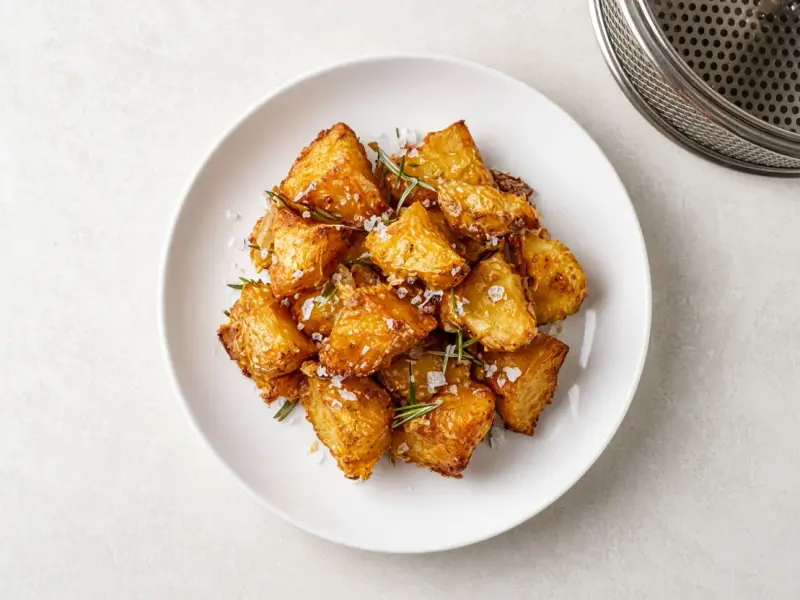 Air Fryer Roast Potatoes
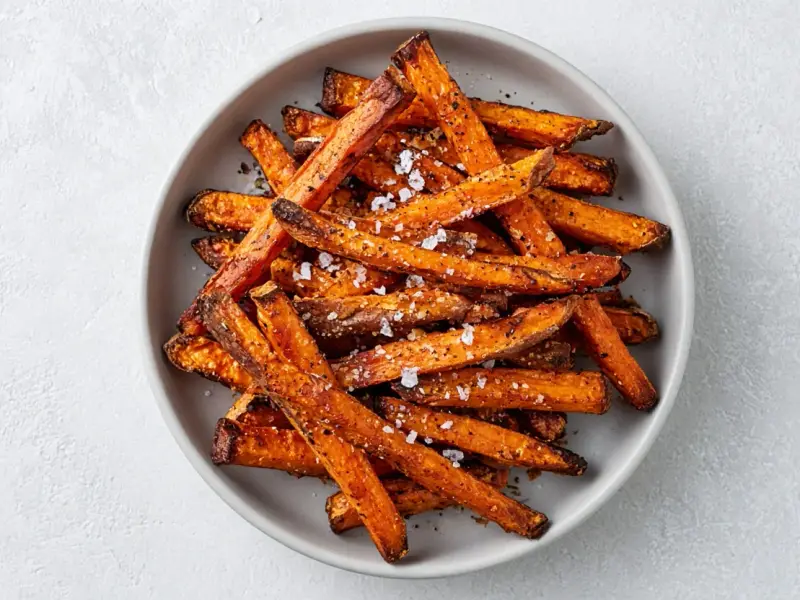 Sweet Potato Fries
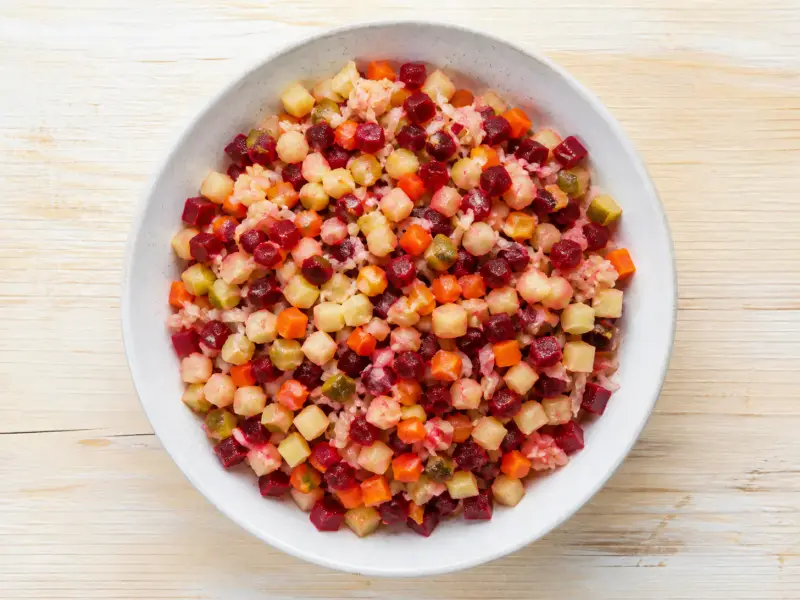 Vinegret
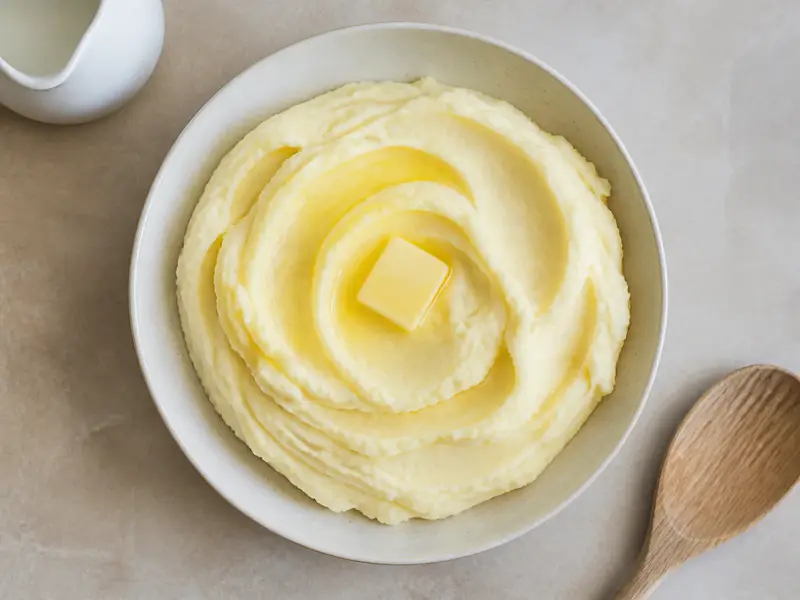 Buttery Mashed Potato
 Air Fryer Frozen Chips
 Air Fryer Halloumi
Categories
Cuisines
 British
Courses & dish types
 Side dishes
Main ingredients
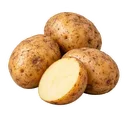 Potatoes
Diets
 Vegan
 Vegetarian
Techniques & equipment