Honey Glazed Ham
A gammon joint simmered gently with onion and spices, then scored, studded with cloves and roasted under a honey and mustard glaze until it lacquers and catches dark at the edges.
- Prep
- 20 min
- Cook
- 2 hr 40 min
- Resting
- 30 min
- Total
- 3 hr 30 min
- Serves
- 10
- Revisions
- 1
Allergens
- Mustard
Named from the ingredients as written, including those carried in from sub-recipes. This is not a guarantee — check the labels on what you actually buy, and note that a product’s recipe can change.
Ingredients
Serves
Method
Put the gammon in a large pan, cover it with cold water and bring it to the boil.
Drain and discard the water, which takes away excess salt and scum.
Return the gammon to the pan with the onion, bay leaves, peppercorns and cinnamon, and cover with fresh cold water.
Bring it back to a bare simmer, partly cover, and cook for 2 hours, with the water barely trembling.
Heat the oven to 200C/180C fan.
Lift the gammon onto a board and leave it for 10 minutes, until cool enough to handle.
Cut away the rind with a sharp knife, leaving an even layer of fat about 5mm thick.
Score the fat in a 2cm diamond pattern, cutting through the fat but not into the meat.
Push a clove into the centre of each diamond.
Simmer the honey, mustard, sugar and orange juice in a small pan for 2-3 minutes, until syrupy.
Set the ham in a foil-lined roasting tin and brush it with half the glaze.
Roast for 15 minutes.
Brush with the rest of the glaze and roast for 15-20 minutes more, until it is deep amber, bubbling and catching dark at the edges of the diamonds, and the centre reads 70C. Check every 5 minutes towards the end.
Rest for 20 minutes before carving into thin slices.
Nobody has rated this recipe yet.
Sign in to rate this recipe. One rating per person, and you can change it.
What to expect
- Taste
Salty, savoury and porky, with the smoky depth of a smoked joint, under a sticky glaze that is sweet with honey and brown sugar, sharpened by mustard and orange, and warmly spiced by clove and cinnamon.
- Aroma
Clove and honey caramelising, orange, and roasting pork fat.
- Texture
Tender, dense and moist meat, a soft layer of fat, and a sticky, slightly chewy, caramelised crust.
- Sound
The glaze bubbles and spits in the tin.
- How the flavour moves
Sweet sticky glaze first, then the salty, savoury ham, with mustard heat and clove warmth coming through in the middle and a long, savoury, smoky finish.
- Serve it
Warm as a centrepiece, or cold the next day.
- Goes with
Baked mac and cheese, sweet potato casserole, green beans, Parker House rolls, mustard and pickles.
Cook's notes
- Difficulty
Easy, but the glazing needs watching.
- Cost
Moderate; ham goes a long way.
- Equipment
A very large pan, a sharp knife, a foil-lined roasting tin, a pastry brush and a probe thermometer.
- When to make it
Thanksgiving, Christmas and Easter.
- You know it is done when
A deep amber, glossy, bubbling glaze, darker at the edges of each scored diamond.
- And it feels like
The meat is tender and moist, slicing cleanly without falling apart.
- Food safety
Gammon is raw and must reach 70C in the centre. Refrigerate leftovers within 2 hours.
- Where it goes wrong
- Boiling hard rather than simmering, which makes the meat stringy.
- Cutting through the fat into the meat when scoring.
- Leaving the glaze unwatched, so it burns.
- Skipping the rest, so it is hard to carve.
- If it does go wrong
Too salty: the first boil and drain were skipped, or the joint needed soaking overnight. Glaze not sticking: the fat was wet; pat it dry before glazing. Glaze burning: cover the darkest areas with foil.
- Making it ahead
Simmer the gammon a day ahead and refrigerate; bring it to room temperature for an hour, glaze and roast for 10-15 minutes longer.
- Keeping it
Keeps up to 5 days wrapped in the fridge.
- Reheating
Usually eaten cold; slices can be warmed in a covered dish with a splash of water.
- Freezing
Sliced ham freezes well for up to 2 months.
- Leftovers
Sandwiches, pea soup, omelettes, macaroni cheese and fried rice.
- Scaling it
Adjust the simmering time at 20 minutes per 500g plus 20 minutes.
- Substitutions
Maple syrup for the honey. Wholegrain mustard for Dijon. A fully cooked American ham skips the simmering: score and glaze it, then roast at 160C/140C fan until the centre reaches 60C, glazing for the last 30 minutes.
- Dietary swaps
Contains mustard. Gluten free if the mustard is. Not suitable for anyone avoiding pork.
- Shopping for it
Ask the butcher whether the gammon needs soaking.
- Keeping the cost down
A large joint feeds a crowd and provides leftovers for days. The cooking liquid makes a good base for pea soup, though it can be salty.
- Sustainability
Higher-welfare pork costs more and is worth asking about.
- Nutrition
High in protein and salt.
- Worth it?
Little effort for a centrepiece that also feeds you for days. Watch the last ten minutes in the oven.
Where it comes from
- Origin
European curing traditions, glazed in British and American holiday cooking.
- Also called
Glazed ham.
- What the name means
Ham originally meant the back of the knee and thigh; it came to mean the cured leg of pork. Gammon is the British term for the raw cured joint.
- History
Pigs slaughtered in late autumn provided cured hams for winter feasts across northern Europe. In the American South, country hams were a core part of the food economy, and glazed ham became a standard holiday main course.
- Why it matters
The Christmas ham in Britain and Scandinavia; the Easter ham in the US, and a second centrepiece at Southern Thanksgivings.
- When it is eaten
Christmas, Easter and Thanksgiving.
- The traditional way
Simmering or baking a cured joint, then glazing with sugar and spice.
- How it changed
Ready-cooked spiral-sliced hams with a sweet glaze became a popular American holiday purchase from the mid-twentieth century.
- Regional variations
Coca-Cola glazed ham in the US and Britain, pineapple and clove ham, Swedish julskinka coated with mustard and breadcrumbs.
- How this version differs
Starts from raw gammon rather than a ready-cooked ham.
- Sources and credit
No single creator. The spiral-sliced honey-baked ham is associated with Harry Hoenselaar and the HoneyBaked Ham company in Detroit in the 1950s.
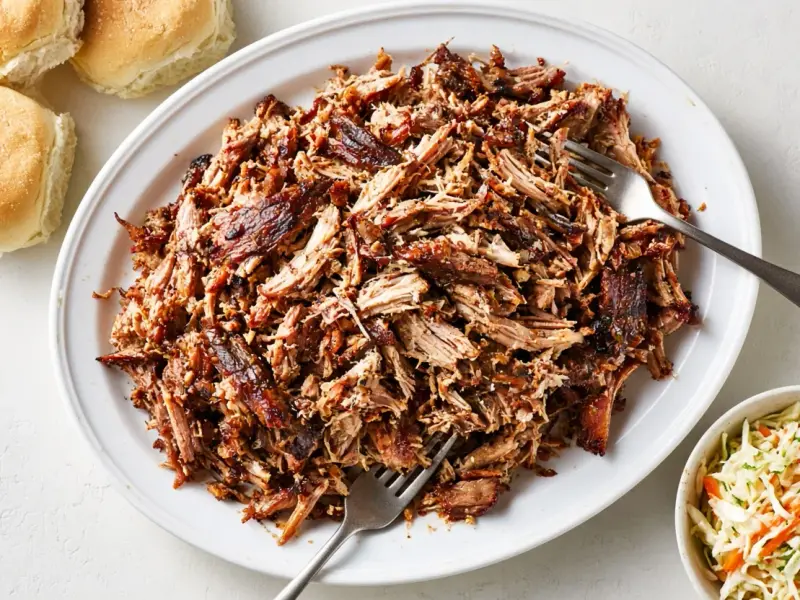 Slow Cooker Pulled Pork
 Beef Tacos
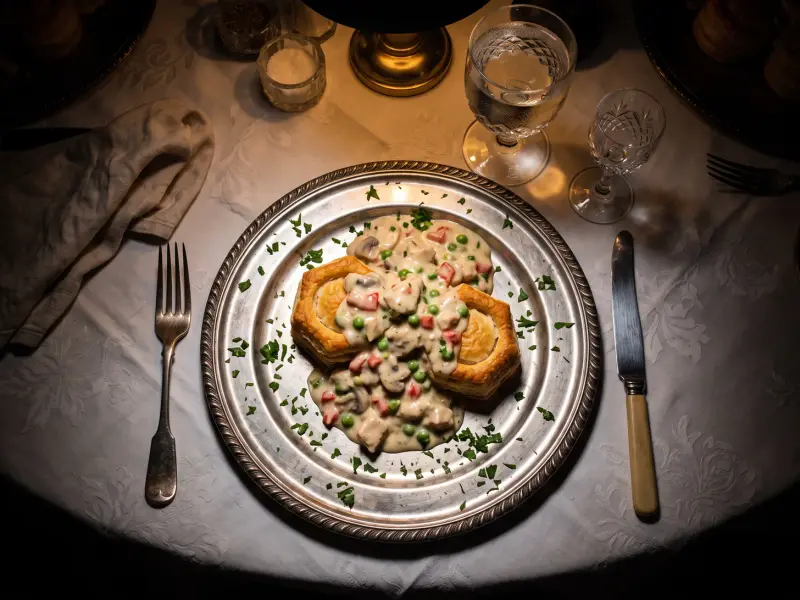 Chicken à la King
 Chicken and Chorizo Rice
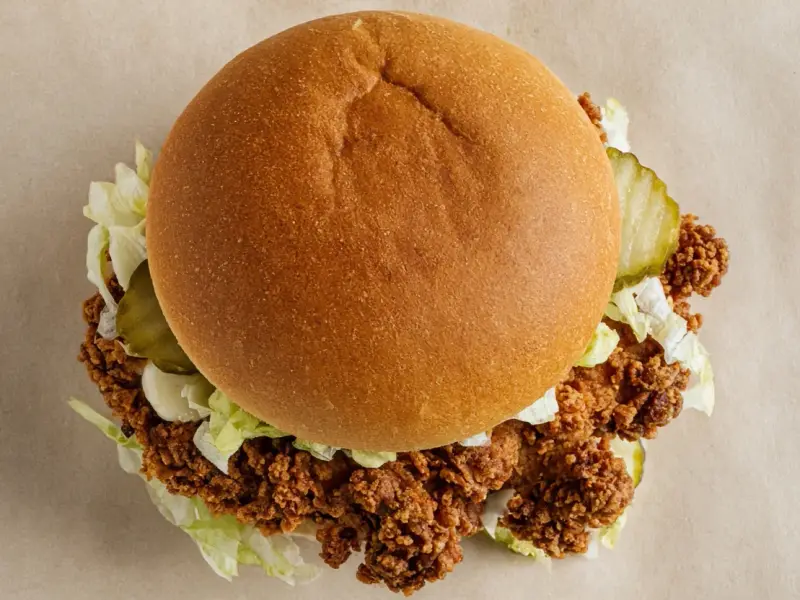 Chicken Burger
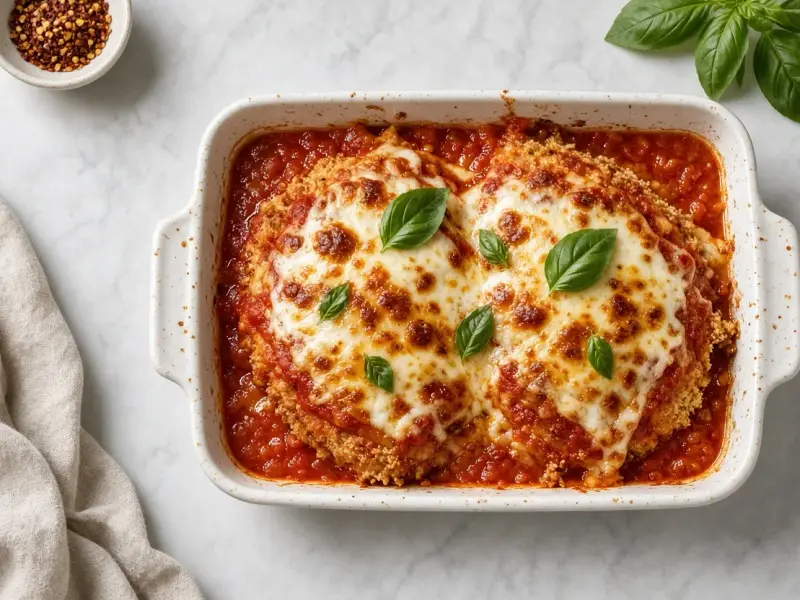 Chicken Parmigiana
 American
 Dinner
 Main courses
 Pork