Shepherd's Pie
Lamb, which is the only thing that makes it a shepherd's pie. Cooked longer than the beef version because lamb mince needs it, and the fat is poured off before the stock goes in.
- Prep
- 25 min
- Cook
- 2 hr
- Resting
- 10 min
- Total
- 2 hr 35 min
- Serves
- 6
- Revisions
- 1
Allergens
- Celery
- Cereals containing gluten
- Milk
- Sulphites
Named from the ingredients as written, including those carried in from sub-recipes. This is not a guarantee — check the labels on what you actually buy, and note that a product’s recipe can change.
Ingredients
Serves
Filling
Topping
Method
Filling
Heat the oil in a wide casserole over high heat and brown the lamb in two batches, pressing each flat and leaving it for 3 minutes before stirring.
Lift the meat out and pour off all but two tablespoons of the fat. Lamb renders far more than beef, and a pie made without pouring it off has a greasy layer under the mash.
Cook the onion, carrot and celery in the remaining fat over medium heat for 12 minutes, until soft.
Add the garlic and the rosemary and cook for 1 minute, until the rosemary smells green rather than dusty.
Stir in the flour and tomato purée and cook for 2 minutes until sandy and darkened.
Add the wine, scrape the base and let it reduce to almost nothing.
Return the lamb with the stock, Worcestershire sauce and bay, and bring to a simmer.
Cook uncovered at a lazy simmer for 1 hour. Lamb mince is coarser and tougher than beef and it wants the extra quarter of an hour.
Stir in the peas, fish out the bay, and taste for salt and pepper.
Topping
Tip into a 2.5 litre dish and cool for 20 minutes before topping.
Heat the oven to 200C fan.
Spoon the mash over in heaps from the edges inwards, join them up and seal the topping to the rim all the way round.
Rough the surface up with a fork and dot with butter.
Bake for 35 to 40 minutes, until deep gold on the ridges and bubbling at the edges.
Rest for 10 minutes before serving.
Nobody has rated this recipe yet.
Sign in to rate this recipe. One rating per person, and you can change it.
What to expect
- Taste
Sweeter and more distinctly meaty than the beef version — lamb has a characteristic slightly grassy richness that the rosemary picks up rather than covers. The sweetness of the carrot is more noticeable against it.
- Aroma
Roast lamb and rosemary, which is a stronger and more specific smell than the beef version produces.
- Texture
Coarser than beef mince in the mouth, in a good way — you can feel the grain of the meat. The mash stays the calm half.
- Sound
The crust cracking under a spoon, and the filling still working audibly for a minute after it leaves the oven.
- How the flavour moves
Butter first, then lamb, then rosemary arriving late and staying. The finish is longer and more savoury than the beef version's.
- Serve it
Very hot through the middle. Rest it.
- Goes with
Buttered greens, cabbage, or peas again. Mint sauce on the side is not traditional in the pie but is not wrong beside it. A red with some grip.
Cook's notes
- Difficulty
Easy.
- Cost
Mid. Lamb mince costs noticeably more than beef.
- Equipment
A wide casserole, a 2.5 litre baking dish.
- When to make it
A weekend, or a weeknight with mash already made.
- Best season
Autumn and winter, and a natural way to use lamb outside the spring roast.
- You know it is done when
Deep gold ridges and filling bubbling at the corners. The filling itself should look glossy rather than greasy — if there is a visible fat layer, not enough was poured off.
- And it feels like
The meat soft rather than springy, and the filling holding a cut edge.
- Food safety
Nothing unusual, and it is cooked twice. Lamb renders a lot of fat and the poured-off fat is hot — pour it into a heatproof container, not down the sink, where it sets.
- Where it goes wrong
- Not pouring off the lamb fat, which leaves a greasy layer under the mash.
- Cooking it for the beef version's 45 minutes, which leaves the meat chewy.
- Rosemary left in sprigs, so people find needles.
- Topping a hot filling, so the layers merge.
- Adding cheese out of habit, which fights the lamb.
- If it does go wrong
Greasy: chill the filling and lift the set fat before topping. Chewy: it needed the full hour and can have another 20 minutes. Watery: reduce further with the lid off. Bland: lamb needs more salt than beef does, and the Worcestershire sauce is load-bearing.
- Making it ahead
Assemble a day ahead unbaked, or freeze it. Both are better than reheating a baked one.
- Keeping it
Three days in the fridge, covered.
- Reheating
Covered at 180C fan for 25 minutes, then uncovered for 10.
- Freezing
Freezes well assembled and unbaked for three months. From frozen, covered, an hour at 180C fan then 20 minutes uncovered at 200C.
- Leftovers
Fry slabs of it in a dry pan until crisp on both faces.
- Scaling it
Doubles cleanly.
- Substitutions
Cornflour instead of flour for a gluten-free version, slaked and added with the stock. Stout works instead of red wine. Half lamb and half beef makes a milder pie and, strictly, neither dish.
- Dietary swaps
Contains milk from the mash, gluten from the flour, celery, and sulphites from the wine and stock. Gluten free with cornflour and a checked stock. Egg free and nut free as written.
- Shopping for it
Ordinary lamb mince. Ask for it coarsely minced if there is a butcher counter.
- Keeping the cost down
Lamb mince is the expensive part; half lamb and half beef cuts the cost substantially, at the price of the name.
- Sustainability
Lamb's greenhouse gas footprint per kilogram is in the same region as beef's and by some measures higher, so this is not the low-impact member of the pair. British and Irish lamb is largely pasture-raised on land that grows little else, which is a real argument about land use and is not the same as an argument about emissions; both things are true and neither cancels the other. Practically: this dish takes a lentil substitution as well as the beef version, and buying less lamb less often is more effective than any sourcing choice within it.
- Nutrition
Rich. Pouring off the fat removes a real amount of it and improves the dish at the same time.
- Worth it?
Pouring the fat off is thirty seconds and it is the single thing that makes this better than most versions of it.
Where it comes from
- Origin
Britain, nineteenth century.
- Also called
Shepherd's pie.
- Said out loud
Straightforward.
- What the name means
A shepherd keeps sheep, so the name is a claim about the meat and the whole basis of the modern distinction from cottage pie.
- History
Printed uses of the name date from the 1870s, roughly eighty years after cottage pie. Both dishes descend from the same practice of covering chopped cooked meat with mashed potato instead of pastry, which became widespread once potatoes were cheap. In Ireland and Scotland the dish is equally established and the naming convention is the same.
- Why it matters
Domestic British and Irish cooking at its most recognisable, and one of the dishes most often cited when people are asked what British food is.
- When it is eaten
Family dinner, cold weather, and cooking for somebody who is unwell or has just moved.
- The traditional way
Chopped or minced lamb under mashed potato, browned in the oven.
- How it changed
From leftover roast mutton to fresh lamb mince, and from a plain top to a forked and browned one.
- Regional variations
In Ireland it is often made with stout in place of wine. Some versions add swede to the mash, which is worth trying.
- How this version differs
The rendered lamb fat is poured off before the stock goes in, which most recipes do not mention and which is the difference between a rich pie and a greasy one. The simmer is a full hour rather than the beef version's 45 minutes, for a real reason rather than symmetry.
- Sources and credit
None.
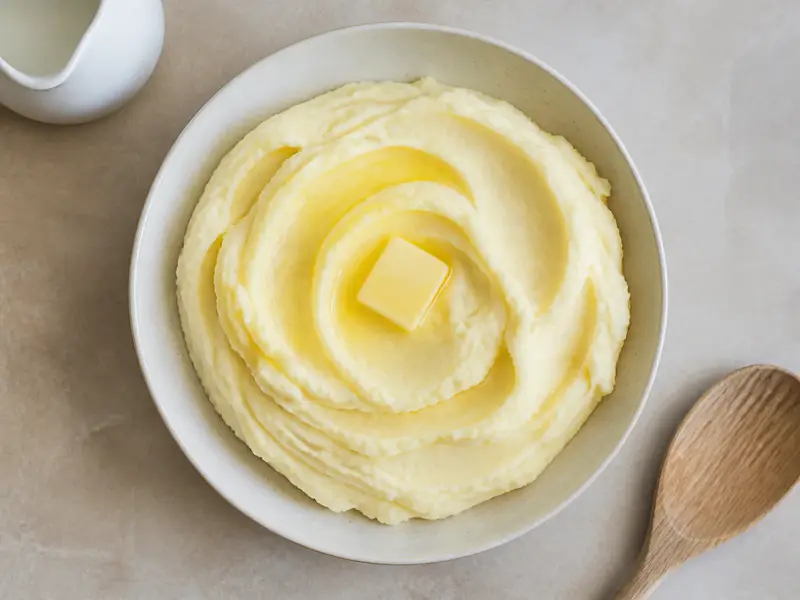 Buttery Mashed Potato
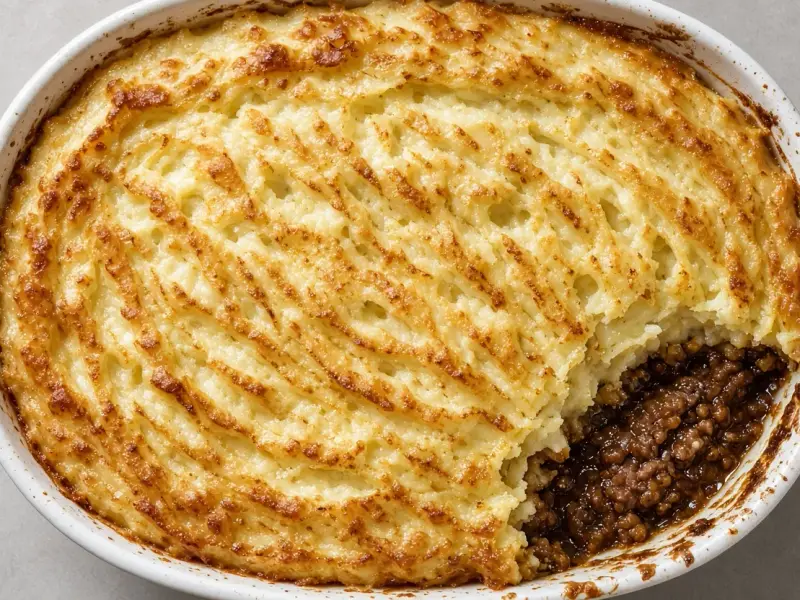 Cottage Pie
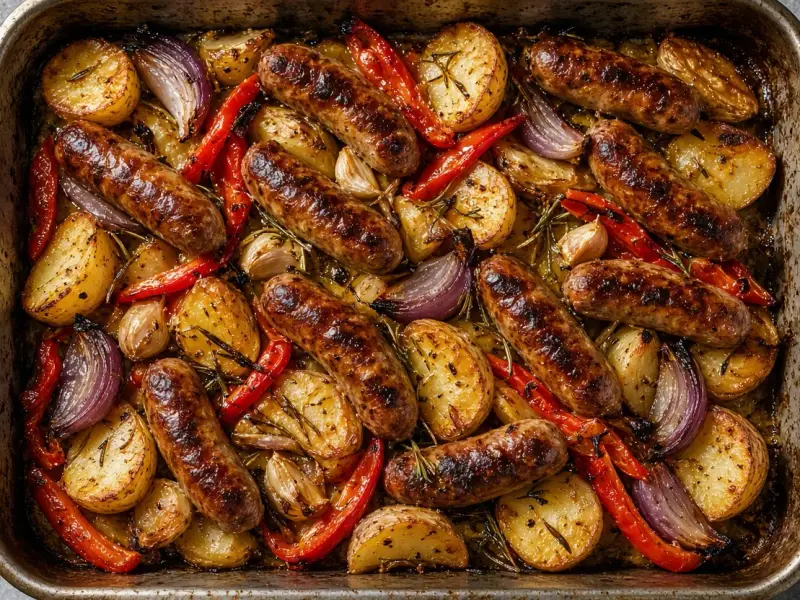 Sausage and Potato Traybake
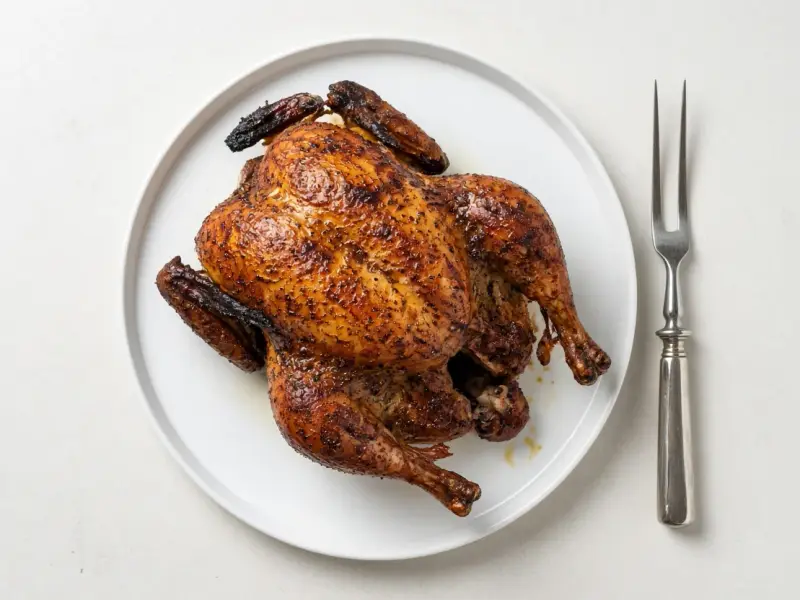 Air Fryer Whole Chicken
 Chicken and Mushroom Pie
 Chicken Thigh and Potato Traybake
 Macaroni Cheese
 British
 Main courses
 Dinner
 Potatoes