Vegetable Stock
A light stock of leek, carrot, celery and onion simmered for only forty minutes, because long cooking turns vegetable stock bitter.
- Prep
- 15 min
- Cook
- 1 hr
- Total
- 1 hr 15 min
- Serves
- 8
- Revisions
- 5
Allergens
- Celery
Named from the ingredients as written, including those carried in from sub-recipes. This is not a guarantee — check the labels on what you actually buy, and note that a product’s recipe can change.
Ingredients
Serves
Method
Split the leeks lengthways and wash between the layers under the tap, opening each one out with your thumbs. Grit sits down in the middle of a leek, and nothing you do later takes it back out of the stock.
Cut the leeks, carrots and celery into rough 3cm lengths — small enough to give up what they have in forty minutes, large enough not to break down into the liquid.
Leave the onions in their skins. The papery brown layers are what tint the stock gold, and a pale stock looks like water once it is in the bowl.
Keep the brassicas out of the pot. Cabbage, cauliflower, broccoli, sprouts and all their trimmings turn sulphurous over a simmer, and even a small handful will dominate everything else in there.
Keep potato out as well. The starch it sheds clouds the stock, and it will neither settle nor strain out.
Warm the oil in a tall heavy pan over medium heat.
Add the leek, carrot, celery, onion and garlic and turn them through the oil.
Cover and sweat for 10 minutes, stirring once or twice, until the leeks have gone slack and the pan smells sweet, with no colour on anything.
Pour in the 2.5 litres of cold water.
Add the bay leaves, parsley, thyme and peppercorns.
Bring it up over about 10 minutes, to the point where the first lazy bubbles break the surface.
Adjust the heat until one bubble breaks somewhere on the surface every second or two, and no faster, so the liquid stays clear rather than churning cloudy.
Simmer uncovered for 40 minutes and no longer.
Hold to the forty minutes even though the chicken stock in this collection asks for three or four hours. There is no collagen here that needs the time: everything the vegetables have is out inside forty minutes, and past about an hour they start giving up bitterness instead — a dull, faintly cabbagey edge that no amount of reducing or seasoning covers up.
Do not salt it at any point, for the same reason the chicken stock is left unsalted. It exists to be reduced and seasoned in whatever it goes into.
Taste it at forty minutes. It should be sweet and clearly vegetal rather than tasting of warm water.
Set a sieve over a large bowl and ladle the stock through it.
Press nothing against the mesh, which pushes softened pulp through and turns a clear stock cloudy.
Discard the vegetables, which have nothing left in them.
Divide the strained stock between two or three shallow containers rather than leaving two litres to stand in one deep bowl, where the middle of it stays warm for hours.
Stand the containers in a sink of cold water with ice in it, filled to just below their rims.
Stir the stock every few minutes and change the sink water once it has warmed through.
Aim to have it below 21C/70F within two hours of it coming off the heat, which is what the shallow containers and the ice are for.
Move it to the fridge at that point, where it should drop below 5C/41F within a further four hours.
Leave it uncovered until it is cold and cover it after that.
Expect it to stay liquid in the fridge rather than setting to a soft jelly the way the chicken stock does. There is no gelatin in it to set, and nothing has gone wrong.
Keep it in the fridge for up to four days, or freeze it in portions for three months.
It makes about 2 litres: a pan of the minestrone in this collection with 500ml to spare, the sweetcorn chowder twice, or the roast tomato soup five times over.
Nobody has rated this recipe yet.
Sign in to rate this recipe. One rating per person, and you can change it.
What to expect
- Taste
Sweet, vegetal and light. Carrot and leek supply most of the sweetness, celery brings salt and a green bitterness, and onion adds depth. Parsley stalks are more assertive than the leaves. Thyme is resinous. Peppercorns give a slow warmth rather than heat, since they are whole and only simmered. There is no salt at all, deliberately, and a stock tasted alone therefore seems flat — that is correct, because it exists to be reduced and seasoned inside something else, and salting it now means every dish it goes into is over-seasoned before you start.
- Aroma
Sweet and vegetal, dominated by the leek and the carrot. If it smells of cabbage, something brassica got in and the batch is spoiled — that smell does not cook out and is the reason for the exclusion.
- Texture
Thin, and it should be. Chicken stock sets to a jelly in the fridge because of the gelatine; vegetable stock has none and stays liquid, which is not a failure and is the reason vegetable soups need a starch or a purée for body in a way meat-based ones do not.
- Sound
Almost nothing, and silence is the target. One bubble every second or two is the correct sound, and anything more energetic means the heat is too high.
- How the flavour moves
Sweetness first and then a green vegetal note, finishing clean and short. There is no long finish because there is no fat and no gelatine, which is precisely what makes it useful — it carries other flavours rather than adding its own.
- Serve it
Used hot, stored cold, and cooled fast — see the safety note, which is the only part of this recipe with any urgency in it.
- Goes with
Anything that wants a light base. Risotto, where a meat stock would be too assertive. Vegetable soups. Braises. Grains cooked by absorption. It is worth noting where it is not the right choice: a stock this light disappears entirely in a long meat braise, and in those a chicken stock or water is generally better.
Cook's notes
- Difficulty
Easy. The judgement is knowing when to stop and what to keep out.
- Cost
Almost nothing, and less than nothing if you use trimmings you would otherwise throw away.
- Equipment
A tall heavy pan, a sieve, and several shallow containers for cooling. The shallow containers are a genuine safety requirement rather than a convenience.
- When to make it
Whenever. Freeze it in portions and it is always available.
- Best season
None.
- You know it is done when
The stock should be clear and pale gold. Cloudiness means it boiled or something was pressed through the sieve.
- And it feels like
It stays liquid in the fridge rather than setting to a soft jelly, because there is no gelatine in it. Nothing has gone wrong.
- Food safety
The cooling is the part that matters and it is worth doing properly. Two litres of hot liquid left standing in a deep bowl stays warm in the middle for hours, and that is the temperature range in which bacteria multiply fastest. Divide it between shallow containers, stand them in a sink of iced water, stir every few minutes and change the water when it warms. The target is below 21°C within two hours of coming off the heat, and below 5°C within a further four in the fridge. Leave it uncovered until cold and cover it afterwards.
- Where it goes wrong
Simmering it for hours, which is the fault and makes it bitter. Putting brassicas in, which makes it sulphurous. Putting potato in, which clouds it. Salting it, which removes your ability to reduce it later. Pressing the vegetables against the sieve, which pushes pulp through. Boiling rather than simmering. And leaving it to cool in one deep container, which is the only genuine safety issue here.
- If it does go wrong
Bitter: it went too long, or a brassica got in. Nothing recovers it. Cloudy: it boiled, or it was pressed. It will still taste fine. Tastes of warm water: not enough vegetable for the volume of water, and the fix is to reduce it. Smells of cabbage: as above, and start again. Will not set in the fridge: it is not supposed to.
- Making it ahead
It is entirely make-ahead. Four days refrigerated, three months frozen.
- Keeping it
Four days in the fridge, or three months frozen in portions. Freezing in ice-cube trays gives useful small quantities.
- Reheating
As needed.
- Freezing
Very well. Reduce it by half first if freezer space is short, and dilute on use.
- Leftovers
It is nothing but leftovers by design. The spent vegetables have genuinely nothing left in them and go on the compost.
- Scaling it
Freely. A larger pot takes longer to come up and longer to cool, which makes the cooling protocol more important rather than less.
- Substitutions
Fennel trimmings, parsnip, mushroom stalks and tomato are all good additions. Parsley stalks in particular are worth saving specifically. What does not belong: any brassica — cabbage, cauliflower, broccoli, sprouts and all their trimmings — which turn sulphurous over a simmer and will dominate everything else in the pot; and potato, whose starch clouds the stock and will neither settle nor strain out.
- Dietary swaps
Vegan, vegetarian, dairy-free, gluten-free and nut-free. Contains celery, which is a declarable allergen and is very easily overlooked in a stock.
- Shopping for it
Nothing needs buying. Onion skins are the one thing worth keeping deliberately.
- Keeping the cost down
It is free if you use trimmings. Keep a bag in the freezer for leek tops, carrot peelings, celery leaves, onion skins, parsley stalks and mushroom stems, and make stock when it is full. That is genuinely the best thing in this dossier and it costs nothing at all.
- Sustainability
As good as it gets — it turns something that would be thrown away into an ingredient, uses no packaging, and replaces a commercial product.
- Nutrition
Around 15 calories per 250ml. It contributes flavour rather than nutrition, and it contains no salt at all, which makes it far better than any commercial cube for anybody watching sodium.
- Worth it?
Worth it, and it costs nothing. Keep a bag in the freezer for trimmings and make it when the bag is full: an hour of largely unattended cooking produces two litres of something better than any cube, with no salt in it, that freezes for three months. Stop at forty minutes and keep the cabbage out.
Where it comes from
- Origin
Professional French kitchens, as the vegetarian member of the stock family.
- Also called
Bouillon de légumes, or fond de légumes.
- Said out loud
As it looks.
- What the name means
Stock is from the sense of a store or reserve. The French fond means base or foundation, which is a more accurate description of what it is for.
- History
The classical French stock repertoire is built on bones, and the technique is entirely about collagen: long slow cooking hydrolyses it into gelatine, which is what gives a good stock its body and its mouth-coating quality. A vegetable stock has no access to any of that, which is why it behaves so differently and why applying meat-stock timings to it produces something worse rather than better. The forty-minute limit is not a shortcut — it is the point at which extraction has finished and degradation begins, and what degrades first is the sulphur compounds in the allium and brassica families, which turn from sweet to acrid. That is also why the brassica exclusion matters: cabbage and its relatives contain glucosinolates that break down under prolonged heat into compounds that smell and taste distinctly of overcooked cabbage, and a handful of sprout trimmings will define an entire pot.
- Why it matters
Its significance is practical. The rise of vegetarian cooking in professional kitchens over the last forty years made a good vegetable stock necessary, and a great deal of what is now understood about how to make one is quite recent.
- When it is eaten
Whenever there are vegetables and a pan.
- The traditional way
Sweating first, cold water, bare simmer, no pressing at the sieve. All four are borrowed directly from meat stock practice and all four still apply.
- How it changed
Commercial stock cubes and pastes have largely displaced homemade stock in domestic kitchens, and they are a genuinely different product — mostly salt, with flavourings, and unable to be reduced without becoming inedible. That last point is the practical case for making your own.
- Regional variations
Japanese kombu dashi is the great alternative approach — a stock made from kelp alone, steeped rather than boiled, taking twenty minutes and delivering far more umami than any European vegetable stock. It is worth knowing about as a different answer to the same problem.
- How this version differs
It is orthodox. What it adds is the explicit list of what to keep out, and the cooling protocol, which is the part of stock-making most likely to cause an actual problem and is almost never written down.
- Sources and credit
None. Classical technique.
Related recipes
Used in 5 recipes
Where this turns up as an ingredient.
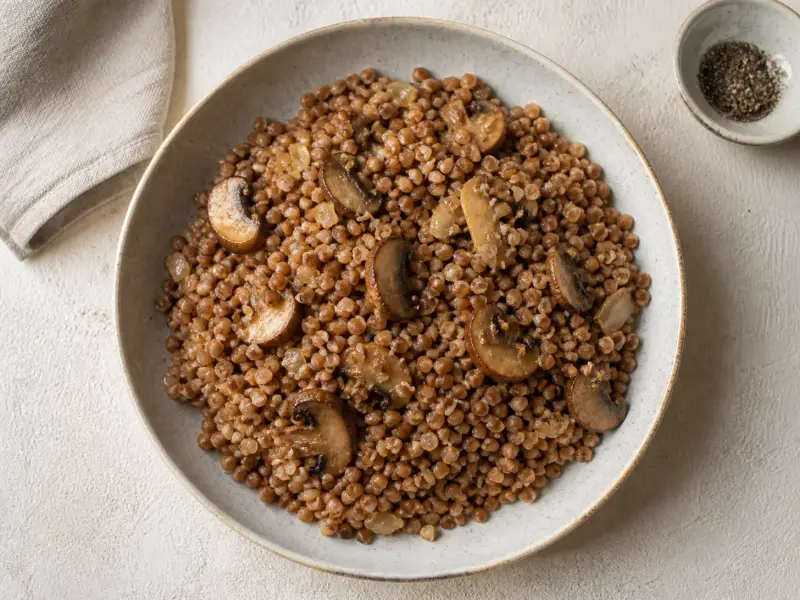 Buckwheat Kasha with Mushrooms
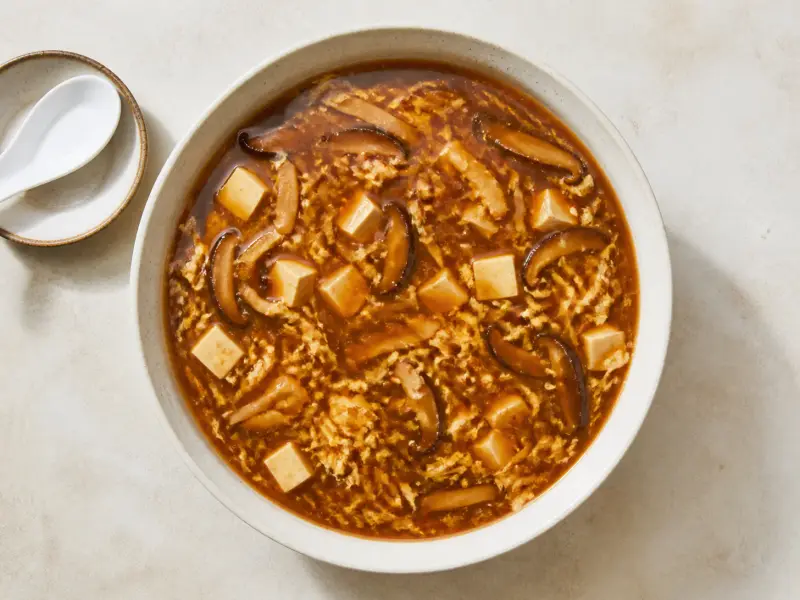 Hot and Sour Soup
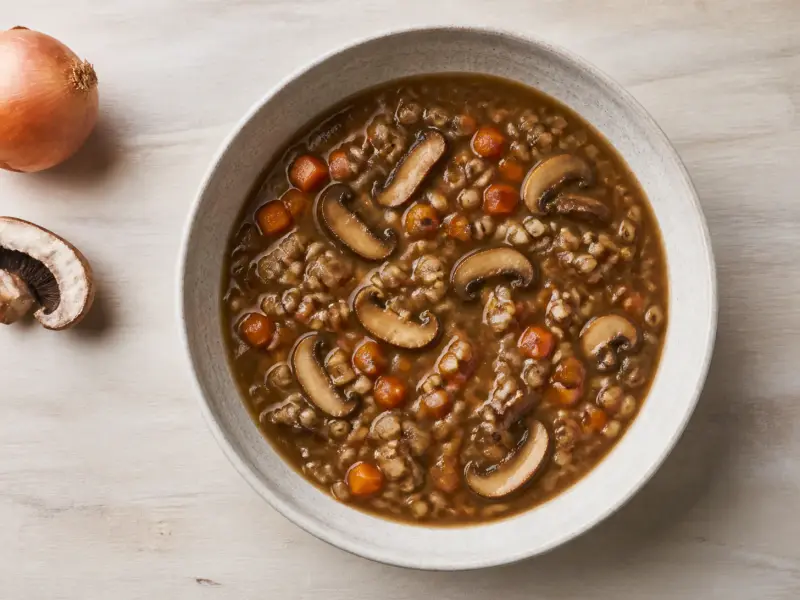 Mushroom and Barley Soup
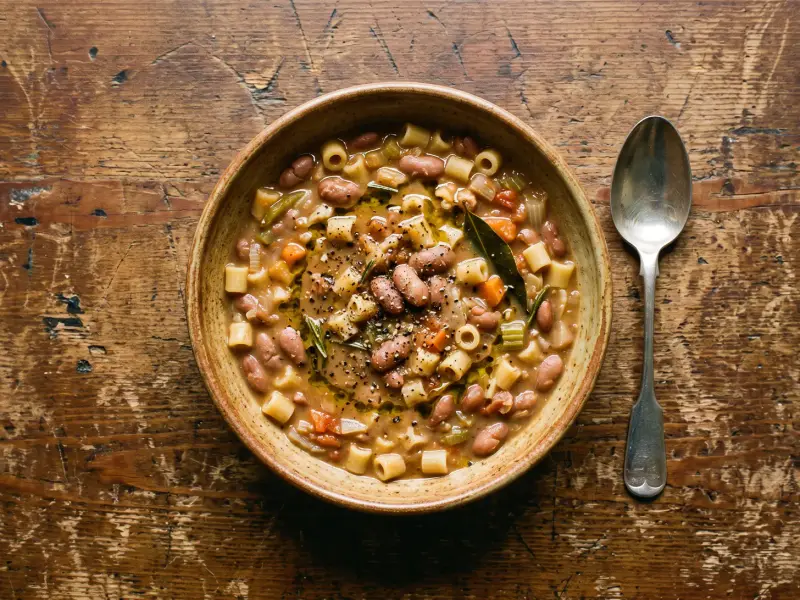 Pasta e Fagioli
 Roast Squash and Sage Soup
 Quick Pickled Red Onions
 Wet Brine for Chicken and Pork
 Kvass
Kvass Sauerkraut
 Garam Masala
 Basil Pesto
Categories
Diets
Other