Shortbread
Three parts flour to two of butter and one of sugar, with semolina for grit, baked low and slow so it stays short rather than snapping crisp.
- Prep
- 20 min
- Cook
- 45 min
- Resting
- 1 hr 15 min
- Total
- 2 hr 20 min
- Serves
- 12
- Revisions
- 1
Allergens
- Cereals containing gluten
- Milk
Named from the ingredients as written, including those carried in from sub-recipes. This is not a guarantee — check the labels on what you actually buy, and note that a product’s recipe can change.
Ingredients
Serves
Method
Butter a 20cm round loose-bottomed tin.
Beat the softened butter and the caster sugar together for 2-3 minutes, until pale and creamy but not whipped to a fluff.
Keep the beating short. Shortbread wants a dense crumb, and a lot of whipped-in air makes it rise in the tin and then crack apart as it cools.
Sift the flour, the semolina and the fine salt over the butter.
Work them in with a wooden spoon and then with one hand, until the mixture clumps and comes together as a single soft dough.
Stop the moment it holds together. Every extra minute of working develops gluten, and gluten is exactly what shortbread must not have: it is the difference between short and sandy, and chewy.
Press the dough into the tin with your knuckles and level the surface with the back of a spoon.
Prick the surface all over with a fork, going right down to the base, so steam has a way out instead of lifting the middle.
Score 12 wedges with a knife, cutting about halfway down.
Crimp the outside edge between finger and thumb all the way round.
Chill for 30 minutes, until the dough is firm to a fingertip. Cold dough holds its scored lines and its crimped edge; dough that goes into the oven soft spreads up the sides of the tin and loses both.
Heat the oven to 150C/300F while it chills.
Bake for 40-50 minutes, until the shortbread is an even pale biscuit colour with a faintly darker rim, and firm rather than soft when pressed in the middle.
Bake it low and long. At a higher temperature the edge browns well before the centre has dried out, and you get a crisp rim around a middle that is still soft and greasy.
Scatter the demerara sugar over the hot surface.
Cut down through the scored lines while the shortbread is still hot and soft.
Leave the wedges in the tin to cool completely, at least 45 minutes. They are fragile until they are cold, and they do most of their crisping on the way down.
Keep them in an airtight tin for up to two weeks. There is no egg and almost no water in this, which is why it keeps far longer than any cake.
Nobody has rated this recipe yet.
Sign in to rate this recipe. One rating per person, and you can change it.
What to expect
- Taste
Butter, and then more butter. There is nothing else in shortbread to taste, which is why the quality of the butter is the only sourcing decision worth making. The sweetness is low for a biscuit and deliberately so, and the salt is high enough to be a definite presence — a shortbread with too little salt tastes like fat and flour and nothing else. There is a faint toasted-cereal note from the long slow bake and from the semolina, and the demerara on top adds a clean granular sweetness right at the start of the bite.
- Aroma
Warm butter and very little else, which fills a room slowly over the forty-five minutes it bakes rather than arriving in a rush. Once cold it smells of almost nothing, which is part of why it is a biscuit tin food rather than a fresh-baked one.
- Texture
The entire point, and it is a very specific thing. It should be short — meaning it fractures cleanly and crumbles rather than snapping or bending — and it should be faintly sandy on the tongue from the semolina, and it should melt rather than dissolve, because a third of it is butterfat. There is no chew anywhere and there should be no hardness. A shortbread that snaps like a digestive has had its gluten developed.
- Sound
A quiet, dull fracture rather than a snap. That difference is audible and is a reliable test of whether it worked.
- How the flavour moves
Sugar first from the demerara, then a wall of butter through the middle that lasts a long time and does not develop. Salt arrives late and is what makes the second bite as good as the first. The finish is buttery and slightly toasted and stays in the mouth for a while, which is why one wedge is enough and why it goes with tea rather than needing anything else.
- Serve it
Room temperature. Warm, it has not finished setting and falls apart; refrigerated, the butterfat is solid and the melt disappears entirely, which is most of what makes it good.
- Goes with
Tea, and it is close to purpose-built for it. Also very good with a strong cheese, which is a Scottish habit rather than an English one, and with a dessert wine or a whisky.
Cook's notes
- Difficulty
Easy, with one rule that has to be obeyed rather than understood: stop working the dough the moment it holds together.
- Cost
Low, though it is almost entirely butter and it is worth using a good one.
- Equipment
A 20cm round loose-bottomed tin, a wooden spoon and a fork. No mixer is needed and a stand mixer makes over-working easier.
- When to make it
Christmas and Hogmanay by tradition, and any time by inclination.
- Best season
None, though it is associated with midwinter.
- You know it is done when
An even pale biscuit colour across the whole surface with a faintly darker rim. Shortbread should never be golden brown — that is overbaked, and the butter starts to taste scorched rather than rich.
- And it feels like
Firm rather than soft when pressed in the middle. It will still feel slightly yielding when it comes out and finishes crisping as it cools, so the test is firm rather than hard.
- Food safety
Nothing unusual. No egg and very little water, which is why it keeps for weeks.
- Where it goes wrong
- Working the dough too long, which develops gluten and turns short into chewy.
- Creaming the butter and sugar until fluffy, which aerates a biscuit that is not supposed to rise and then cracks as it cools.
- Skipping the 30-minute chill, so the dough spreads up the sides of the tin and loses the scoring and the crimped edge.
- Baking hot and fast, which browns the edge before the middle has dried and leaves a greasy centre.
- Cutting cold, at which point the wedges break wherever they feel like rather than along the scores.
- If it does go wrong
Spread and shapeless, having lost its edge: the butter was too soft, or the dough was not chilled. Tough or chewy: over-worked. Hard and snapping rather than crumbling: overbaked, or too little fat, or the semolina was left out. Greasy in the middle with a crisp rim: baked too hot. Cracked across the top: over-creamed, so too much air went in. Falls apart when lifted: it was moved before it was completely cold.
- Making it ahead
Made ahead by nature — it improves for a day or two and keeps for a fortnight.
- Keeping it
Airtight tin at room temperature for two weeks and it will still be good. It softens rather than going stale.
- Reheating
None.
- Freezing
The raw dough freezes well pressed into the tin and can be baked from frozen with 10 minutes added. Baked shortbread freezes for three months.
- Leftovers
Crushed into a cheesecake base, which is better than a digestive base and considerably more expensive.
- Scaling it
Doubles into a 20cm square tin cut into fingers, with about 10 minutes more baking. The proportion 3:2:1 makes scaling trivial in either direction.
- Substitutions
Ground rice for semolina, one for one. Cornflour is sometimes used and gives a softer, more powdery result rather than a sandy one. Salted butter can be used with the added salt reduced to 1g.
- Dietary swaps
Contains cereals containing gluten and milk. Vegetarian, egg free and nut free. Genuinely difficult to make dairy free, since butter is a third of the weight and the flavour is almost all butter.
- Shopping for it
A good unsalted butter, ideally one with some cultured character. Fine semolina from the baking aisle or from a shop selling South Asian groceries, where it is sold as sooji or rava and costs less.
- Keeping the cost down
Nothing to save. This is the one recipe here where paying for a better butter is directly tasted, because there is nothing else in it to taste.
- Nutrition
A third butter by weight. There is no version of this that is not rich.
- Worth it?
Six ingredients, one of which is salt, and the difference between a good one and a bad one is entirely in how little you do to it.
Where it comes from
- Origin
Scotland.
- Also called
Shortbread. The round scored into wedges is called petticoat tails; the rectangular version is fingers; a thick round is a bannock.
- What the name means
Short in baking means high in fat and low in developed gluten, so that the crumb fractures rather than stretches. Petticoat tails is usually explained as a corruption of the French petites gatelles, or as a description of the shape of the wedges of a hooped petticoat; both explanations are traditional and neither is established.
- History
Shortbread descends from medieval biscuit bread — leftover bread dough sweetened and dried out slowly in a cooling oven — with butter progressively replacing the yeast. It is documented in Scotland from at least the sixteenth century. Because butter and refined white flour were both expensive, it was for a long time a luxury item made for Christmas, Hogmanay and weddings rather than an everyday biscuit.
- Why it matters
One of the strongest food identities Scotland has, and a substantial export product. It is traditional at Hogmanay, where it is carried as part of first-footing, and at Christmas and weddings.
- When it is eaten
Hogmanay, Christmas, weddings. It is also now entirely everyday.
- The traditional way
Working the dough as little as possible, and baking it slowly at a low temperature to dry it rather than to brown it.
- How it changed
It moved from an occasional luxury to a mass-produced everyday biscuit through the nineteenth and twentieth centuries. The proportion has not changed.
- Regional variations
The three named shapes — petticoat tails, fingers, bannock — are the main variation. Additions of ground rice, semolina, cornflour or rice flour vary by household and region and all do the same job.
- How this version differs
Semolina for a fifth of the flour, and a deliberately low oven and long bake. Many published recipes use plain flour alone at 180C for 20 minutes, which produces a paler-textured, smoother biscuit that is closer to a plain butter cookie than to shortbread.
- Sources and credit
None available. It is a national tradition rather than a recipe with an author.
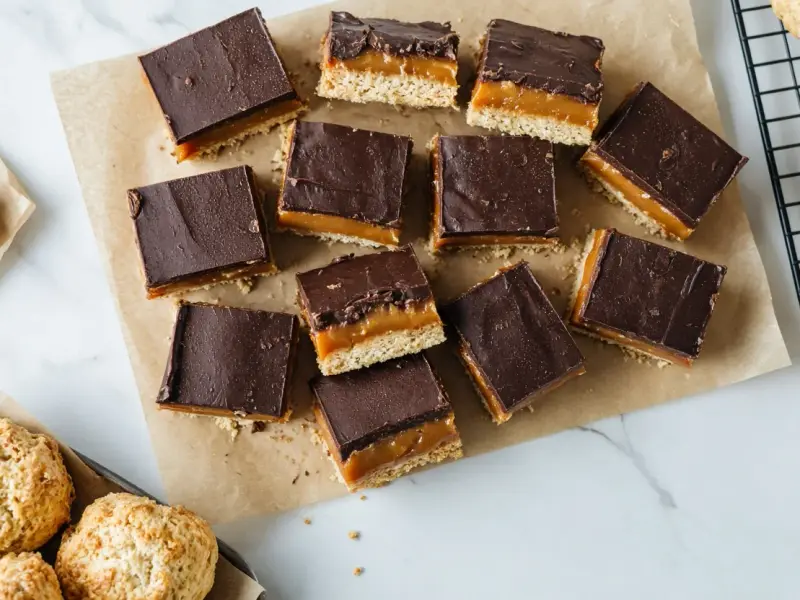 Millionaire's Shortbread
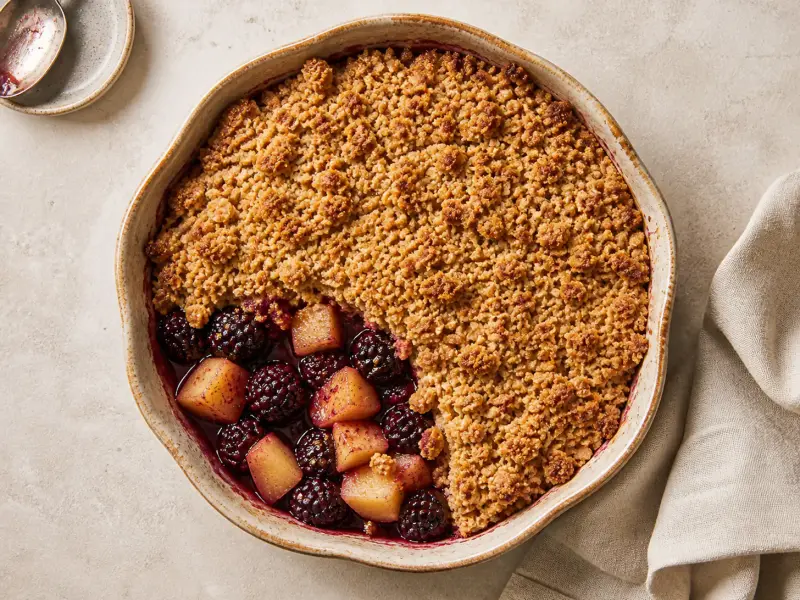 Apple and Blackberry Crumble
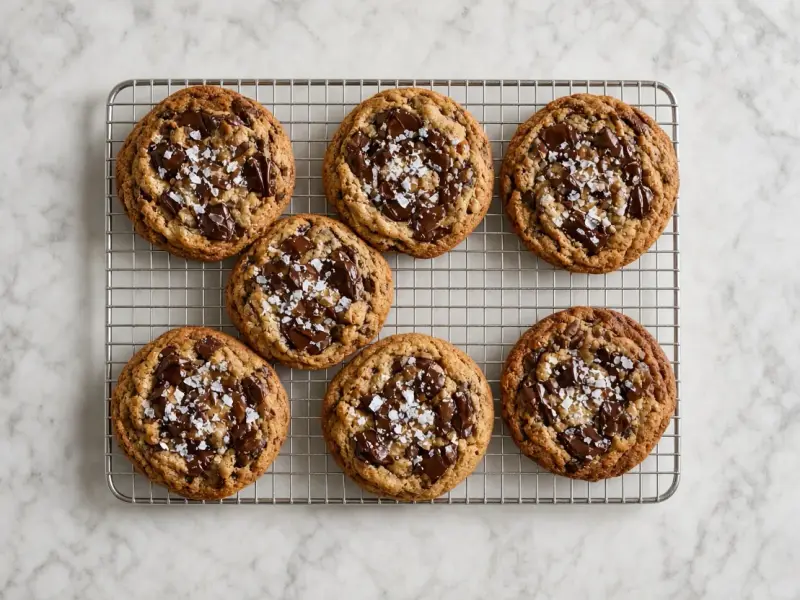 Chocolate Chip Cookies
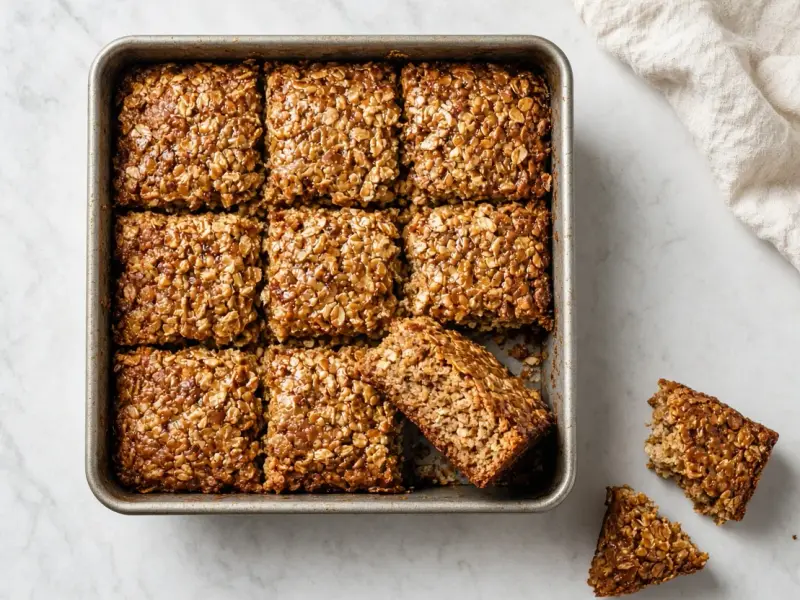 Flapjacks
 Lemon Drizzle Loaf Cake
 Victoria Sponge
 British
 Baking
 Desserts
 Vegetarian