Millionaire's Shortbread
A properly baked shortbread base, a caramel boiled to a temperature rather than a colour, and chocolate poured on only once the caramel is cold.
- Prep
- 30 min
- Cook
- 40 min
- Resting
- 3 hr
- Total
- 4 hr 10 min
- Serves
- 16
- Revisions
- 1
Allergens
- Cereals containing gluten
- Milk
- Soya
Named from the ingredients as written, including those carried in from sub-recipes. This is not a guarantee — check the labels on what you actually buy, and note that a product’s recipe can change.
Ingredients
Serves
Shortbread base
Caramel
Topping
Method
Shortbread base
Heat the oven to 170C/340F.
Butter a 20cm square tin and line it with baking paper, leaving an overhang on two sides.
Rub the cold butter into the flour, the caster sugar and the 3g of fine salt with your fingertips, until the mixture looks like damp sand with no pieces of butter left in it.
Tip the crumbs into the tin and press them into an even layer with the flat bottom of a glass, firming them right into the corners.
Prick the base all over with a fork.
Bake for 25-30 minutes, until the shortbread is pale gold across the whole surface and dry to the touch.
Bake the base properly. An underdone one goes soft under the caramel within a day, and the slice then collapses in the hand the moment it is picked up.
Set the tin aside. The base does not need to cool before the caramel goes on.
Caramel
Put the 150g of butter, the muscovado, the golden syrup, the condensed milk and the 2g of fine salt into a heavy pan.
Melt over low heat, stirring, until the sugar has dissolved.
Bring to a gentle boil and cook for 8-12 minutes, stirring constantly with a heatproof spatula and scraping the base and the corners of the pan the whole time.
Do not stop stirring or walk away. Condensed milk catches on the base of a pan within seconds, and the burnt specks it lifts will not stir back out.
Cook until the caramel has darkened to about the colour of peanut butter, pulls away from the base of the pan in a mass behind the spatula, and reads 112-115C/234-239F on a thermometer.
Use the thermometer. Temperature is the only reliable test here: under it the caramel never sets and runs out of the cut slice, over it the caramel sets to toffee and pulls the shortbread apart when you bite through.
Pour the caramel over the shortbread and level it with a palette knife.
Cool at room temperature for at least an hour, until the caramel is completely cold and firm under a fingertip.
Topping
Melt the chocolate in a heatproof bowl set over a pan of barely simmering water, keeping the base of the bowl clear of the water.
Take the bowl off the pan and stir the chocolate for 5 minutes, until it is barely warm.
Pour it over the cold caramel and tilt the tin to run it into the corners.
Drag a fork across the surface in loose waves.
Leave the tin at room temperature for 1-2 hours, until the chocolate has set to a dull, even sheen.
Do not put it in the fridge to hurry this. Chocolate cooled fast sets streaked and grey, and cold caramel turns brittle enough to crack the whole slab as the knife goes in.
Lift the slab out by the paper onto a board.
Cut into 16 pieces with a long knife warmed under hot water and wiped dry between cuts, pressing straight down rather than sawing.
Nobody has rated this recipe yet.
Sign in to rate this recipe. One rating per person, and you can change it.
What to expect
- Taste
Three separate things arriving in order, which is the entire design. The chocolate is the most bitter thing in it and hits first. The caramel underneath is intensely sweet, dairy-rich and slightly burnt at the edges of its flavour — condensed milk cooked to this temperature develops a real toffee note rather than just tasting of sugar, and the muscovado adds molasses behind it. The shortbread is the plainest layer, buttery and barely sweet, and its job is to give the mouth somewhere to rest. Salt runs through all three and this recipe carries more of it than most, which is what keeps a very sweet slice from being sickly.
- Aroma
The caramel stage is the smell worth being in the room for: hot butter, condensed milk and sugar going from milky to distinctly toffee over about ten minutes. The finished slice smells mostly of chocolate and only faintly of anything else, since caramel and shortbread are both quiet once cold.
- Texture
The most complex texture here and the reason the recipe is worth the thermometer. The chocolate snaps under the teeth and then stops. The caramel is dense, chewy and slightly sticky, and it should stretch a little rather than either running or resisting. The shortbread is short and sandy and crumbles rather than snapping. The failure mode is the caramel going harder than the base, at which point biting through pushes the chocolate off the top and the base into fragments.
- Sound
The chocolate cracking as the first bite goes in, and the knife going through the set slab, which needs warming for exactly this reason.
- How the flavour moves
Bitter first, from the chocolate, and it is a short note. Then the caramel floods in and dominates the middle of the mouthful — sweet, milky, toffee-ish and long. Salt cuts across it about halfway. The shortbread arrives last, plain and buttery, and it is what stops the finish. The slice ends much less sweet than it started, which is the trick of it, and is why the three layers have to be in that order rather than any other.
- Serve it
Room temperature and firmly not the fridge. Cold, the caramel goes hard and stops being chewy, the chocolate loses most of its flavour, and the whole thing eats like confectionery rather than baking.
- Goes with
Strong black coffee, and very little else. Anything sweet alongside it is redundant.
Cook's notes
- Difficulty
Moderate, entirely because of the caramel. The other two layers are beginner work.
- Cost
Moderate. Butter and chocolate carry the cost.
- Equipment
A 20cm square tin, a heavy-based saucepan, a heatproof spatula and a sugar thermometer or probe. The thermometer is the piece of equipment that makes the difference, and there is no reliable substitute for it.
- When to make it
It keeps a week and travels well, so it is a good thing to make for something rather than for now.
- Best season
None.
- You know it is done when
The base should be pale gold across the whole surface with no damp grey patches in the middle. The caramel darkens to roughly the colour of peanut butter and starts to pull away from the base of the pan in a mass behind the spatula — that pulling-away is the visual cue that arrives at about the right temperature. The chocolate is set when it has lost its wet shine and gone to an even dull sheen.
- And it feels like
The caramel is right when a spoonful dropped onto a cold plate sets to something you can push with a fingertip and dent, rather than either running or cracking. The thermometer is still the better test.
- Food safety
Boiling sugar is the one genuine burn risk in this batch. It is far hotter than boiling water and it sticks to skin. Keep forearms clear and do not let children stir it.
- Where it goes wrong
- Not using a thermometer, and guessing the caramel by colour, which cannot distinguish between the two failures either side of it.
- Stopping stirring, or turning away from the pan, at which point the condensed milk catches and lifts burnt specks that never stir out.
- Underbaking the shortbread base, which then goes soft under the caramel within a day.
- Pouring the chocolate onto caramel that is still warm, so the two blend at the join and the layers lose their edges.
- Putting the tin in the fridge to set the chocolate faster, which blooms it grey and makes the caramel brittle enough to crack the slab as it is cut.
- If it does go wrong
Caramel runs out of the cut slice: undercooked, below about 112C. It cannot be fixed once poured. Caramel hard enough to pull the base apart: overcooked, above about 118C. Burnt specks through the caramel: it caught on the base of the pan and the whole batch is affected. Chocolate set streaky and grey: it was cooled too fast, usually in a fridge. Base soggy: underbaked. Chocolate cracks away from the caramel when cut: the chocolate is too dark, or the slab is too cold, or the knife was not warmed.
- Making it ahead
Made ahead by necessity — it needs three hours of setting — and it is at its best on the day after it is made.
- Keeping it
Airtight at room temperature for a week. Not in the fridge, which makes the caramel brittle and blooms the chocolate.
- Reheating
None.
- Freezing
Freezes for two months, wrapped, though the chocolate loses its sheen on thawing.
- Leftovers
Chopped into ice cream, or crumbled over a chocolate mousse.
- Scaling it
Doubles into a 23 x 33cm tin. The caramel does not scale as cleanly as the other two layers: a double batch takes noticeably longer to reach temperature and is much more likely to catch, so make it in two pans rather than one.
- Substitutions
Golden syrup can be light corn syrup. Light muscovado can be soft light brown sugar. The condensed milk cannot be substituted — it is the structure of the caramel, not merely its sweetness. Milk chocolate can replace up to half the dark for a softer, sweeter top.
- Dietary swaps
Contains cereals containing gluten, milk and soya, the last from the lecithin in most chocolate. Vegetarian, egg free and nut free. There is no useful dairy-free version: butter is a third of the base and condensed milk is the caramel.
- Shopping for it
A chocolate around 55% cocoa specifically. It is the one sourcing decision that changes the eating.
- Keeping the cost down
Own-brand condensed milk and a mid-range 55% chocolate are exactly right. This is not a recipe where an expensive bar shows, because the chocolate is set in a thin layer against a very sweet caramel.
- Sustainability
Cocoa sourcing is the one place here where certification is worth paying for.
- Nutrition
The richest thing in this batch by a distance. A 5cm square is a portion.
- Worth it?
Buy a thermometer for this one recipe and it stops being difficult.
Where it comes from
- Origin
Contested. Most strongly associated with Scotland, with rival claims elsewhere — see contested below.
- Also called
Millionaire's shortbread. Also caramel shortbread, caramel slice, and in Australia and New Zealand caramel slice or, in a related form, chocolate caramel slice.
- What the name means
The millionaire is presumably a comment on richness rather than on any actual person, but the naming is not documented and nobody knows where it came from. Millionaire's shortbread as a term is not recorded early and appears to be a later commercial name for a slice that already existed.
- History
The recipe cannot predate cheap sweetened condensed milk, which was patented in the United States in 1856 and became an everyday product through the later nineteenth century. Recipes for shortbread bases with a boiled condensed-milk caramel and a chocolate top appear in the middle of the twentieth century in more than one country. Shortbread itself is very much older and Scottish, which is part of why the assembled slice reads as Scottish even though only its bottom third is.
- Why it matters
A standard British bakery, cafe and supermarket item, and a fixture of church halls, school fetes and office kitchens. It occupies the same social space as flapjack and does so at roughly three times the richness.
- When it is eaten
None. Everyday baking.
- The traditional way
Cooking the caramel in a pan to a measured temperature. An older and still widespread alternative is boiling an unopened tin of condensed milk, which produces dulce de leche and is a different, softer caramel — and which is genuinely dangerous if the tin is allowed to boil dry.
- How it changed
Commercial versions almost universally use a softer, sweeter caramel that does not need cooking to temperature, which is easier and gives a slice that oozes. Salted caramel versions are a recent addition and are close to what this recipe already is.
- Regional variations
The Australian and New Zealand caramel slice is essentially the same construction with a coconut-and-oat base rather than a shortbread one. South African and American versions exist under other names.
- How this version differs
The caramel is cooked in a pan to a stated temperature rather than boiled in the tin or made from a softer no-cook mixture, and a 55% chocolate is specified rather than a darker one so that the top layer cuts and bites without shattering.
- Sources and credit
None available, and claims to the contrary should be treated with suspicion.
Related recipes
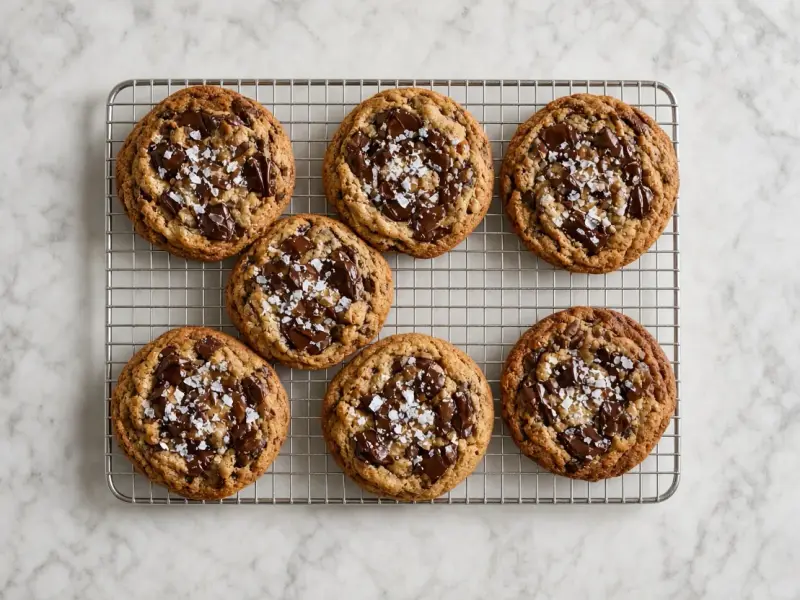 Chocolate Chip Cookies
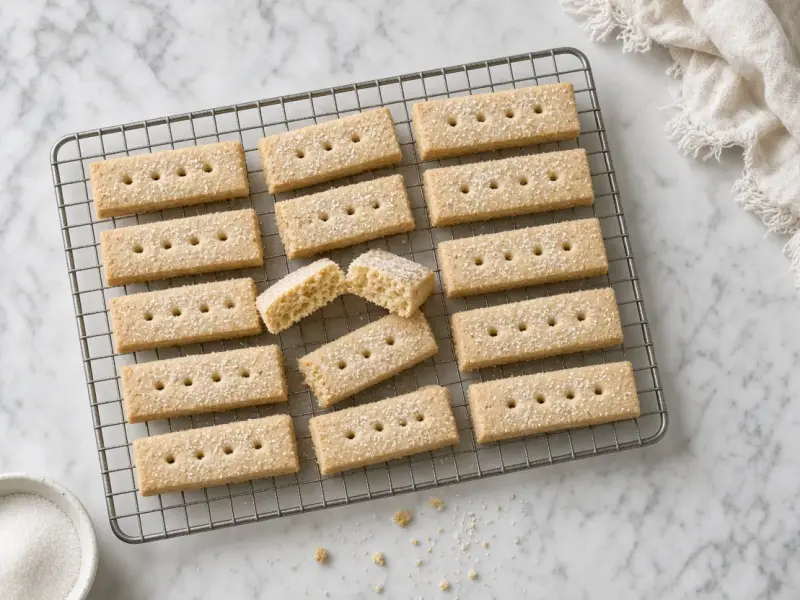 Shortbread
 Apple and Blackberry Crumble
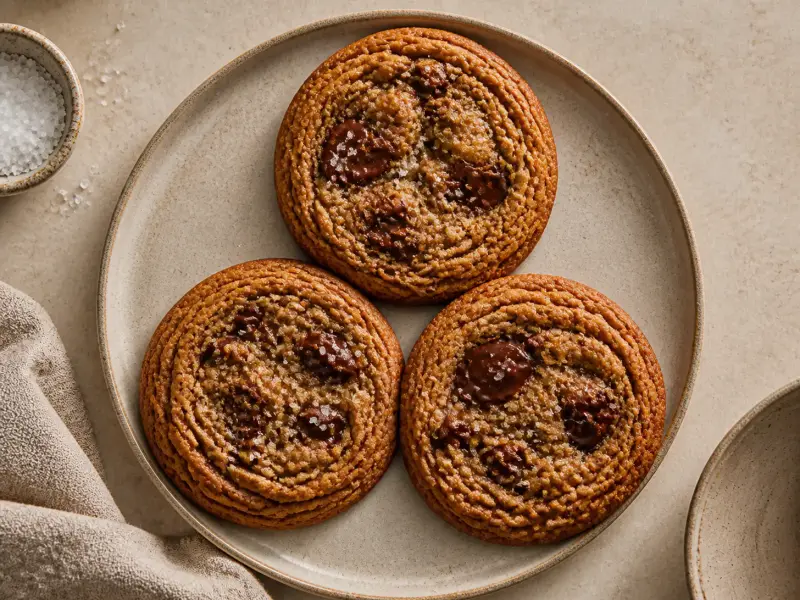 Brown Butter Chocolate Chip Cookies
 Chocolate Fudge Cake
 Dark Chocolate Brownies
Categories
Cuisines
 British
Courses & dish types
 Baking
 Desserts
Main ingredients
 Chocolate
Diets
 Vegetarian