Victoria Sponge
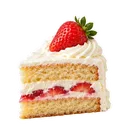
Two creamed sponges in equal weights of egg, butter, sugar and flour, filled with jam and cream and judged on the crumb rather than the height.
- Prep
- 25 min
- Cook
- 25 min
- Resting
- 1 hr 15 min
- Total
- 2 hr 5 min
- Serves
- 10
- Revisions
- 1
Allergens
- Cereals containing gluten
- Eggs
- Milk
Named from the ingredients as written, including those carried in from sub-recipes. This is not a guarantee — check the labels on what you actually buy, and note that a product’s recipe can change.
Ingredients
Serves
Sponge
Filling
Method
Sponge
Take the butter and the eggs out of the fridge an hour before you start. Cold butter will not hold air and cold eggs split the batter, and neither is recoverable once the flour is in.
Heat the oven to 180C/350F.
Butter two 20cm sandwich tins and line each base with a disc of baking paper.
Beat the softened butter and the caster sugar with an electric whisk for 4-5 minutes, until the mixture is very pale, has grown noticeably in volume, and feels smooth rather than gritty between finger and thumb.
Give it the full four minutes. Creaming is not mixing, it is driving air into the fat, and the raising agent in the flour can only expand bubbles that are already there.
Beat in the eggs one at a time, letting each disappear before the next goes in.
Add a spoonful of the flour with the third and fourth eggs if the batter starts to look curdled and watery. A split batter holds less air and bakes coarse.
Beat in the vanilla.
Sift the flour and the fine salt over the batter.
Fold them in with a large metal spoon, cutting down through the middle and sweeping round the side of the bowl, until the last streak of flour goes and no further.
Fold in the milk a tablespoon at a time, until the batter drops off the spoon in a soft lump in about three seconds. That dropping consistency is what makes the cakes bake level; a stiff batter climbs at the edges and domes.
Divide the batter between the tins, weighing them if you want the two layers the same depth, and level the tops.
Bake both tins on the middle shelf for 22-25 minutes, until the sponges are golden, have shrunk very slightly from the sides, and spring back leaving no dent when pressed in the centre.
Do not open the oven before 20 minutes. The crumb is still liquid at the centre until then, and a rush of cold air drops the middle for good.
Cool in the tins for 10 minutes, then turn the sponges out onto a rack and peel off the paper.
Filling
Cool them completely, at least 45 minutes. Cream on a sponge that is even faintly warm melts and runs out of the sides.
Whip the cold double cream with the icing sugar to soft peaks that flop over when the whisk is lifted.
Set the first sponge on a plate with its flat base upwards, so the filling sits on a level surface.
Spread the jam over it to within 1cm of the edge.
Spoon the cream over the jam and spread it out to the same line. Filling taken right to the edge squeezes out under the weight of the top layer.
Set the second sponge on top, base down, so its domed top is the top of the cake.
Dust with caster sugar rather than icing sugar, which is the traditional finish and does not go damp and patchy within the hour.
Eat it the day it is filled. There is no syrup and no soaking in this cake, and a buttercake with fresh cream in it is past its best by tomorrow.
Nobody has rated this recipe yet.
Sign in to rate this recipe. One rating per person, and you can change it.
What to expect
- Taste
Buttery, and it should taste of butter before it tastes of sugar. The sponge itself is only mildly sweet, faintly eggy and rounded by vanilla and by a level of salt that is high enough to be doing work without being detectable as salt. The jam is the sweet element and the sharp one at once — strawberry brings fruit acidity that the sponge has none of — and the cream sits between the two as fat and coolness with almost no flavour of its own. The dusting of caster sugar adds a granular sweetness at the very first contact.
- Aroma
Warm butter and vanilla, and very little else. The smell of a Victoria sponge coming out of the oven is one of the plainest in baking and is almost entirely browned butter and egg. Once cold and filled it smells faintly of strawberry.
- Texture
Fine, close and tender, and it should compress under a fork rather than crumble. The two words that describe a good one are soft and light, and they are not the same thing: it wants to be light from the creamed air and soft from the butter. Against that, the cream is cold and slack and the jam is slightly sticky and gives resistance. There is deliberately no crunch anywhere except the sugar on top.
- Sound
None to speak of. This is the quietest cake there is.
- How the flavour moves
Sugar on the lips first, from the dusting. Then butter and the plain eggy sweetness of the sponge, which fills the middle of the mouthful and does not develop much. Then, later than expected, the jam arrives with a sharp fruit acidity that cuts across everything, and the cream flattens that out again on the finish. The sequence is the reason the cake is filled rather than plain: the sponge on its own is one flat note held too long.
- Serve it
Room temperature, and it matters more than it sounds. Straight from the fridge the butter in the crumb is solid and the cake eats dense and waxy, and the jam tastes of nothing. Twenty minutes on the side transforms it.
- Goes with
Tea, and it is genuinely built for it — the tannin in a strong black tea cuts the butter in a way coffee does not. Nothing else is needed.
Cook's notes
- Difficulty
Easy to make and easy to make badly. Nothing in it is difficult; everything in it is unforgiving.
- Cost
Low. Butter is the largest single cost.
- Equipment
Two 20cm sandwich tins, an electric whisk or stand mixer, a large metal spoon, and scales. The scales are not optional in a recipe built on equal weights.
- When to make it
Afternoon, and eaten the same day.
- Best season
None, though it is a summer cake by association and by fete season.
- You know it is done when
Golden on top, very slightly shrunk from the sides of the tin, and level rather than domed if the batter was at the right consistency. The surface should look dry and matte rather than shiny.
- And it feels like
A fingertip pressed into the centre springs back leaving no dent. If it holds the dent it needs three more minutes and the door should be opened as briefly as possible to check.
- Food safety
The finished cake contains fresh whipped cream and should not stand at room temperature for more than a few hours in warm weather.
- Where it goes wrong
- Cold butter or cold eggs, which is the root cause of most failures further down.
- Under-creaming. Four to five minutes feels absurdly long and it is the number that decides the crumb.
- Adding the eggs too fast, splitting the batter, which knocks out the air just put in.
- Over-folding once the flour is in, which develops gluten and gives a tough, close cake.
- Opening the oven before 20 minutes, which drops the middle for good.
- Filling the sponges while they are still faintly warm, so the cream melts and runs out.
- If it does go wrong
Sunk in the middle: the oven was opened early, or the cake was underbaked, or there is too much raising agent. Domed and cracked: the oven was too hot, or the batter was too stiff — it should drop off the spoon in three seconds. Tough and close-textured: over-folded. Coarse crumb with large holes: under-creamed, or the batter split when the eggs went in. Two layers of different depths: the batter was divided by eye rather than weighed. Dry: overbaked, and there is nothing in this cake to disguise it.
- Making it ahead
The sponges can be baked a day ahead, or frozen. The cake should be filled within a few hours of eating.
- Keeping it
Filled, it keeps in the fridge for a day and is best on the day it is made. Unfilled, the sponges keep wrapped for two days or freeze well.
- Reheating
None. Take a chilled slice out 20 minutes before eating so the butter in the crumb softens.
- Freezing
The bare sponges freeze very well, wrapped individually, for three months. The filled cake does not.
- Leftovers
Day-old sponge is good as the base of a trifle, which is where most of it ends up in British kitchens.
- Scaling it
Scales cleanly by egg. Three eggs and 170g of everything gives a shallower 20cm cake; six eggs and 340g suits two 23cm tins.
- Substitutions
Self-raising flour can be replaced with 225g plain flour and 10g baking powder. Raspberry jam is as traditional as strawberry. Whole milk loosens the batter to dropping consistency and water will do the same job less well.
- Dietary swaps
Contains cereals containing gluten, eggs and milk. Vegetarian as written. There is no useful egg-free version of this particular cake: the eggs are a quarter of its weight and most of its structure.
- Shopping for it
A jam with real fruit acidity rather than a very sweet one, because sharpness is the only thing cutting across the butter and cream.
- Keeping the cost down
Nothing here is expensive. A good jam is worth more to the finished cake than a premium butter is.
- Nutrition
Butter, sugar, egg and flour in equal measure, plus cream. A cake, and honest about it.
- Worth it?
The plainest cake in the collection and the hardest to make well, which is the whole point of it.
Where it comes from
- Origin
Britain.
- Also called
Victoria sandwich, or Victoria sponge. The older name is sandwich, which describes the construction.
- What the name means
Named for Queen Victoria. Beyond that the naming cannot be evidenced from her lifetime.
- History
The two-layer chemically raised sponge is a mid-nineteenth-century British cake and depends on baking powder, which was patented and commercialised in the 1840s and 1850s. Its rise coincides with the growth of afternoon tea as a formalised meal. Isabella Beeton's Book of Household Management, published in 1861, includes sponge and layer cakes of this family. The association with Queen Victoria herself is traditional and widely repeated rather than documented.
- Why it matters
The standard against which British home baking is judged. It is the set piece of village fete competitions and Women's Institute judging, where it is assessed on the evenness of the two layers, the fineness of the crumb and whether the filling has been kept to jam alone.
- When it is eaten
Afternoon tea, church fetes, village shows, and any occasion where a plain cake is wanted rather than a decorated one.
- The traditional way
The creaming method with equal weights of egg, butter, sugar and flour, weighed against the eggs in their shells.
- How it changed
The strictly traditional filling is jam alone; the jam-and-cream version now made by almost everybody is a later, richer form and is still argued about by competition judges. The all-in-one method, in which everything is beaten together at once with extra baking powder, is a twentieth-century convenience that produces a slightly coarser crumb.
- Regional variations
None to speak of within Britain. The cake travelled with British emigration and is made in the same form in Australia, New Zealand and parts of southern Africa.
- How this version differs
It fills with both jam and cream, which the strictest reading does not allow, and it says so. It also uses the creaming method rather than the quicker all-in-one, because the finer crumb is the reason to make this cake at all.
- Sources and credit
No documented author.
 Apple and Blackberry Crumble
 Blueberry Muffins
 Carrot Cake
 Chocolate Fudge Cake
 Flapjacks
 Lemon Drizzle Loaf Cake
 British
 Baking
 Desserts
 Vegetarian