Macaroni Cheese
The cheese goes in off the heat, a handful at a time. Above about 80C the proteins tighten and squeeze the fat out, which is what makes a grainy, oily sauce.
- Prep
- 15 min
- Cook
- 45 min
- Resting
- 5 min
- Total
- 1 hr 5 min
- Serves
- 4
- Revisions
- 1
Allergens
- Cereals containing gluten
- Milk
- Mustard
Named from the ingredients as written, including those carried in from sub-recipes. This is not a guarantee — check the labels on what you actually buy, and note that a product’s recipe can change.
Ingredients
Serves
Pasta
Sauce
Topping
Method
Sauce
Heat the oven to 200C fan.
Melt the 60g of butter in a large pan over medium heat, stir in the flour and cook for 2 minutes, stirring constantly, until it smells of biscuit rather than raw flour.
Take the pan off the heat and add the warm milk a third at a time, beating each addition smooth before the next goes in. Warm milk into a hot roux is what prevents lumps; cold milk seizes it.
Return it to the heat with the bay leaf and cook, stirring, for 8 to 10 minutes, until it thickens and coats the back of a spoon.
Cook it for the full ten minutes even once it has thickened. A béchamel that has not simmered tastes of flour, and the taste does not go away later.
Pasta
Boil the macaroni in well-salted water for 2 minutes less than the packet says.
It finishes cooking in the oven, and pasta boiled to the packet time comes out of the bake soft and swollen.
Sauce
Fish the bay leaf out of the sauce and take the pan off the heat entirely.
Let it stop steaming for a minute, then stir in the Cheddar and Gruyère a handful at a time, waiting for each to melt.
This is the step the dish stands or falls on. Cheese added to a sauce hotter than about 80C tightens and squeezes its fat out, and the result is grainy with oil on top. Off the heat, it emulsifies smoothly.
Stir in the mustard, nutmeg and salt, and taste. It should be slightly saltier than seems right, because the pasta will dilute it.
Pasta
Drain the macaroni and fold it through the sauce.
Topping
Tip it into a 2.5 litre dish.
Mix the breadcrumbs, Parmesan and melted butter, and scatter over the top.
Bake for 20 to 25 minutes, until the top is deep gold and the sauce is bubbling at the edges.
Rest for 5 minutes before serving.
Nobody has rated this recipe yet.
Sign in to rate this recipe. One rating per person, and you can change it.
What to expect
- Taste
Salty, savoury and mild, with the mustard and nutmeg giving a barely detectable warmth underneath. Mature Cheddar is doing the flavour and the Parmesan on top is doing the sharp edge.
- Aroma
Toasted cheese and butter, mostly from the crumb. The béchamel itself smells faintly of nutmeg and very little else.
- Texture
The whole point. Crisp crumb, smooth sauce, pasta with a little resistance. A grainy sauce is a failure of texture rather than of flavour, which is why the temperature rule matters so much.
- Sound
The crumb topping cracking under a spoon.
- How the flavour moves
Toasted crumb first, then salt and cheese, then a long mild dairy finish. Nothing sharp, which is why something acidic beside it helps.
- Serve it
Very hot in the middle and it holds heat for a long time; the five-minute rest is a burn precaution as much as anything.
- Goes with
A sharply dressed green salad, grilled tomatoes, or broccoli. Brown sauce or a spoonful of chutney, which sounds wrong and is not.
Cook's notes
- Difficulty
Easy, and there is exactly one moment where it can go wrong.
- Cost
Low, and mostly cheese.
- Equipment
A large pan, a whisk and a 2.5 litre baking dish.
- When to make it
A weeknight, or a Sunday.
- Best season
None.
- You know it is done when
A deep gold crumb top and sauce bubbling up at the edges of the dish.
- And it feels like
The sauce should be smooth and pourable when it goes in the dish and just set when it comes out. Pasta with a little bite left.
- Food safety
Nothing unusual. Cool leftovers within two hours rather than leaving a hot dish on the side.
- Where it goes wrong
- Adding the cheese to a sauce still on the heat, which splits it.
- Pre-grated cheese, whose anti-caking starch makes the sauce grainy.
- An undercooked béchamel, which tastes of raw flour whatever else you do.
- Cold milk into a hot roux, which makes lumps.
- Boiling the pasta to the packet time, so it is swollen and soft after the bake.
- Under-seasoning. It needs to taste slightly too salty before the pasta goes in.
- If it does go wrong
Grainy or oily: it was too hot. A stick blender with a splash of cold milk will rescue it more often than not. Lumpy: sieve it, and use warm milk next time. Too thick: more warm milk. Bland: salt, then more mustard.
- Making it ahead
Assemble a day ahead and refrigerate unbaked; add 10 minutes to the bake.
- Keeping it
Three days in the fridge.
- Reheating
Covered at 180C fan for 25 minutes with a splash of milk poured over, then uncovered for 5. It thickens considerably when cold.
- Freezing
Freezes assembled and unbaked for two months. Bake from thawed. Freezing it baked works less well.
- Leftovers
Cut into squares, breadcrumbed and fried, which is a better dish than the original.
- Scaling it
Doubles cleanly. Use a wider dish rather than a deeper one so the crumb-to-sauce ratio holds.
- Substitutions
Any short pasta with a hole or a ridge. Gluten-free pasta works; gluten-free flour makes an acceptable béchamel but needs an extra couple of minutes of cooking. Comté, Emmental or Red Leicester all work in place of the Gruyère.
- Dietary swaps
Contains gluten, milk and mustard. Vegetarian if the Parmesan is replaced with a vegetarian hard cheese, since Parmigiano Reggiano is made with animal rennet. Egg free and nut free as written.
- Shopping for it
Nothing unusual. Buy blocks, not bags.
- Keeping the cost down
All Cheddar rather than a mix, and a block of Parmesan lasts months. Cheese is most of the cost and a smaller amount of a stronger cheese goes further than a large amount of a mild one.
- Sustainability
This is a dairy dish, and dairy carries a real footprint — cheese especially, because it takes roughly ten litres of milk to make a kilogram of it. There is no substitution that keeps the dish intact, so the honest levers are quantity and waste: a smaller amount of a strong mature cheese delivers more flavour than a large amount of a mild one, and the dish reheats and freezes well enough that none of it need be thrown away. Adding a head of roasted cauliflower or broccoli stretches it considerably and is a genuinely good version.
- Nutrition
Rich. It is a dish made of milk, butter, cheese and pasta and there is no version of it that is not.
- Worth it?
One rule — pan off the heat before the cheese — and it is the difference between the dish and its most common failure.
Where it comes from
- Origin
England, and then America, both early.
- Also called
Macaroni cheese in Britain, macaroni and cheese or mac and cheese in America.
- Said out loud
Straightforward.
- What the name means
Macaroni is from the Italian maccheroni, once a general word for pasta rather than the specific tube shape.
- History
Baked pasta with cheese and cream is documented in medieval Italian and later English cooking, and Elizabeth Raffald's The Experienced English Housekeeper of 1769 contains a recipe close to the modern one. It reached America in the eighteenth century — Thomas Jefferson had it served at the President's House, and his enslaved chef James Hemings, trained in France, is credited with introducing the dish to the household. From there it became central to Black American cooking, where the baked, custard-set style with several cheeses is a distinct tradition rather than a variation on the British one.
- Why it matters
In Britain a plain comfort dish; in the United States, and particularly in Black American cooking, a dish with real ceremonial weight — a fixture of Sunday dinners, holidays and family cooking, and one people are judged on.
- When it is eaten
Weeknight comfort, feeding children, and cooking for somebody who is unwell.
- The traditional way
A béchamel enriched with cheese, folded through cooked pasta and baked with a crumb or cheese top.
- How it changed
The British version stayed a béchamel dish; the American one split into a béchamel style and a custard style set with eggs and evaporated milk, which is a genuinely different technique.
- Regional variations
The southern American baked style uses eggs and evaporated milk and sets like a custard. Stovetop versions skip the oven entirely. Boxed versions are their own thing and have their own defenders.
- How this version differs
Nothing unusual, except that the temperature rule for adding the cheese is written into the method as a step rather than left as a tip. That is the failure this recipe exists to prevent.
- Sources and credit
Elizabeth Raffald for the earliest widely cited English recipe; James Hemings for its introduction to an American household that made it famous. Both are worth naming.
 Cacio e Pepe
 Chicken Alfredo
 Spaghetti Bolognese
 Tuna Pasta Bake
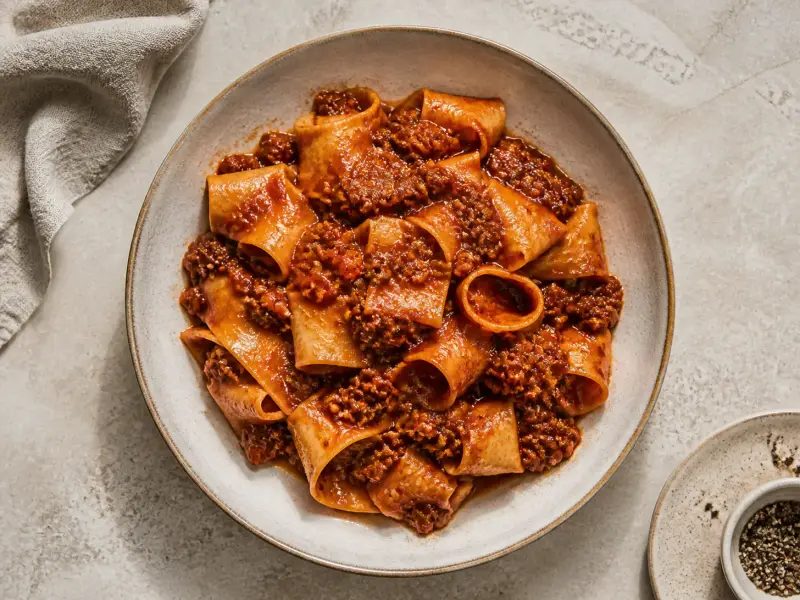 Slow-Cooked Beef Ragu
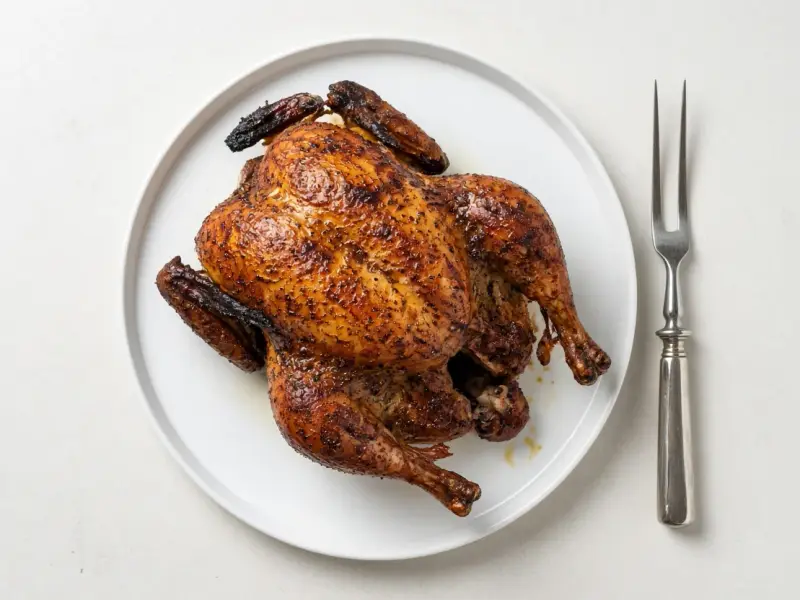 Air Fryer Whole Chicken
 British
 Pasta
 Main courses
 Dinner
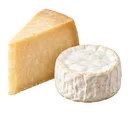 Cheese