Keema Matar
Lamb mince and peas, cooked until the fat separates and sits clear on top. That separation is the signal the dish is finished, and it is the only timer worth trusting.
- Prep
- 15 min
- Cook
- 1 hr
- Total
- 1 hr 15 min
- Serves
- 4
- Revisions
- 1
Ingredients
Serves
Curry
To finish
Method
Curry
Heat the oil in a heavy pan over medium heat and add the cumin seeds, cinnamon and cardamom. Wait for the cumin to sizzle and smell toasted, about 30 seconds.
Add the onions and cook for 15 minutes, stirring often, until deep golden brown. This is the longest step and the one that decides the colour of the finished dish; pale onions give a pale, thin keema.
Add the ginger, garlic and green chillies and cook for 2 minutes, until the raw smell has gone.
Turn the heat up, add the lamb and break it up.
Cook for 10 minutes, until the water has boiled away and the meat is frying in its own fat and browning in places.
Add the turmeric, ground coriander and Kashmiri chilli and stir for 1 minute.
Add the tomatoes and salt and cook for 8 minutes, until they have collapsed completely and the mixture pulls away from the side of the pan.
Pour in the water, bring to a simmer, cover and cook for 20 minutes on low heat.
Take the lid off and cook for a further 10 minutes, until clear fat separates and pools at the edges. That is the point the dish is done, whatever the clock says.
To finish
Stir in the peas and cook for 4 minutes.
Add the garam masala, the coriander and the lemon juice, take it off the heat and taste for salt.
Fish out the cinnamon stick and the cardamom pods before serving with chapatis or rice.
Nobody has rated this recipe yet.
Sign in to rate this recipe. One rating per person, and you can change it.
What to expect
- Taste
Deeply savoury and warmly spiced rather than hot, with a sweetness underneath from the browned onions that is the dish's whole character. The peas are sweet and cut through it. Garam masala arrives last and is the perfumed note.
- Aroma
Toasted cumin at the start, then onions caramelising, then a warm sweet spice smell from the cardamom and cinnamon that sits over everything. Adding the garam masala off the heat is a second, sharper burst of aroma right before it is served.
- Texture
Loose and grainy, almost dry to look at but soft to eat, with the peas bursting against it.
- Sound
The cumin seeds crackling in hot oil at the start. The rest is quiet.
- How the flavour moves
Sweet browned onion first, then meat, then the warm whole spices, and a lift of lemon and fresh coriander at the very end that stops it sitting heavily.
- Serve it
Hot, and it holds heat well because of the fat.
- Goes with
Chapatis or parathas, plain rice, and something sharp — a raita, or sliced raw onion with lemon.
Cook's notes
- Difficulty
Easy, and entirely dependent on one skill: browning onions properly and not hurrying it.
- Cost
Mid. Lamb mince is the only expensive thing in it.
- Equipment
A heavy pan with a lid.
- When to make it
A weeknight, an hour with very little attention needed for the last half of it.
- Best season
None, thanks to frozen peas.
- You know it is done when
Clear orange-red fat pooling at the edges and rising to the surface, and the mixture pulling away from the side of the pan when stirred. This separation — bhuna in the Indian kitchen sense — is the signal the dish is finished.
- And it feels like
Loose, moist grains of meat with no liquid pooling, and peas still whole and bright.
- Food safety
Mince cooked well past any safe threshold. Nothing else unusual.
- Where it goes wrong
- Rushing the onions, which decides the colour and body of the finished dish and cannot be corrected later.
- Not driving the water off the lamb, so it stews grey instead of browning.
- Stopping before the fat separates, which is the difference between a finished curry and a wet one.
- Adding garam masala early, where its aroma cooks off. It goes in at the end.
- Using ordinary chilli powder in place of Kashmiri, which makes it much hotter than intended.
- If it does go wrong
Pale and thin: the onions were not browned enough; more time now will help a little but not fix it. Watery: cook uncovered until the fat separates. Harsh: it needs the lemon and the fresh coriander. Too hot: a spoonful of yogurt at the table.
- Making it ahead
Better the next day. Make it a day ahead and add the peas on reheating.
- Keeping it
Three days in the fridge, and it improves overnight.
- Reheating
Low heat with a splash of water.
- Freezing
Freezes well for three months. Add the peas after reheating if you want them bright, rather than freezing them in.
- Leftovers
In a wrap, folded into a keema paratha, or as the filling for samosas.
- Scaling it
Doubles well, but brown the onions in two batches or use a very wide pan — crowded onions steam and never brown.
- Substitutions
Beef mince works and is the more common choice in some regions; it needs about 10 minutes longer. Fresh peas need 6 minutes rather than 4. Tinned tomatoes at 200g instead of fresh, which is often better out of season.
- Dietary swaps
No declared allergens as written. Naturally gluten free, dairy free, egg free and nut free, which is unusual for a curry. Serve with rice rather than chapatis to keep it gluten free.
- Shopping for it
Kashmiri chilli powder from an Indian grocer, where it costs a fraction of the supermarket price and comes in a useful quantity.
- Keeping the cost down
Beef mince instead of lamb saves a good deal and is entirely traditional.
- Sustainability
Lamb carries a footprint comparable to beef's, and it is the only heavy thing here. Keema is one of the dishes where a substitution is genuinely traditional rather than a concession: soya mince and, more to the point, lentils are both used in home cooking across the region, and a version made with 300g lamb and 200g brown lentils behaves the same way through the bhuna stage. Frozen peas are worth defending — they are frozen within hours of picking and are usually a better and lower-impact ingredient than fresh ones flown in.
- Nutrition
High protein, and the peas add real fibre. Lamb makes it rich; some fat can be spooned off after it separates.
- Worth it?
Two waiting games — the onions and the fat separating — and both of them are the dish.
Where it comes from
- Origin
Northern India and Pakistan.
- Also called
Keema matar, or qeema matar.
- Said out loud
KEE-ma MUH-tar.
- What the name means
Keema is minced meat, from the Turkish kıyma via Persian; matar is peas. The name is simply the two things in it.
- History
Minced meat cookery has a long presence in the region and is strongly associated with Mughal court kitchens, where labour-intensive preparations of pounded and minced meat were a mark of refinement. Keema as an everyday household dish is much plainer than that ancestry suggests, and the addition of peas is modern and owes a good deal to frozen peas being cheap and always available.
- Why it matters
Domestic rather than ceremonial. It is a dish people grow up eating on ordinary days, cooked in enormous variation from house to house, and it is one of the most common fillings for parathas and samosas.
- When it is eaten
Everyday family cooking, and a common breakfast dish with parathas in parts of Pakistan.
- The traditional way
Bhuna — frying the base until the fat separates from the masala — which is the technique the whole dish turns on.
- How it changed
Frozen peas made matar a year-round rather than a seasonal addition.
- Regional variations
Potato instead of or alongside peas is very common. Some versions are much drier and are used as a filling; others are looser and eaten with rice. Beef, mutton and chicken keema are all ordinary depending on the region.
- How this version differs
Nothing unorthodox. It is written to make the bhuna stage explicit, because it is the step recipes tend to summarise as 'cook for 10 minutes' when it is the only thing that determines whether the dish works.
- Sources and credit
None.
Related recipes
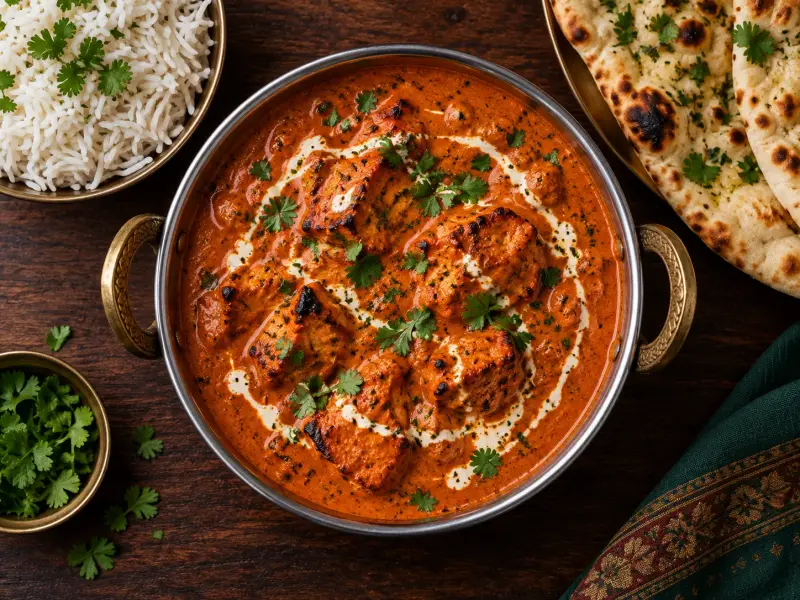 Butter Chicken
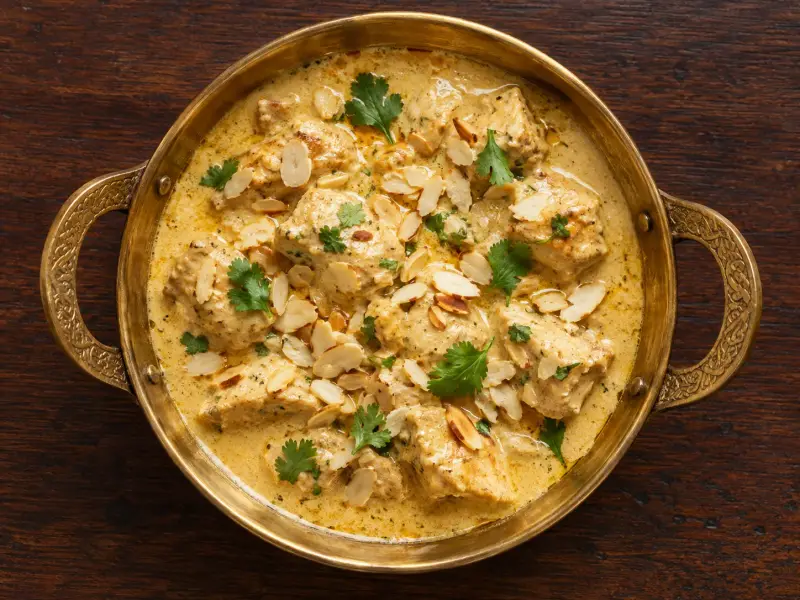 Chicken Korma
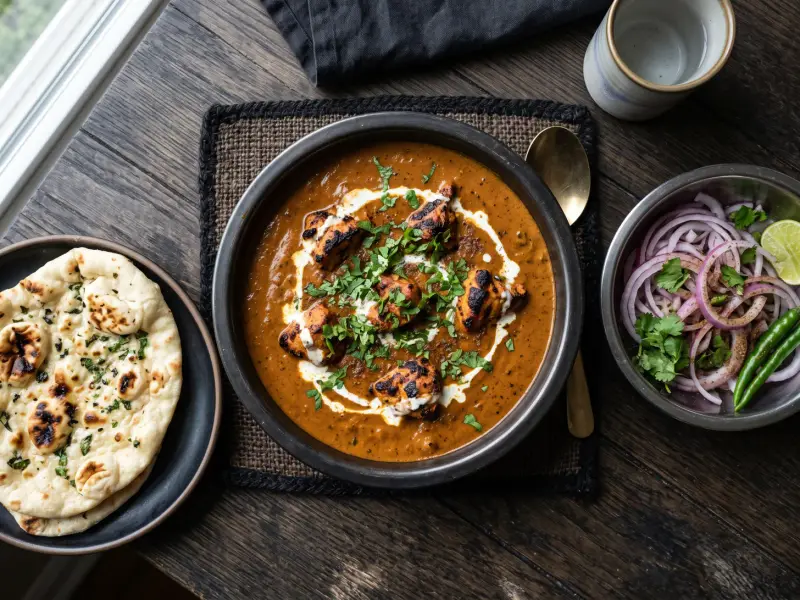 Chicken Tikka Masala
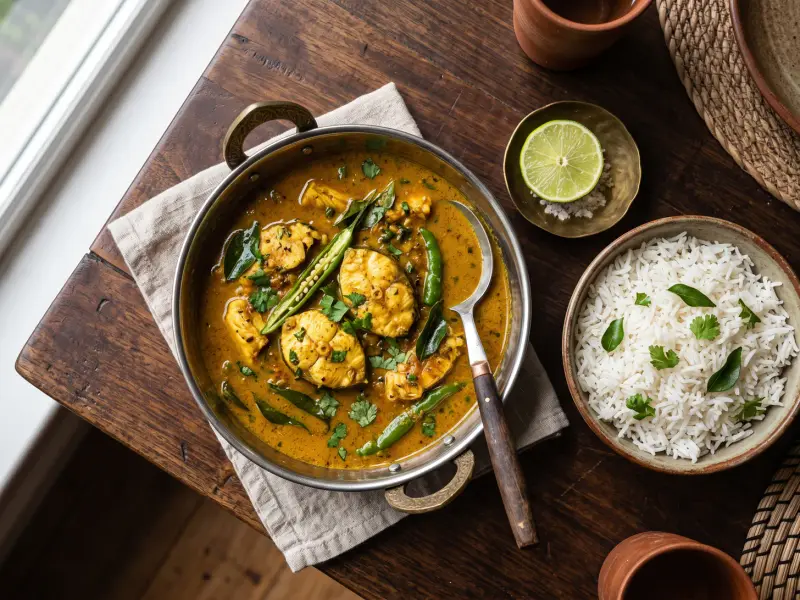 Goan Fish Curry
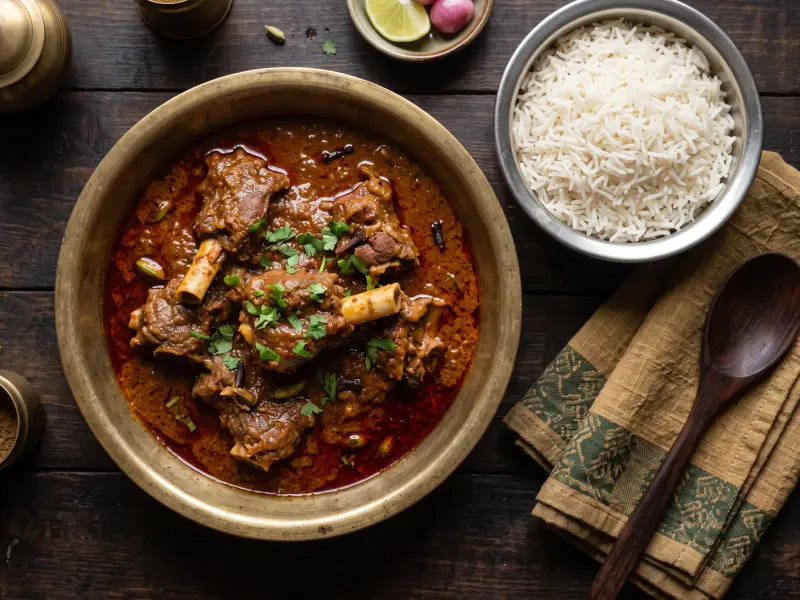 Lamb Rogan Josh
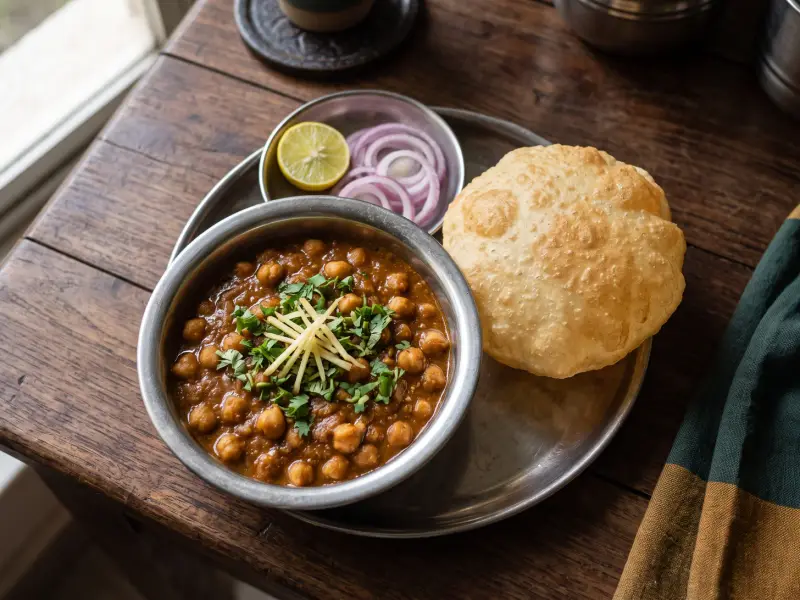 Chana Masala
Categories
Cuisines
 Indian
Courses & dish types
 Curries
 Main courses
 Dinner