Slow Cooker Beef Stew
Chuck browned properly, a thickener added at the end rather than the start, and root vegetables cut large enough to survive eight hours.
- Prep
- 30 min
- Cook
- 8 hr 10 min
- Total
- 8 hr 40 min
- Serves
- 6
- Revisions
- 1
Allergens
- Celery
- Cereals containing gluten
- Sulphites
Named from the ingredients as written, including those carried in from sub-recipes. This is not a guarantee — check the labels on what you actually buy, and note that a product’s recipe can change.
Ingredients
Serves
Stew
To finish
Method
Stew
Pat the beef dry and season it with the salt. Wet meat steams instead of browning, and this is the step everything else rests on.
Heat the oil in a frying pan until it shimmers and brown the beef in three or four batches, giving each piece a proper dark crust on two sides.
Move each batch to the slow cooker as it is done. Crowding the pan drops its temperature and you get grey meat in a grey stew.
Cook the onions in the same pan for 5 minutes, add the garlic and tomato purée and stir for 2 minutes.
Pour in the wine and let it bubble for 3 minutes, scraping every brown scrap off the base. Everything stuck to that pan is flavour, and tipping it away is the second most common mistake here.
Add the carrots, celery and potatoes to the slow cooker in large pieces. Anything cut small will have dissolved by hour six.
Pour the pan contents over, add the stock, Worcestershire sauce, thyme and bay, and push everything below the liquid.
Cover and cook on low for 8 hours, without lifting the lid.
The beef is ready when a piece falls apart under light pressure from a spoon. Chuck is stubborn until it is not, and an underdone one just needs another hour.
To finish
Mix the flour and cold water to a smooth slurry.
Stir it into the pot, turn to high and cook uncovered for 20 minutes, until the liquid has gone from thin to glossy and coats the meat.
Flour added at the start would have spent eight hours in a wet pot doing nothing useful; added now it thickens in twenty minutes.
Fish out the thyme stalks and bay, stir in the parsley and taste for salt.
Nobody has rated this recipe yet.
Sign in to rate this recipe. One rating per person, and you can change it.
What to expect
- Taste
Deeply savoury and slightly sweet from the carrot and onion, with the wine giving a faint background acidity. It should taste of beef first and vegetables second.
- Aroma
Slow and constant all day. The strongest single moment is the wine hitting the hot pan during the deglaze, which happens before anything goes in the slow cooker.
- Texture
Meat that falls apart but is not shredded, vegetables that are soft with a little resistance left, and a liquid with enough body to cling.
- Sound
Silent for eight hours, then a faint bubble on high at the end.
- How the flavour moves
Savoury and meaty first, sweetness from the roots behind it, and a long finish from the thyme and the reduced wine.
- Serve it
Very hot and it stays hot in the bowl for a long time.
- Goes with
Crusty bread and butter, or dumplings if you want to add them for the last hour on high. A pint of stout.
Cook's notes
- Difficulty
Easy.
- Cost
Low. Chuck is cheap and this is a lot of food.
- Equipment
A slow cooker of at least 5 litres and a heavy frying pan.
- When to make it
A working day in winter.
- Best season
Autumn and winter, when the root vegetables are at their best anyway.
- You know it is done when
The beef visibly slumped and shorter than it went in, the liquid darkened, and the vegetables still recognisable as pieces.
- And it feels like
A piece of beef falls apart under light pressure from a spoon. Anything springy needs another hour.
- Food safety
Slow cooker rules: never from frozen, never more than two-thirds full, browning first helps the pot reach temperature sooner, and leftovers must be cooled in shallow containers rather than left in the crock, which holds heat for hours and is the opposite of a cooling vessel.
- Where it goes wrong
- Not browning, which is where the colour and half the flavour come from.
- Crowding the frying pan so the beef steams grey.
- Tossing the meat in flour at the start, which does very little in a sealed wet pot and can go claggy.
- Vegetables cut too small, which dissolve.
- Tipping away the browned bits stuck to the frying pan instead of deglazing them.
- Lifting the lid to check, which costs about 20 minutes each time.
- If it does go wrong
Thin: the slurry, on high, uncovered, 20 minutes. Tough: another hour, not more heat. Mushy vegetables: they were cut too small; add a second batch of carrots for the last hour next time. Greasy: skim the surface before thickening.
- Making it ahead
Better the next day. It also freezes.
- Keeping it
Four days, and better on day two.
- Reheating
Low heat, covered, with a splash of water.
- Freezing
Three months, with the caveat that potatoes go slightly grainy on thawing. Leave them out if you know you are freezing it and boil some fresh on the day.
- Leftovers
Under a pastry lid as a pie, or thinned into a soup with more stock.
- Scaling it
Limited by the pot. Two-thirds full is the ceiling.
- Substitutions
Chuck is the right cut — shin, brisket and featherblade all work and shin is the best of them. Do not use anything lean or already tender: braising steak sold as 'stewing steak' varies enormously and a lean cut goes dry rather than soft. Cornflour instead of flour for a gluten-free slurry, 1 tbsp.
- Dietary swaps
Contains gluten from the flour, celery, and sulphites from the wine and stock. Gluten free with a cornflour slurry and a checked stock. Dairy free, egg free and nut free as written.
- Shopping for it
A butcher will cut chuck to size. Shin is often cheaper still and is better.
- Keeping the cost down
Chuck or shin rather than anything labelled premium. Buy a whole piece and cut it yourself, which is cheaper than pre-diced and gives you larger pieces.
- Sustainability
Beef is the heaviest protein there is, and the honest counterweight here is that this recipe uses a cut that comes from the working parts of the animal and would otherwise be under-demanded — cooking chuck and shin rather than steak is a real way of reducing waste across a carcass. The vegetable proportion is already high, and adding 80g of pearl barley lets you drop to 900g of beef without the dish feeling smaller.
- Nutrition
Substantial and reasonably balanced, with a lot of vegetable in it.
- Worth it?
Two rules — brown it, and thicken at the end — and it stops being the dish people are disappointed by.
Where it comes from
- Origin
Britain and Ireland.
- Also called
Beef stew, beef casserole; in Ireland, often beef and stout stew.
- Said out loud
Straightforward.
- What the name means
A stew is cooked in liquid in a closed pot, which is exactly what a slow cooker does.
- History
Long, wet cooking of tough cuts is the oldest way of making cheap meat edible and predates any specific national version. The modern British form settles in the nineteenth and twentieth centuries. The slow cooker itself began as the Naxon Beanery, bought by Rival and relaunched as the Crock-Pot in 1971; its spread through American and then British homes is tied to the growth of households where nobody is home to watch a pot.
- Why it matters
The dish most people picture when they picture a slow cooker, and one of the most common reasons to own one.
- When it is eaten
Cold weather, working days, and cooking for people arriving at different times.
- The traditional way
Brown, deglaze, and hold below a simmer for hours.
- How it changed
The oven or hearth became an appliance, and the thickening moved from a flour coating on the meat at the start to a slurry at the end, because the first does not work in a sealed wet pot.
- Regional variations
Ale rather than wine in much of Britain, stout in Ireland, and dumplings added for the last stretch in both.
- How this version differs
This site also has Beef and Ale Stew with Herb Dumplings and Slow-Braised Beef Shin, both cooked in an oven. This one is written for the appliance, and the two changes that matter are the late thickener and the large-cut vegetables.
- Sources and credit
None.
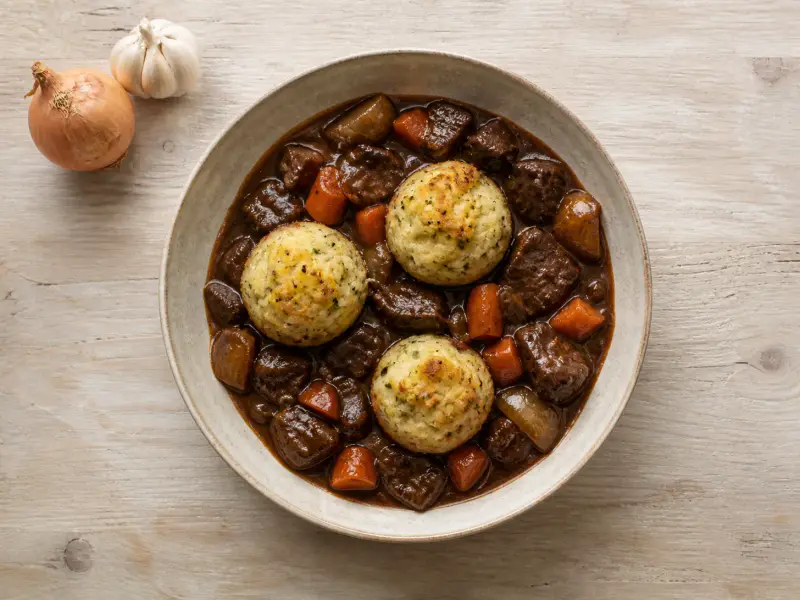 Beef and Ale Stew with Herb Dumplings
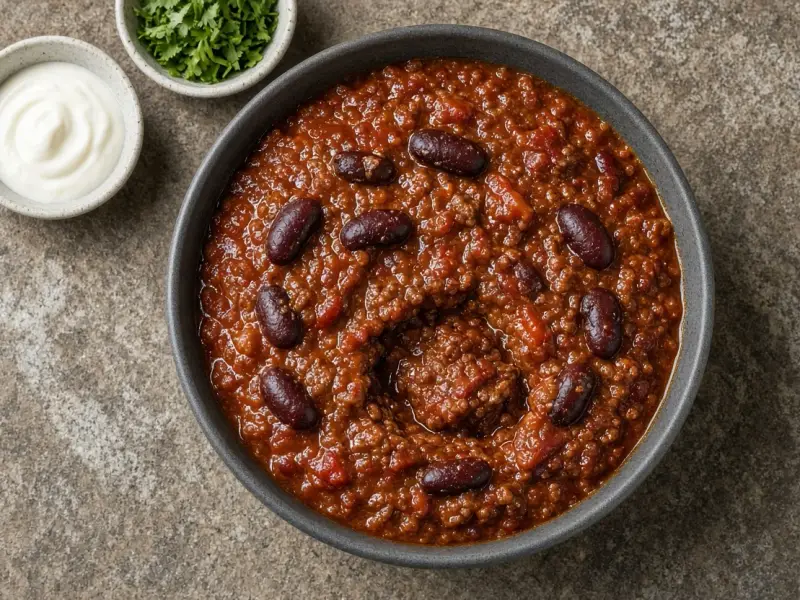 Slow Cooker Beef Chilli
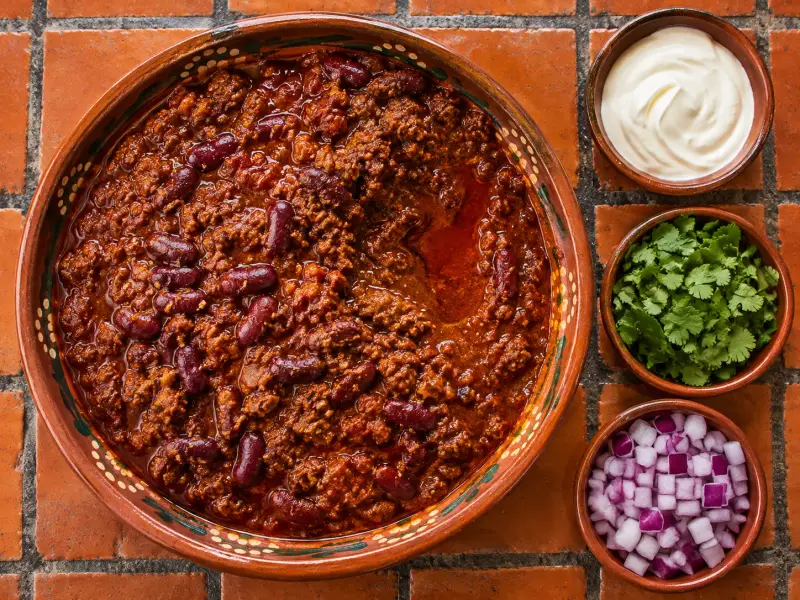 Chilli con Carne
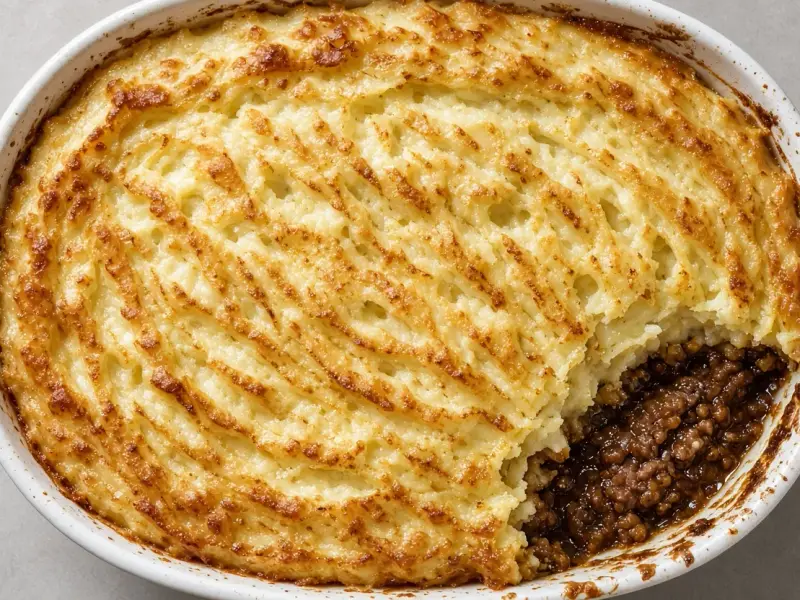 Cottage Pie
 Curry Goat
 Lamb Rogan Josh
 British
 Stews
 Main courses
 Beef