Rocky Road
Broken digestives, marshmallows and glacé cherries set in dark chocolate loosened with butter and syrup, so the slice gives rather than shatters.
- Prep
- 25 min
- Cook
- 10 min
- Resting
- 4 hr
- Total
- 4 hr 35 min
- Serves
- 16
- Revisions
- 1
Allergens
- Cereals containing gluten
- Milk
- Soya
- Sulphites
Named from the ingredients as written, including those carried in from sub-recipes. This is not a guarantee — check the labels on what you actually buy, and note that a product’s recipe can change.
Ingredients
Serves
Method
Line a 20cm square tin with baking paper, leaving an overhang on two sides.
Put the digestives in a bag and break them with a rolling pin into pieces about the size of a thumbnail, with a handful of smaller rubble among them.
Leave real pieces rather than crumbs. Crushed fine, the biscuit disappears into the chocolate and takes with it the one thing the slice is for, which is something to bite through.
Melt the chocolate, butter, golden syrup and fine salt together in a heatproof bowl set over a pan of barely simmering water, stirring until smooth and glossy.
Keep the base of the bowl clear of the water and the heat low. A few drops of water or a gust of steam into melting chocolate seizes it into a stiff dull paste, and it does not come back.
The butter and the syrup are not there for sweetness. They stop the cocoa butter setting hard, which is the whole difference between a slice that gives under the teeth and a slab that shatters onto the plate.
Take the bowl off the pan and leave it for 10 minutes, stirring now and then, until the mixture is barely warm.
Cool it before the marshmallows go in. Stirred into hot chocolate they dissolve into strings, and the white pockets that give the slice its name go with them.
Stir in the biscuit pieces, the marshmallows and the glacé cherries until everything is coated.
Tip the mixture into the tin.
Press it down firmly and evenly with the back of a spoon, pushing it into the corners so the finished slab has no hollows in it.
Refrigerate for at least 4 hours, until it is completely firm right through.
Lift the slab out by the paper onto a board.
Cut into 16 pieces with a long knife warmed under hot water and wiped dry between cuts.
Dust with icing sugar.
Keep it in the fridge, and take it out 10 minutes before eating. Straight from cold the chocolate is brittle and tastes of almost nothing, and both the texture and the flavour come back as it warms.
Nobody has rated this recipe yet.
Sign in to rate this recipe. One rating per person, and you can change it.
What to expect
- Taste
Chocolate first and it is the whole background — at 55% it is bitter enough to be adult and sweet enough not to fight the rest. The butter and syrup round it off and take the edge off the bitterness, making it read as fudgy rather than as plain chocolate. Digestive brings a faintly savoury, wheaty, slightly salty note that is much more important than it sounds and is the reason a plain biscuit works better here than a sweet one. Marshmallow is pure sweetness with a vanilla edge and no other flavour. Glace cherry is the loud element: intensely sweet, faintly almond-scented, and unmistakably artificial in a way that people either enjoy or object to. Salt runs through everything.
- Aroma
Very little once set, which is characteristic of cold chocolate — cocoa butter gives up almost no aroma below body temperature. The melting stage smells strongly of chocolate and butter and the finished slab barely smells at all, which is worth knowing before trying to film it.
- Texture
Four things at once, which is the point. The chocolate is firm but gives rather than snapping, because of the butter and syrup. The biscuit is dry, sandy and crumbles. The marshmallow is soft, slightly elastic and chews. The cherry is wet and dense. Nothing in the slice has the same texture as anything else in it, and eating it is a sequence of small surprises.
- Sound
The knife going through the cold slab, which is a dull compression rather than a crack if the chocolate has been loosened properly. A snap means too much cocoa butter and not enough butter.
- How the flavour moves
Icing sugar and then chocolate, immediately and heavily. Through the middle the biscuit arrives and dries the mouth slightly, which is what keeps the slice from being cloying. A cherry, if the bite catches one, cuts across everything with a sharp sweetness. The finish is bitter chocolate and salt, and it is much drier and less sweet than the start — which is the reverse of what the ingredients list suggests and the reason it works.
- Serve it
Cool but not fridge-cold, and the difference is large. Straight from the fridge the chocolate is brittle, the marshmallow is firm and the whole thing tastes of very little, because cold suppresses both aroma and sweetness. Ten minutes on the side and the chocolate softens, the flavour comes back, and the textures separate properly.
- Goes with
Coffee, or nothing. It is too sweet to want anything sweet with it.
Cook's notes
- Difficulty
The easiest recipe here. There is no oven, no raising agent and no timing to judge.
- Cost
Low to moderate, and the chocolate is nearly all of it.
- Equipment
A 20cm square tin, baking paper, a heatproof bowl and a pan to set it over. No oven and no mixer.
- When to make it
Any time. It needs four hours of fridge, so it is a make-in-the-morning, eat-in-the-evening recipe.
- Best season
None, though it does not survive a hot kitchen and is a poor choice for a summer picnic.
- You know it is done when
Nothing bakes, so there is no doneness in the usual sense. The set slab should be matte rather than glossy on top and completely firm to a fingertip in the middle before it is cut.
- And it feels like
Cut a corner off after four hours: the knife should meet resistance and go through cleanly rather than dragging or crumbling. If it drags, it needs another hour.
- Food safety
Nothing is cooked, so nothing is sterilised, but nothing in it is a risk either. Marshmallows made with gelatine make this unsuitable for vegetarians, which is a dietary rather than a safety point but matters just as much when serving other people.
- Where it goes wrong
- Crushing the biscuits to crumbs, which loses the entire texture of the slice.
- Letting water or steam into the melting chocolate, which seizes it beyond recovery.
- Adding the marshmallows while the chocolate is still hot, so they melt into strings.
- Leaving out the butter and syrup, or reducing them, which gives a slab that shatters rather than a slice that gives.
- Cutting it straight from the fridge with a cold knife, which cracks the slab along the line.
- If it does go wrong
Shatters when cut: too little butter and syrup, or the chocolate was too dark, or the knife was cold. Warm the knife under a tap and dry it. Seized, stiff, dull chocolate: water or steam got in, or it was overheated — it cannot be brought back for this purpose, though it can be turned into a ganache with hot cream and used elsewhere. No visible marshmallow: the mixture was still hot when they went in. Soft and never properly set: the kitchen is warm and it needs longer in the fridge, or too much butter went in. Slice falls apart: it was not pressed hard enough into the tin.
- Making it ahead
Made ahead by necessity and keeps a week in the fridge.
- Keeping it
In the fridge in an airtight box for a week. It does not keep at room temperature in a warm kitchen.
- Reheating
None, but it should be taken out of the fridge 10 minutes before eating.
- Freezing
Freezes for two months. Thaw in the fridge rather than on the side.
- Leftovers
Chopped into ice cream, or crumbled over a chocolate mousse.
- Scaling it
Doubles into a 23 x 33cm tin without change. Melting a double quantity of chocolate takes noticeably longer and should be done more slowly, not hotter.
- Substitutions
Any firm plain biscuit works — rich tea, hobnobs, shortbread, or the broken ends of the shortbread recipe in this collection. Raisins, dried cranberries or chopped dried apricot in place of the cherries. Golden syrup can be light corn syrup or honey. Nuts are common in Australian and American versions and are deliberately absent here so that the recipe carries no nut allergen.
- Dietary swaps
Contains cereals containing gluten, milk, soya and sulphites. Not vegetarian as written, because most marshmallows are set with gelatine — vegetarian marshmallows are widely sold and swapping them makes the recipe vegetarian. The sulphites come from the glace cherries, which are usually preserved with sulphur dioxide; leaving them out removes that allergen.
- Shopping for it
A chocolate around 55% cocoa. Higher is not better here and makes the slab brittle.
- Keeping the cost down
The biscuits can be the broken ends of a packet and the chocolate can be own-brand. This is a recipe designed around using things up.
- Sustainability
Cocoa is the one ingredient where certification is worth paying for.
- Nutrition
Rich and sugar-dense. A 5cm square is the portion the tin is cut for.
- Worth it?
No oven, five minutes of real work, and the only two decisions that matter are how coarsely to break the biscuits and how long to let the chocolate cool.
Where it comes from
- Origin
Contested and, more importantly, split across three different foods that share a name — see contested.
- Also called
Rocky road. The British form is sometimes called a fridge cake or chocolate tiffin, though tiffin is a distinct Scottish recipe with raisins and no marshmallow.
- What the name means
The name describes the appearance: an uneven, rubbly surface. It is also frequently explained as a Depression-era reference to hard times, an explanation which is widely repeated and has no source behind it.
- History
Three separate foods carry this name. In Australia, rocky road is a confection of marshmallow, nuts and often coconut set in chocolate, claimed there from the nineteenth century. In the United States, rocky road is primarily an ice cream flavour, dated to around 1929 and credited both to William Dreyer of Oakland and to Fenton's Creamery, with both claims still in circulation and neither settled. In Britain, rocky road is a no-bake fridge cake of broken biscuit, marshmallow and glace cherries set in chocolate, and its origin is simply not documented — it belongs to the same family as chocolate tiffin and the various biscuit cakes of British domestic baking.
- Why it matters
In Britain it is a cafe counter and school fete staple, and one of the standard recipes given to children because there is no oven involved. In Australia it is a confectionery item sold by weight.
- When it is eaten
None. It is everyday, and it is a common first recipe for a child to make alone.
- The traditional way
Setting rather than baking, and loosening the chocolate with fat and sugar syrup so that it does not set to a snap.
- How it changed
The British version has accumulated ingredients over time — popcorn, pretzels, honeycomb, Turkish delight and a great deal else now appear in commercial versions. The plain three-addition version here is the older shape.
- Regional variations
The Australian confection uses nuts and coconut and no biscuit. American rocky road is ice cream. Scottish tiffin is the closest British relative and uses raisins and no marshmallow.
- How this version differs
Golden syrup and butter in the chocolate, in stated quantities and with the reason given, which many recipes leave out and which is why many home-made rocky road shatters. No nuts, so the recipe carries no nut allergen.
- Sources and credit
None available for the British form.
 Millionaire's Shortbread
 Apple and Blackberry Crumble
 Brown Butter Chocolate Chip Cookies
 Chocolate Chip Cookies
 Chocolate Fudge Cake
 Dark Chocolate Brownies
 British
 Baking
 Desserts
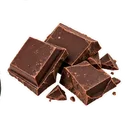 Chocolate