Roast Turkey
A whole turkey dry-brined uncovered in the fridge, roasted with thyme butter under the breast skin and checked in two places so the breast stays juicy.
- Prep
- 30 min
- Cook
- 3 hr
- Resting
- 25 hr 45 min
- Total
- 29 hr 15 min
- Serves
- 10
- Revisions
- 1
Allergens
- Milk
Named from the ingredients as written, including those carried in from sub-recipes. This is not a guarantee — check the labels on what you actually buy, and note that a product’s recipe can change.
Ingredients
Serves
Method
Pat the turkey dry inside and out with kitchen paper.
Mix the salt, sugar and pepper together.
Rub about two-thirds of the salt mix evenly over the skin, breast and legs especially, and the rest inside the cavity.
Set the turkey on a rack over a tray and refrigerate it, uncovered, for at least 24 hours and up to 3 days. Do not rinse it afterwards; the salt has already gone into the meat, and the skin should look dry and slightly translucent.
Take the turkey out of the fridge 1 hour before roasting.
Heat the oven to 180C/160C fan.
Mash the butter with the chopped thyme leaves.
Loosen the skin over the breast by working your fingers gently underneath it from the cavity end, without tearing it.
Push the thyme butter under the skin and smooth it out over the breast from the outside.
Put the onions, lemon, garlic and thyme sprigs loosely into the cavity. Packed tight, the cavity slows the heat reaching the centre of the bird.
Set the turkey breast-up on a rack in a large roasting tin and pour the water into the tin.
Roast for 2 hours 30 minutes to 3 hours, adding a splash of water whenever the tin looks dry. The drippings are the gravy, and once they burn they taste of it.
If the breast is deep golden before the legs are done, lay a loose sheet of foil over it.
Start checking at 2 hours. It is done when the thickest part of the thigh, away from the bone, reads 75C and the deepest part of the breast reads 70C; the juice from the thigh runs clear, not pink. The breast climbs past 74C as it rests.
Lift the turkey onto a board, tip the juices from the cavity into the roasting tin and discard the aromatics. Keep the tin and everything in it for the gravy.
Cover the turkey loosely with foil and rest it for 45 minutes to 1 hour. It stays hot for that long, and the oven is free for the sides.
Carve the legs off first, then cut each breast off the bone in one piece and slice it across the grain.
Nobody has rated this recipe yet.
Sign in to rate this recipe. One rating per person, and you can change it.
What to expect
- Taste
Savoury and properly seasoned right through to the centre of the breast, which is what the dry brine does that surface salting cannot. The breast is mild, sweet and clean; the dark meat is richer, more gamey and more savoury. The skin is the strongest-tasting part: salty, buttery and roasted, with a faint caramel note from the sugar.
- Aroma
Roast fat and browning skin first, then thyme and butter, with lemon and onion steaming out of the cavity. As the drippings darken in the tin the kitchen smells of gravy before any gravy has been made.
- Texture
The skin is crisp and thin over the breast and softer over the legs. Properly cooked breast is tender and juicy, giving slightly under the teeth; overcooked, it turns fibrous and dry. The dark meat is softer, looser and more gelatinous.
- Sound
The drippings spit and sizzle in the tin through the last hour. A crisp skin crackles faintly under the carving knife.
- How the flavour moves
Salty, buttery skin hits first. The breast meat follows, mild and sweet, and the thyme comes through as it is chewed. Dark meat lingers longer and finishes richer and more savoury, especially with gravy.
- Serve it
Served warm rather than scalding, after its long rest, with hot gravy poured over to bring it back up.
- Goes with
Turkey gravy, cranberry sauce, sage and onion stuffing, mashed or roast potatoes, glazed carrots, green beans and Brussels sprouts with bacon.
Cook's notes
- Difficulty
Moderate. Nothing in it is difficult; the skill is in timing and in trusting a thermometer.
- Cost
Moderate to high, depending on the bird. A free-range or heritage turkey costs several times a standard one.
- Equipment
A large roasting tin with a rack, a tray and rack that fit in the fridge, a probe thermometer, foil and a carving board with a groove for juice.
- When to make it
Thanksgiving in late November, Christmas, or any large gathering.
- Best season
Fresh turkeys are mainly available around Thanksgiving and Christmas; frozen ones all year.
- You know it is done when
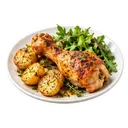
The skin is deep, even golden brown and tight over the breast. When the thigh is pierced, the juice runs clear rather than pink, and the leg wobbles loosely at the joint.
- And it feels like
The breast is firm but springy under a finger; it should not feel hard. The thigh meat gives easily and pulls from the bone.
- Food safety
Poultry must reach 74C throughout. Thaw a frozen bird in the fridge, never at room temperature. Keep raw turkey and its juices away from anything eaten raw, and wash hands, boards and the sink after handling. Stuffing cooked inside the bird must also reach 74C, which is one reason this recipe bakes it separately.
- Where it goes wrong
- Roasting by time alone rather than by thermometer.
- Waiting for the breast to reach the same temperature as the legs, which dries it out.
- Not drying the skin, which leaves it pale and rubbery.
- Cooking stuffing inside the bird, which forces the breast to overcook while the stuffing comes up to temperature.
- Carving immediately, so the juice runs onto the board instead of staying in the meat.
- If it does go wrong
Breast browning too fast: cover it loosely with foil. Legs still underdone when the breast is ready: take the bird out, cut off the legs and return them to the oven while the breast rests. Pale skin at the end: turn the oven up to 220C/200C fan for the last 10-15 minutes and watch it. Drippings burning: add a splash of water to the tin.
- Making it ahead
The salting must be done 1-3 days ahead and is the main make-ahead step. The thyme butter can be made a few days in advance.
- Keeping it
Carved meat keeps for 3 days in the fridge, covered, and should be refrigerated within 2 hours of carving.
- Reheating
Reheat slices in a covered dish with a few spoonfuls of gravy or stock at 160C/140C fan until piping hot. Dry heat turns leftover breast to sawdust.
- Freezing
Carved meat freezes well for up to 3 months, ideally with a little gravy or stock over it.
- Leftovers
Sandwiches, pies, soups and curries. The carcass makes an excellent stock.
- Scaling it
Allow about 500g of whole bird per person. Salt at about 8g per kilo. A bird over 7kg is better spatchcocked or cooked as a separate crown and legs.
- Substitutions
Sage or rosemary in the butter instead of thyme. Salted butter can be used if the salt rub is cut by a few grams.
- Dietary swaps
Contains milk from the butter. For a dairy-free bird, rub olive oil over the skin instead and push nothing underneath; the skin browns well and the breast is a little less rich.
- Shopping for it
Order a fresh bird from a butcher a few weeks before the holiday. Ask for the giblets and neck to be included. Check whether the bird is self-basting or pre-brined, in which case skip the salting.
- Keeping the cost down
A standard frozen bird is far cheaper than fresh or free-range and roasts well if fully thawed. The carcass and giblets go into the gravy and a stock, so nothing is wasted.
- Sustainability
Higher-welfare and heritage breeds cost more and are raised more slowly. Using the carcass for stock makes the most of the bird.
- Nutrition
A lean protein, especially the breast. The skin and butter add most of the fat.
- Worth it?
Not difficult once the two-temperature problem is understood. Salt it early, roast it by thermometer and rest it properly, and the breast is as juicy as the legs.
Where it comes from
- Origin
The bird is native to North America; the roast as a festive centrepiece developed in both Britain and the United States.
- Also called
Roast turkey.
- What the name means
The English name probably comes from confusion with guinea fowl, which reached England through traders associated with the Ottoman Empire, then called Turkey. The exact route of the confusion is debated.
- History
Indigenous peoples of Mexico domesticated the turkey long before Spanish arrival, and Spanish ships carried it to Europe in the early sixteenth century. It became a feast bird in England within a few decades. In the United States, Thanksgiving was celebrated irregularly and locally until Sarah Josepha Hale, editor of Godey's Lady's Book, campaigned for a national day for years; Lincoln proclaimed it in 1863, and roast turkey became the expected centrepiece in the decades that followed.
- Why it matters
The single most recognisable symbol of American Thanksgiving, and of a British Christmas dinner. The President of the United States has formally pardoned a turkey every year since 1989.
- When it is eaten
Thanksgiving, Christmas, and other large family gatherings.
- The traditional way
Roasting a whole bird, often stuffed, and basting it repeatedly. Dry brining is a more recent home technique, popularised by American food writers and restaurant cooks from the 2000s.
- How it changed
Commercial breeding since the mid-twentieth century has produced birds with far larger breasts than heritage breeds, which makes the breast-versus-leg timing problem worse. Brining, spatchcocking and separate cooking of the legs are all responses to it.
- Regional variations
Deep-fried turkey is common in the American South. British birds are often roasted with bacon over the breast. Spatchcocked turkey, flattened before roasting, cooks much faster and more evenly.
- How this version differs
No stuffing inside the bird, no basting, and a dry brine rather than a wet one.
- Sources and credit
No individual is credited with the dish. Dry brining has been widely popularised in recent decades by several American food writers, and no one of them invented the technique of salting meat ahead.
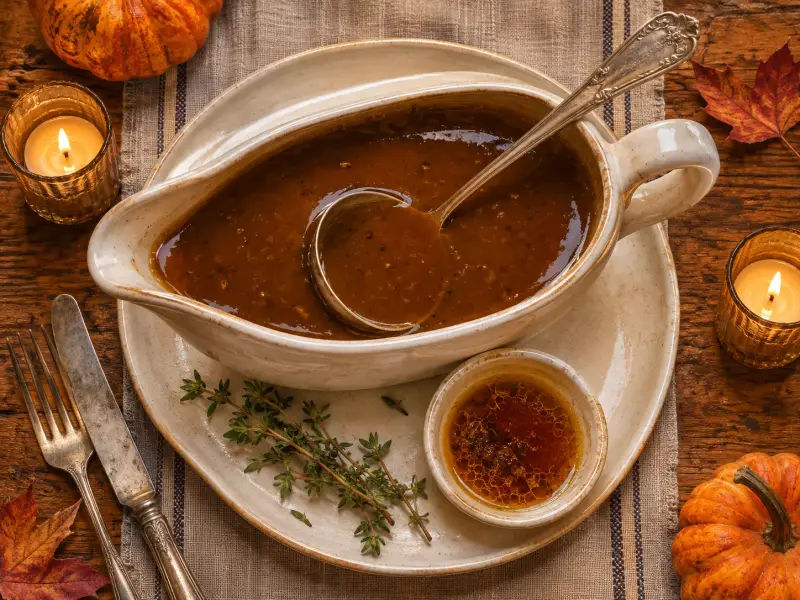 Turkey Gravy
 Beef Tacos
 Chicken à la King
 Chicken Burger
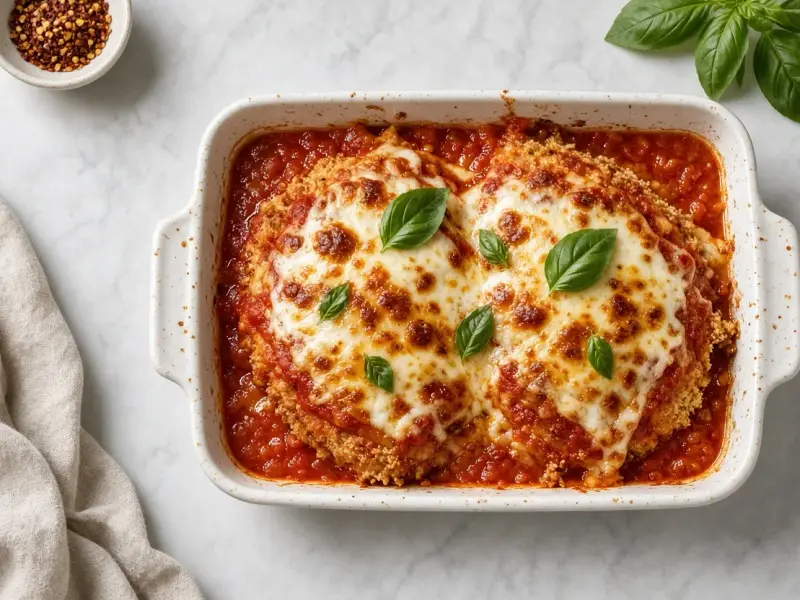 Chicken Parmigiana
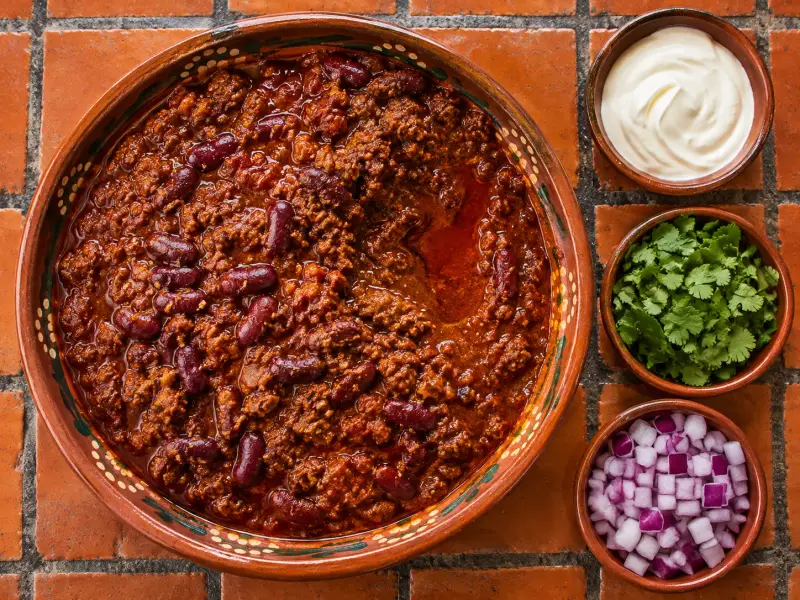 Chilli con Carne
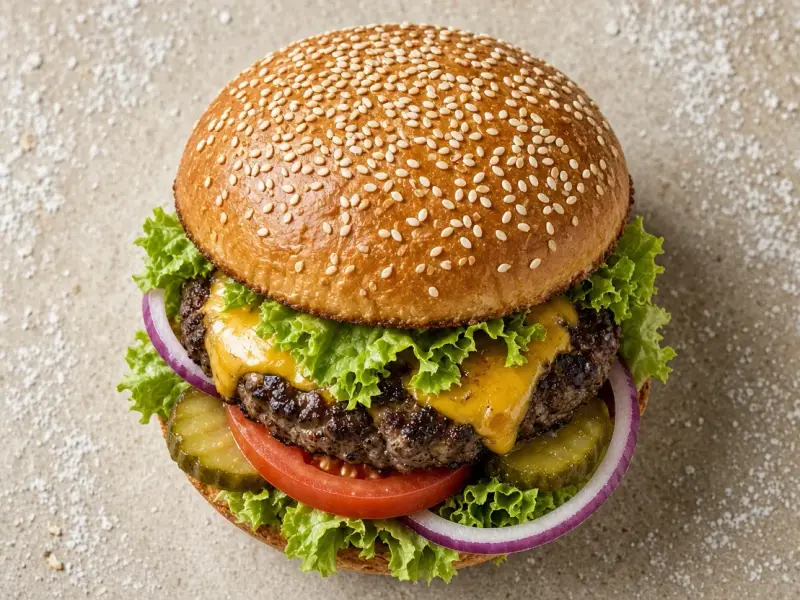 Classic Beef Burger
 American
 Dinner
 Main courses