BLT
Three ingredients and one problem, which is water. Salt the tomato and drain it, and put the lettuce between the tomato and the bread.
- Prep
- 10 min
- Cook
- 10 min
- Total
- 20 min
- Serves
- 2
- Revisions
- 1
Allergens
- Cereals containing gluten
- Eggs
- Mustard
- Sulphites
Named from the ingredients as written, including those carried in from sub-recipes. This is not a guarantee — check the labels on what you actually buy, and note that a product’s recipe can change.
Ingredients
Serves
Sandwich
Method
Sandwich
Lay the tomato slices out on kitchen paper, salt them and leave them for 10 minutes.
This is the whole recipe. A ripe tomato is mostly water, and salting it draws a surprising amount out and concentrates what is left. Skip it and the sandwich is soggy within two minutes.
Meanwhile, cook the bacon until properly crisp — in a cold pan brought up to medium heat, which renders the fat before the meat tightens.
Drain the bacon on a rack rather than on paper, so the underside stays crisp.
Toast the bread and butter it to the edges while hot.
Spread mayonnaise generously on all four slices, on top of the butter.
Lay lettuce on the bottom slices, then the drained tomato, then pepper, then the bacon.
The lettuce goes underneath the tomato, not on top of it. It is a physical barrier between the wettest thing in the sandwich and the bread, and putting it the other way round is the second reason BLTs go soft.
Close, press gently, and cut in half diagonally with a serrated knife. Eat now — this is not a sandwich that travels.
Nobody has rated this recipe yet.
Sign in to rate this recipe. One rating per person, and you can change it.
What to expect
- Taste
Salt and smoke against sweet tomato, with the mayonnaise binding them and the lettuce doing almost nothing except being cold and crisp. It is a sandwich of three strong things and no subtlety, which is why it works.
- Aroma
Bacon, and only bacon.
- Texture
Two kinds of crunch — bacon and lettuce — against soft tomato and toast. When it fails, it fails on texture rather than flavour.
- Sound
The bite, which should be audible.
- How the flavour moves
Salt and smoke first, then sweetness and acidity from the tomato, then a fatty finish from the mayonnaise.
- Serve it
Hot bacon, cold tomato and lettuce, warm toast. Three temperatures at once and all deliberate.
- Goes with
Crisps. A cup of tea, or a cold beer.
Cook's notes
- Difficulty
Beginner, and it is entirely a water-management problem.
- Cost
Low.
- Equipment
A frying pan, a toaster and a serrated knife.
- When to make it
Lunch, ideally in summer.
- Best season
Genuinely seasonal. Make it in August.
- You know it is done when
Bacon evenly brown and rigid. Tomato slices that look drier and slightly darker than they did.
- And it feels like
Everything should crunch except the tomato.
- Food safety
Nothing unusual.
- Where it goes wrong
- Not draining the tomato, which is the whole problem.
- Lettuce on top of the tomato rather than under it.
- Bacon started in a hot pan, which curls it and leaves it chewy.
- Draining the bacon on paper, which softens the underside.
- A winter tomato, which has no flavour and all the water.
- If it does go wrong
Soggy: the tomato. Chewy bacon: it went into a hot pan. Bland: salt and pepper on the tomato, not on the sandwich. Falling apart: it is over-filled; three rashers per sandwich is plenty.
- Making it ahead
None. This is the least make-ahead dish in the collection.
- Keeping it
None. A made BLT is worse every minute.
- Reheating
No.
- Freezing
No.
- Leftovers
None by design.
- Scaling it
Linear, but cook the bacon in batches so it fries rather than steams.
- Substitutions
Any bread with structure. Pancetta or dry-cured bacon crisps better than cheap wet-cured, which releases water into the pan and boils rather than fries. Iceberg or little gem for the lettuce — anything limp is pointless here.
- Dietary swaps
Contains gluten, and eggs, mustard and sulphites from the mayonnaise. Dairy free if the butter is left out. Nut free.
- Shopping for it
Dry-cured streaky bacon. In the pan, wet-cured bacon releases a white liquid and boils rather than fries, which is the single most common reason home bacon is not crisp.
- Keeping the cost down
Cheap. Dry-cured bacon costs more and behaves noticeably better than wet-cured, which is worth it here.
- Sustainability
Pork carries roughly a fifth of beef's footprint per kilogram, and four rashers a head is a modest amount. The tomato is the more interesting question: out of season, tomatoes grown under heat or flown in carry a footprint out of all proportion to their size and taste of very little, so a BLT in February is worse on both counts. This is a summer sandwich and treating it as one is both the better meal and the lower impact.
- Nutrition
Salty and fatty, with a bit of vegetable. It is a sandwich.
- Worth it?
Ten minutes with the tomato on kitchen paper, and the sandwich survives being eaten.
Where it comes from
- Origin
The United States.
- Also called
BLT — bacon, lettuce and tomato.
- Said out loud
The letters.
- What the name means
An initialism of its three fillings, which is unusual in food and says something about how completely fixed the recipe is.
- History
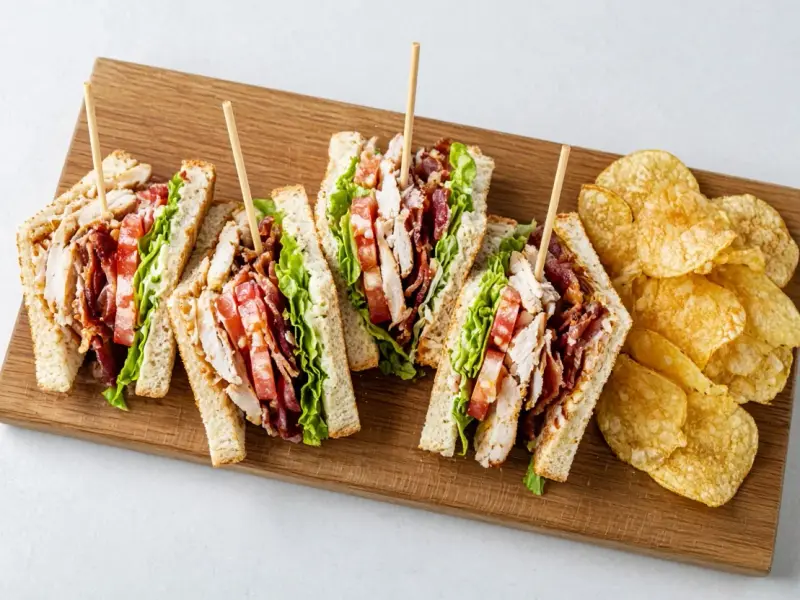
The sandwich is generally understood to have separated from the club sandwich, which contains the same three ingredients with chicken added, and to have become an American standard in the first half of the twentieth century. Its ubiquity depended on lettuce and tomato being available all year, which was a consequence of refrigerated transport and supermarket distribution rather than of anything about the recipe.
- Why it matters
One of the most-ordered sandwiches in the English-speaking world, and one of the very few whose name is an abbreviation everyone understands.
- When it is eaten
Lunch, and a summer sandwich by temperament — it is at its best when tomatoes are.
- The traditional way
None to speak of. It is assembly.
- How it changed
Barely at all, which is the point of a sandwich with a fixed initialism.
- Regional variations
Avocado added makes a BLAT; a fried egg is common in Australia and Britain.
- How this version differs
The tomato is salted and drained, and the lettuce goes underneath it. Both are stated as steps because they are the difference between a good BLT and a wet one.
- Sources and credit
None.
 Mayonnaise
 Club Sandwich
 Grilled Cheese Toastie
 Tuna Melt
 Air Fryer Bacon
 Aviation
 Blue Hawaii
 American
 Lunch
 Pork
 15 minutes