Banana Pancakes
Bananas so ripe they are almost black, mashed rather than blended, and folded in at the end. Ripe bananas are sweeter and softer and are the whole recipe.
- Prep
- 10 min
- Cook
- 20 min
- Resting
- 10 min
- Total
- 40 min
- Serves
- 4
- Revisions
- 1
Allergens
- Cereals containing gluten
- Eggs
- Milk
Named from the ingredients as written, including those carried in from sub-recipes. This is not a guarantee — check the labels on what you actually buy, and note that a product’s recipe can change.
Ingredients
Serves
Batter
To serve
Method
Batter
Mash two of the bananas roughly with a fork, leaving some lumps, and slice the third.
Use bananas that are heavily spotted or black. As they ripen their starch converts to sugar and the flesh softens, so a ripe banana is both sweeter and easier to fold in — a firm yellow one stays as pale rubbery lumps in the finished pancake.
Mash rather than blend. A blender liquefies the banana into the batter and you lose the pockets of fruit entirely.
Whisk the flour, baking powder, bicarbonate, salt, cinnamon and sugar in a large bowl.
Whisk the eggs, buttermilk, melted butter and vanilla in another.
Pour the wet into the dry and fold until only just combined — a few streaks of flour left is correct.
Fold in the mashed banana with two or three strokes, no more.
Rest the batter for 10 minutes. The bicarbonate reacts with the buttermilk's acid immediately, so this is the window in which the bubbles are forming; longer than about twenty minutes and the lift starts to go.
Heat a non-stick pan over medium-low with a little butter.
Drop in ladlefuls and press two or three banana slices into the surface of each.
Cook for 2 to 3 minutes, until bubbles appear across the surface and the edges look dry and matte.
Flip once and cook for a further 1 to 2 minutes. Banana pancakes brown faster than plain ones because of the extra sugar, so the heat wants to be lower than you would use otherwise.
To serve
Keep them on a rack in a low oven rather than stacked, and serve with butter and maple syrup.
Nobody has rated this recipe yet.
Sign in to rate this recipe. One rating per person, and you can change it.
What to expect
- Taste
Sweet without added sugar doing most of it — a black banana is very sweet — with vanilla and cinnamon behind it and the buttermilk giving a faint tang that keeps it from being cloying.
- Aroma
Banana and browning butter, which is a considerably stronger smell than plain pancakes produce.
- Texture
Light and slightly cakey, with soft fruit pockets. The pressed-in slices go sticky and almost jammy where they meet the pan.
- Sound
The batter hitting the butter.
- How the flavour moves
Butter first, then banana sweetness, then a faint sour finish from the buttermilk.
- Serve it
Hot, and they should not be stacked while waiting — a rack in a low oven, like waffles.
- Goes with
Maple syrup and butter. Bacon, which is a genuine American classic and better than it sounds.
Cook's notes
- Difficulty
Beginner.
- Cost
Very low, and it is a use for bananas nobody wants to eat.
- Equipment
A non-stick pan and two bowls.
- When to make it
A weekend morning.
- Best season
None.
- You know it is done when
Bubbles appearing across the whole surface and the edges losing their shine and looking dry. That is the moment to flip, and it is a better signal than any timer.
- And it feels like
Light and slightly cakey, with soft pockets of banana. Dense means overmixed or the batter stood too long.
- Food safety
Nothing unusual.
- Where it goes wrong
- Firm yellow bananas, which stay as rubbery lumps.
- Blending instead of mashing, which loses the fruit entirely.
- Overmixing, which makes them tough.
- Too high a heat, which scorches them before the middle cooks — the extra sugar makes this much easier to do than with plain pancakes.
- Letting the batter stand too long, which spends the lift.
- Stacking them while the rest cook, which steams them soft.
- If it does go wrong
Dark outside, raw inside: the heat was too high. Dense: overmixed, or the batter stood. Rubbery lumps of fruit: the bananas were not ripe. Not rising: the buttermilk was substituted with plain milk, so there was no acid for the bicarbonate.
- Making it ahead
Poorly — the batter is time-sensitive. Cooked pancakes freeze well, which is the better answer.
- Keeping it
Two days in the fridge.
- Reheating
A toaster works surprisingly well, or a dry pan.
- Freezing
They freeze well for two months with greaseproof between them, and go from frozen into a toaster.
- Leftovers
Toasted, with butter.
- Scaling it
Doubles easily.
- Substitutions
Buttermilk can be 300ml milk with 1 tbsp lemon juice, left 10 minutes — the acid is needed to react with the bicarbonate, so plain milk alone will not do. Half wholemeal flour works and gives a denser pancake.
- Dietary swaps
Contains gluten, milk and eggs. Nut free as written. Not straightforwardly vegan: the eggs can be replaced with more mashed banana but the results are dense.
- Shopping for it
Nothing unusual. Supermarkets often sell over-ripe bananas cheaply, which are exactly what this wants.
- Keeping the cost down
Among the cheapest things here, and it is a recipe for ingredients that would otherwise be thrown away.
- Sustainability
Its best feature is that it is a waste recipe. Bananas are one of the most commonly thrown-away foods in British households — usually because they have gone spotty, which is precisely when they are best for this — and using three of them is a more meaningful saving than any substitution in the batter. Bananas themselves travel far but are shipped rather than flown and have a comparatively modest footprint for imported fruit. Over-ripe ones also freeze whole, peeled, and go straight into this batter from frozen.
- Nutrition
Sweet, and much of the sweetness is the fruit rather than added sugar.
- Worth it?
Black bananas and a lower heat. Two adjustments to a pancake batter and nothing else changes.
Where it comes from
- Origin
The United States.
- Also called
None.
- Said out loud
Straightforward.
- What the name means
Descriptive.
- History
The American pancake depends on chemical raising agents — bicarbonate of soda reacting with an acid — which became domestically available in the nineteenth century and turned pancakes from a yeasted or beaten-egg affair into a fifteen-minute batter. Bananas became cheap and universal in Britain and America over the twentieth century through refrigerated shipping, and they entered the batter as soon as they were common enough to have spare over-ripe ones.
- Why it matters
Modest, and largely as a way of using up bananas nobody will eat.
- When it is eaten
Weekend breakfast, and specifically a weekend breakfast made from what is in the fruit bowl.
- The traditional way
Chemical leavening with an acid, and minimal mixing.
- How it changed
Nothing much.
- Regional variations
The two-ingredient banana-and-egg pancake is a different modern dish entirely and behaves nothing like this one.
- How this version differs
This site already has Buttermilk Pancakes, which is the plain version and the better starting point if you want plain ones. This is that batter adjusted for banana — a lower heat and a thicker start — rather than the same recipe with fruit thrown in.
- Sources and credit
None.
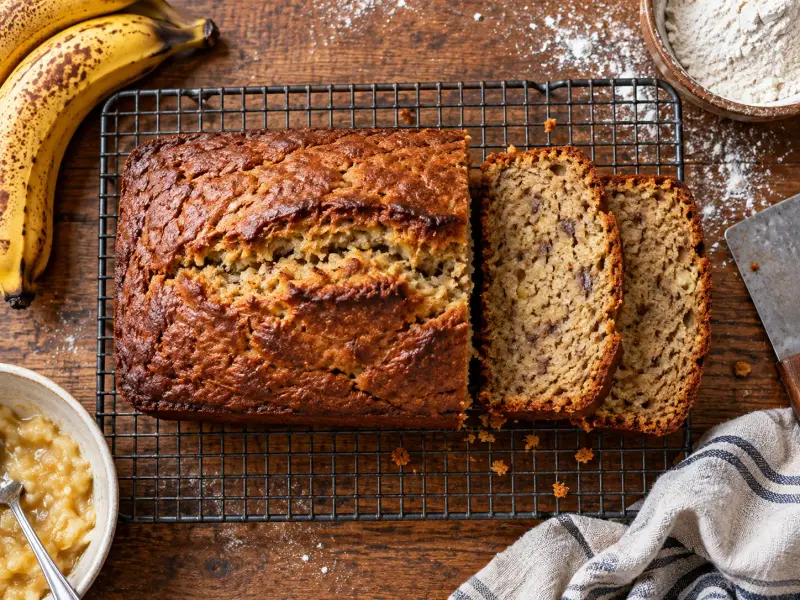 Banana Bread
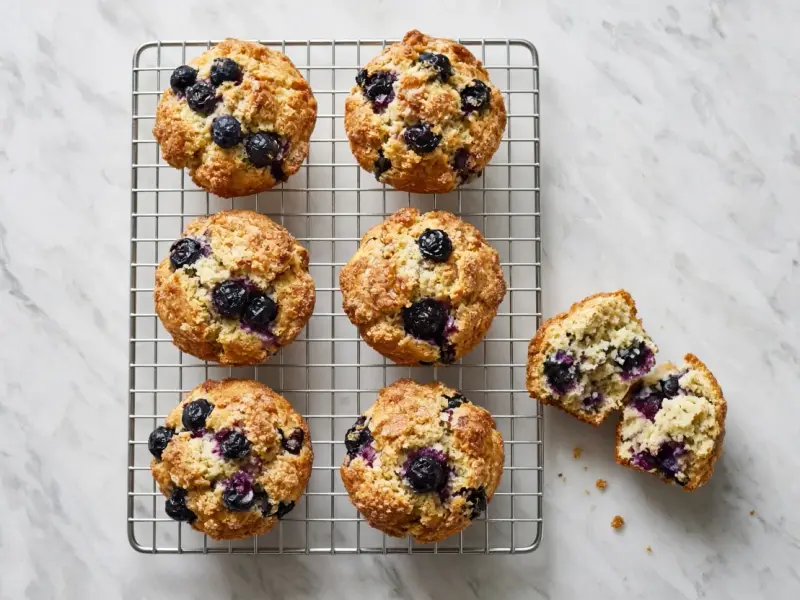 Blueberry Muffins
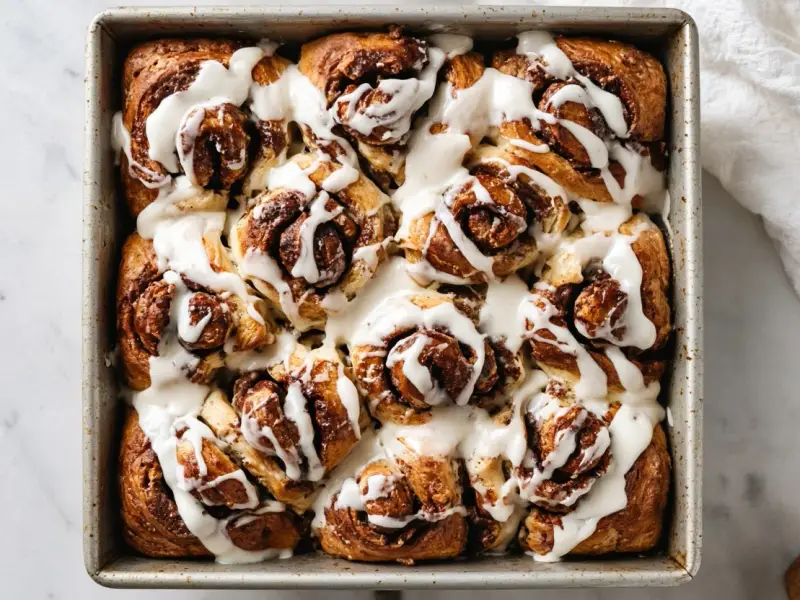 Cinnamon Rolls
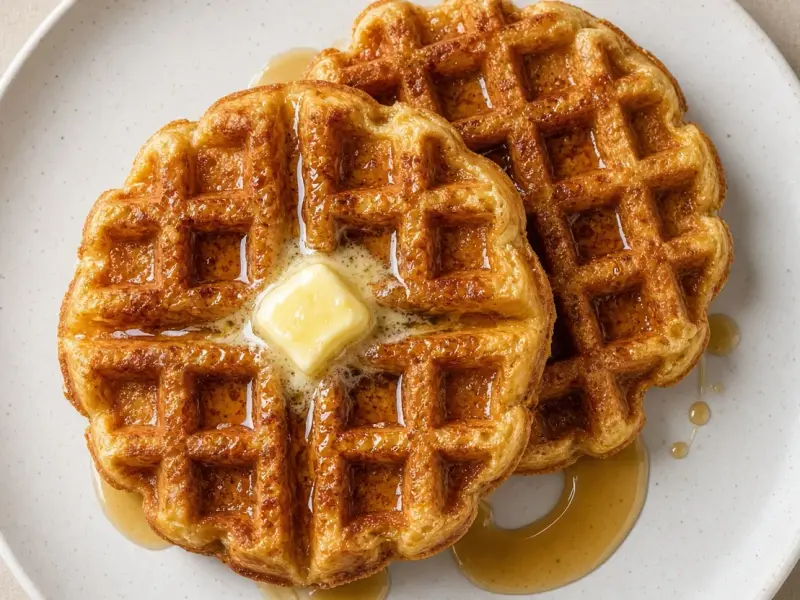 Waffles
 Breakfast Burrito
 Brown Butter Chocolate Chip Cookies
 American
 Breakfast
 Baking
 Vegetarian
 30 minutes