Avocado Toast
Season the avocado properly, with salt, acid and enough of both. The dish is three ingredients and it fails on seasoning nine times out of ten.
- Prep
- 10 min
- Cook
- 3 min
- Total
- 13 min
- Serves
- 2
- Revisions
- 1
Allergens
- Cereals containing gluten
- Sesame
Named from the ingredients as written, including those carried in from sub-recipes. This is not a guarantee — check the labels on what you actually buy, and note that a product’s recipe can change.
Ingredients
Serves
Avocado
Toast
To finish
Method
Toast
Toast the bread until it is properly dark at the edges, not merely warm.
Rub the cut face of the garlic clove over each hot slice. The rough toasted surface grates the garlic against itself and leaves a trace of it, which is all this needs.
Drizzle with the olive oil while still hot.
Avocado
Scoop the avocado into a bowl and add the lemon juice, salt, pepper and chilli flakes.
Mash roughly with a fork, leaving some lumps. Smooth avocado is a dip; this wants texture.
Taste it, and then taste it again. Avocado is fatty and bland and swallows salt and acid without appearing to change — three quarters of a teaspoon of flaky salt for two avocados is not a mistake, and the most common failure of this dish by far is an underseasoned one.
To finish
Pile the avocado onto the toast in a thick uneven layer rather than spreading it thin.
Finish with the toasted sesame seeds, more salt, more pepper and a final squeeze of lemon.
Nobody has rated this recipe yet.
Sign in to rate this recipe. One rating per person, and you can change it.
What to expect
- Taste
Should taste of salt and lemon first and avocado second, which surprises people. The chilli and the garlic on the toast are what give it any length at all.
- Aroma
Toasted bread and garlic. Avocado has almost no smell.
- Texture
The reason to mash roughly: soft lumps against a genuinely crisp toast, with the sesame seeds adding a small crunch.
- Sound
The toast, which should be audible.
- How the flavour moves
Salt and acid first, then fat, then chilli warmth at the end. Without the acid it is a mouthful of fat with nothing to end it.
- Serve it
Warm toast, cool avocado.
- Goes with
A poached egg. Coffee. Hot sauce.
Cook's notes
- Difficulty
Beginner. It is one of the easiest things here and one of the most often done badly.
- Cost
Mid, entirely because of the avocados.
- Equipment
A toaster, a bowl and a fork.
- When to make it
Breakfast, or lunch in ten minutes.
- Best season
None in the shops, which is itself part of the point.
- You know it is done when
The toast should be visibly dark at the edges. Pale toast under avocado goes soft in a minute.
- And it feels like
The avocado should hold soft lumps rather than being uniform.
- Food safety
Nothing unusual. The most common avocado injury is from the stone, which should be removed by levering with a spoon rather than striking with a knife.
- Where it goes wrong
- Under-seasoning, which is the failure in nine cases out of ten.
- No acid, which leaves it a mouthful of fat with no finish.
- Mashing it smooth, which makes it a dip.
- Pale toast, which goes soft under the weight.
- Unripe avocado, which is hard, bitter and cannot be rescued.
- Spreading it thin, when the whole appeal is a thick layer.
- If it does go wrong
Bland: salt, then lemon, then salt again. Watery or stringy: the avocado was over-ripe or a poor one. Hard and bitter: it was not ripe; leave the others in a paper bag with a banana for two days. Brown: it was made too early.
- Making it ahead
None.
- Keeping it
None. Mashed avocado browns and there is no version of it that keeps well.
- Reheating
No.
- Freezing
No.
- Leftovers
None, by design.
- Scaling it
Linear.
- Substitutions
Lime instead of lemon. Any bread with a real crust — soft sliced bread collapses under the weight and gives nothing to bite against.
- Dietary swaps
Contains gluten from the bread and sesame from the seeds. Vegan and dairy free as written. Nut free.
- Shopping for it
A ripe avocado yields to gentle pressure at the stem end. If the little stem cap comes off and the flesh beneath is green, it is good; brown means it is past it.
- Keeping the cost down
Buy avocados hard and cheap and ripen them at home in a paper bag; ready-to-eat ones carry a premium and are often bruised.
- Sustainability
This is the dish here with the most genuinely complicated ingredient. Avocados are water-intensive, are grown largely in Mexico, Peru and Chile and shipped a long way, and demand has driven real pressure on water supplies and, in some regions, on forest. None of that makes them unusable, and the sensible framing is that an avocado is a treat with a real cost rather than an everyday staple — which is roughly how the price already behaves. Buying loose, ripening at home and using the whole thing avoids the waste that makes the footprint worse.
- Nutrition
High in fat, and most of it monounsaturated. Genuinely a decent breakfast, though not the low-calorie one it is sometimes assumed to be.
- Worth it?
Salt it as though you mean it, and taste it twice. That is the entire recipe.
Where it comes from
- Origin
Australia, in this form.
- Also called
None.
- Said out loud
Straightforward.
- What the name means
Descriptive. Avocado comes via Spanish aguacate from the Nahuatl āhuacatl.
- History
Avocados have been cultivated in Mesoamerica for thousands of years, and eating them mashed on bread is not an invention anywhere they grow. The café dish is Australian: Bill Granger's Sydney restaurant served smashed avocado on toast from 1993 and is the usual attribution, and the dish spread through Australian and then British and American café culture, becoming ubiquitous in the 2010s and acquiring an unwelcome second life as a symbol in arguments about young people and house prices.
- Why it matters
Genuinely large for a dish this simple. It became shorthand for a whole café culture and then for a generational argument, which says more about the argument than the toast.
- When it is eaten
Breakfast, brunch, or lunch. It is a café dish that happens to be easy at home.
- The traditional way
None.
- How it changed
It acquired a great many toppings and lost none of them.
- Regional variations
In Mexico, avocado on a bolillo roll with lime and salt is a different and older thing. Chilean and Peruvian versions are common.
- How this version differs
The salt quantity is stated explicitly and the reason given, and the toast is garlic-rubbed. Beyond that there is very little to differ on.
- Sources and credit
Bill Granger, Sydney, 1993, for the café dish. Not for the idea of putting avocado on bread.
Related recipes
 Overnight Oats
 Chopped Salad
 Classic French Omelette
 Couscous Salad
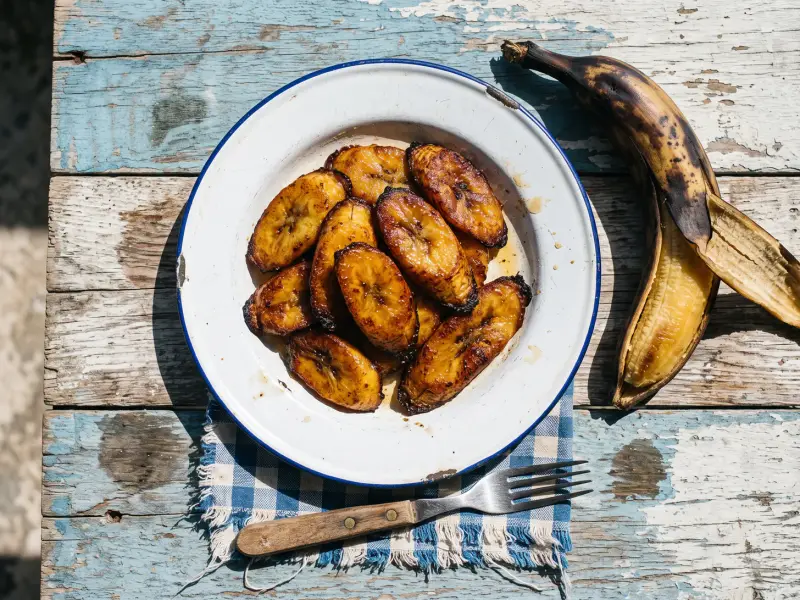 Fried Plantain
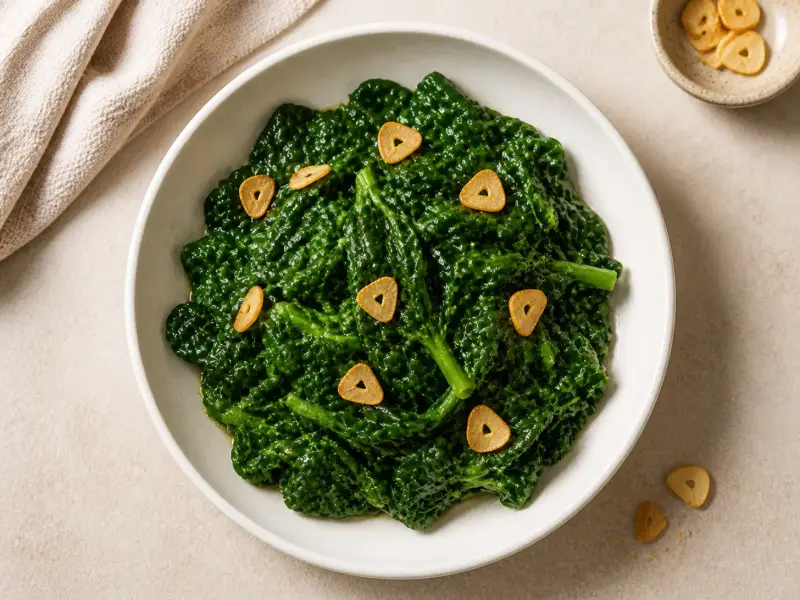 Garlicky Greens
Categories
Courses & dish types
 Breakfast
Diets
 Vegetarian
 Vegan
Techniques & equipment
 No-cook
Time & effort
 15 minutes