Steak Sandwich
Rest the steak, then slice it across the grain and lay it in the bread flat rather than in a lump. A whole steak in a sandwich pulls out in one piece at the first bite.
- Prep
- 15 min
- Cook
- 25 min
- Resting
- 8 min
- Total
- 48 min
- Serves
- 2
- Revisions
- 1
Allergens
- Cereals containing gluten
- Eggs
- Milk
- Mustard
- Sulphites
Named from the ingredients as written, including those carried in from sub-recipes. This is not a guarantee — check the labels on what you actually buy, and note that a product’s recipe can change.
Ingredients
Serves
Steak
Onions
To build
Method
Onions
Cook the onions first: melt the butter in a pan over medium-low heat, add the onions and the salt, and cook for 20 minutes, stirring now and then, until deep gold and sweet.
Stir in the balsamic vinegar and take them off the heat.
Steak
Pat the steak completely dry and season both faces heavily.
Heat the oil in a heavy pan until it is just smoking, and lay the steak in.
Cook for 3 minutes without moving it, then turn.
Add the butter and thyme and cook for a further 2 to 3 minutes, spooning the foaming butter over, until the centre reads 52C for medium rare.
Move it to a warm plate and rest it for 8 minutes. This is not optional: cut straight away and the juices run out onto the board instead of staying in the meat, and the bread gets them instead of you.
To build
Mix the mayonnaise and horseradish and spread it on both cut faces of the bread.
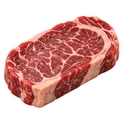
Slice the rested steak across the grain into 5mm strips.
Look at the direction the muscle fibres run and cut at right angles to them. Cut along the grain and every mouthful is a long tough thread; across it, the fibres are already short and the meat gives immediately.
Lay the slices flat and overlapping across the bread, rather than piling them, so each bite pulls through cleanly.
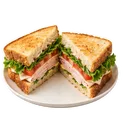
Top with the onions, the rocket and any juices from the resting plate, then close and press. Cut in half with a serrated knife.
Nobody has rated this recipe yet.
Sign in to rate this recipe. One rating per person, and you can change it.
What to expect
- Taste
Beef and browned butter against sweet onion, with horseradish heat cutting up through it and the rocket adding a peppery bitterness. Four strong flavours, all doing something different.
- Aroma
Searing steak and thyme in foaming butter, which is the best thirty seconds in this batch of recipes.
- Texture
Tender meat that gives immediately, soft onions, crisp bread crust and the snap of rocket.
- Sound
The sear, and the crunch of the ciabatta crust.
- How the flavour moves
Crust and salt, then beef, then the sweetness of the onions, then horseradish heat arriving at the back of the nose.
- Serve it
Warm rather than hot, since the steak has rested. That is correct and not a compromise.
- Goes with
Chips, or nothing. A red with some tannin, or a pale ale.
Cook's notes
- Difficulty
Beginner, with one thing to get right and one thing to wait for.
- Cost
Mid. The steak is the whole cost.
- Equipment
A heavy frying pan, a probe thermometer and a sharp knife.
- When to make it
Lunch, or a good weeknight dinner for two.
- Best season
None.
- You know it is done when
A dark even crust and a warm red-pink centre. The resting plate should have a small pool of juice in it, which goes into the sandwich.
- And it feels like
Yielding rather than springy under a finger. Sliced across the grain it should give immediately when bitten.
- Food safety
Whole-muscle beef is safe rare because its interior starts sterile and the surface is seared — this is exactly the opposite of the situation with mince, and is why a rare steak is fine and a rare burger is not. Do not apply this reasoning to any cut that has been mechanically tenderised or needled.
- Where it goes wrong
- Leaving the steak whole, which makes it impossible to eat.
- Slicing along the grain rather than across it, which leaves long tough threads.
- Not resting it, so the juices run onto the board.
- Rushing the onions, which stay sharp.
- A cold steak straight from the fridge, which is grey through the middle by the time the crust forms.
- Fillet steak, which is expensive and tastes of nothing here.
- If it does go wrong
Tough: it was cut along the grain, or it is a cut that needed to be rarer. Dry: overcooked, or not rested. Bread soggy: it will be if the sandwich stands — cut and eat it. Onions bitter: they caught; lower heat and more patience next time.
- Making it ahead
The onions, up to three days ahead, which turns this into a fifteen-minute lunch.
- Keeping it
None.
- Reheating
No.
- Freezing
No.
- Leftovers
Cold steak slices in a salad the next day.
- Scaling it
One steak feeds two comfortably. Cook steaks one at a time in the pan.
- Substitutions
Rump is cheaper than sirloin and has more flavour with slightly more chew; flat iron or bavette are both excellent here and want the same treatment. Bavette in particular has a very pronounced grain and must be cut across it. Do not use fillet, which has little flavour and is wasted in a sandwich.
- Dietary swaps
Contains gluten, milk from the butter, and eggs, mustard and sulphites from the mayonnaise and horseradish sauce. Nut free.
- Shopping for it
A butcher, and ask which way the grain runs if it is not obvious — on bavette it matters enormously.
- Keeping the cost down
Rump, bavette or flat iron rather than sirloin, all of which have more flavour and cost considerably less. Bavette especially rewards correct slicing.
- Sustainability
Beef has the highest footprint of any common protein, and this is the most concentrated beef dish in the batch at 200g a head. The honest framing is that one steak feeding two people in a sandwich, with onions and leaves doing half the work, is a considerably better use of it than one steak per person on a plate — and the cheaper cuts recommended above are also the ones that come from the working parts of the animal and are chronically under-demanded.
- Nutrition
High in protein and fat, with not much vegetable beyond the onion and rocket.
- Worth it?
Rest it, then cut across the grain. Two minutes of attention and the sandwich becomes edible rather than a wrestling match.
Where it comes from
- Origin
No single one; the pub version is British and Australian.
- Also called
Steak sandwich; steak sanger in Australia.
- Said out loud
Straightforward.
- What the name means
Descriptive.
- History
Steak served between bread appears independently in many places and needs no explanation. The specific pub combination of steak, caramelised onion, a peppery leaf and a horseradish or mustard mayonnaise on ciabatta is a late twentieth-century British and Australian gastropub construction, and is roughly contemporary with ciabatta becoming widely available outside Italy.
- Why it matters
The default 'nice lunch' on a British pub menu, and in Australia a genuine institution.
- When it is eaten
Lunch, or a good dinner for two made from one steak.
- The traditional way
Searing, resting, and slicing across the grain.
- How it changed
The bread moved from sliced white to ciabatta and sourdough, and the sauce from mustard to horseradish mayonnaise.
- Regional variations
The Philadelphia cheesesteak is a different dish entirely — thinly shaved beef griddled with onions and melted cheese in a long roll. Chimichurri versions are common in Argentina and increasingly elsewhere.
- How this version differs
The across-the-grain slicing and the flat overlapping layer are written in as steps, because a sandwich with a whole steak in it cannot be eaten neatly and most recipes do not say so.
- Sources and credit
None.
 Air Fryer Bacon
 Air Fryer Sausages
 Bacon and Egg Muffins
 Beef and Ale Stew with Herb Dumplings
 Carrot and Coriander Soup
 Chicken Caesar Salad
 British
 Lunch
 Beef
 30 minutes