Paskha
Пасха
Пасха — Easter.
Sweetened curd cheese beaten with butter, egg yolks and candied fruit, then drained overnight in a pyramid mould.
- Prep
- 40 min
- Cook
- 15 min
- Resting
- 12 hr
- Total
- 12 hr 55 min
- Serves
- 10
- Revisions
- 6
Allergens
- Eggs
- Milk
- Nuts
- Sulphites
Named from the ingredients as written, including those carried in from sub-recipes. This is not a guarantee — check the labels on what you actually buy, and note that a product’s recipe can change.
Ingredients
Serves
Method
Push the tvorog through a fine sieve into a large bowl, then push it through a second time.
Sieve it twice, not once. Curd that has been through the mesh a single time still carries grains you can feel on the tongue, and beating afterwards packs them together rather than breaking them down.
Whisk the egg yolks with the caster sugar and the fine salt for about a minute, until the mixture pales and holds a brief trail from the whisk.
Warm the double cream with the vanilla seeds and the split pod in a small heavy pan until it steams and the surface trembles, about 3 minutes.
Pour a ladleful of the hot cream into the yolks in a thin stream, whisking hard, then whisk in the rest.
Return the mixture to the pan and set it over low heat.
Stir constantly with a spatula for 5-8 minutes, until it reaches 82C/180F and coats the back of the spoon thickly enough that a finger drawn across leaves a clean line.
Do not let it boil. Yolks set into hard grains a little above 82C/180F, and a curdled base does not come back once it is cold, so take the pan off at the line and no later.
Strain the custard through a sieve into a cold bowl, discarding the vanilla pod.
Press cling film onto the surface and cool it to room temperature, which takes about 40 minutes.
Beat the softened butter on its own for 2-3 minutes, until pale and light.
Beat the sieved tvorog into the butter in three additions.
Fold in the cooled custard until the mixture is even, with no pale streaks left.
Fold in the candied peel, raisins and almonds.
Line a pasochnitsa, or a scrupulously clean plastic flowerpot, with a large square of damp muslin, pressing it into the corners and leaving a generous overhang.
A flowerpot works because it is the same tapering shape and, more to the point, has the same hole in the bottom. Anything with a solid base holds the whey in and the paskha will not set.
Pack the mixture into the mould in stages, pressing each addition down firmly with the back of a spoon to drive out air pockets.
Fold the overhanging cloth over the top and sit a saucer and a 500g weight on it.
Stand the mould over a deep bowl and refrigerate for 12-24 hours, pouring off the collected whey once or twice.
Do not shorten this or leave off the weight. Whey drips steadily for the first several hours, and an underdrained paskha slumps into a heap the moment it is turned out.
Invert the mould onto a plate, lift it away and peel the muslin off slowly.
Traditional carved moulds print the letters XB and a spear and reed onto the sides; a plain mould can be decorated with almonds and candied peel instead.
Serve cold, cut in slim wedges, with kulich.
Keep it refrigerated and eat it within four days.
Nobody has rated this recipe yet.
Sign in to rate this recipe. One rating per person, and you can change it.
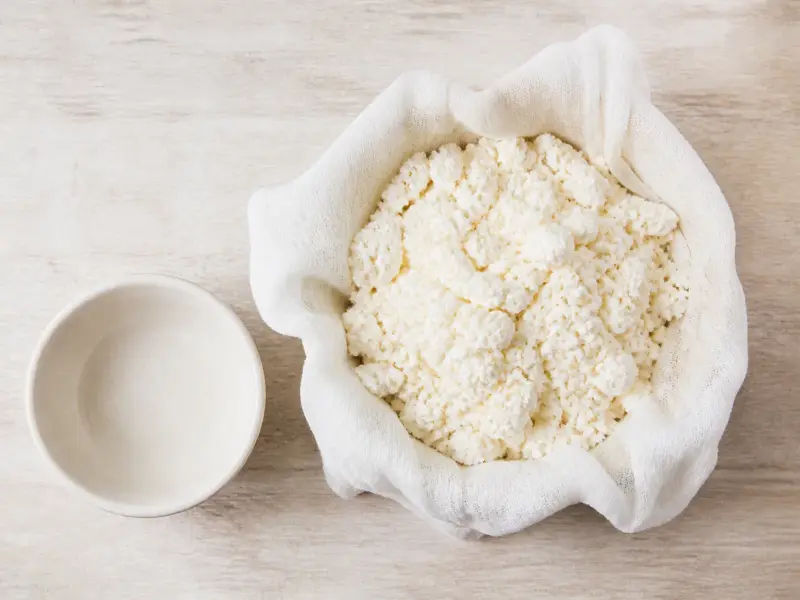 Tvorog
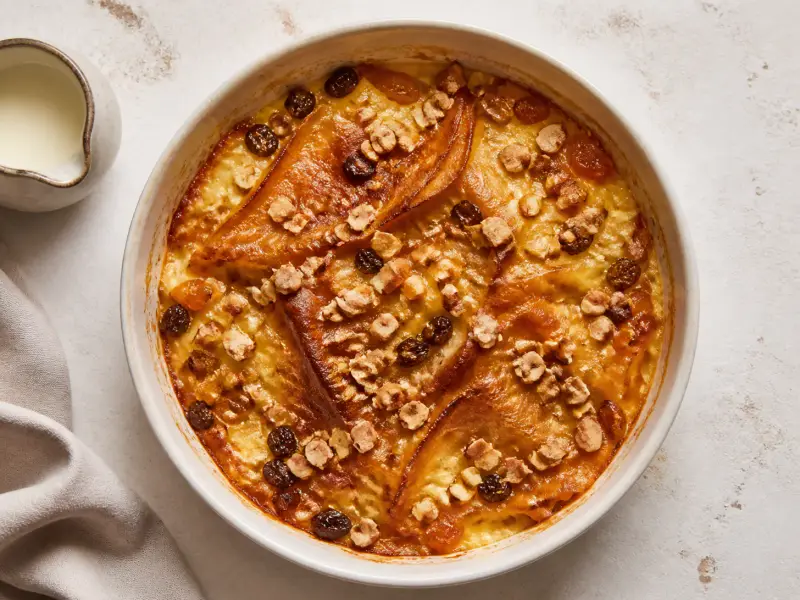 Guryev Kasha
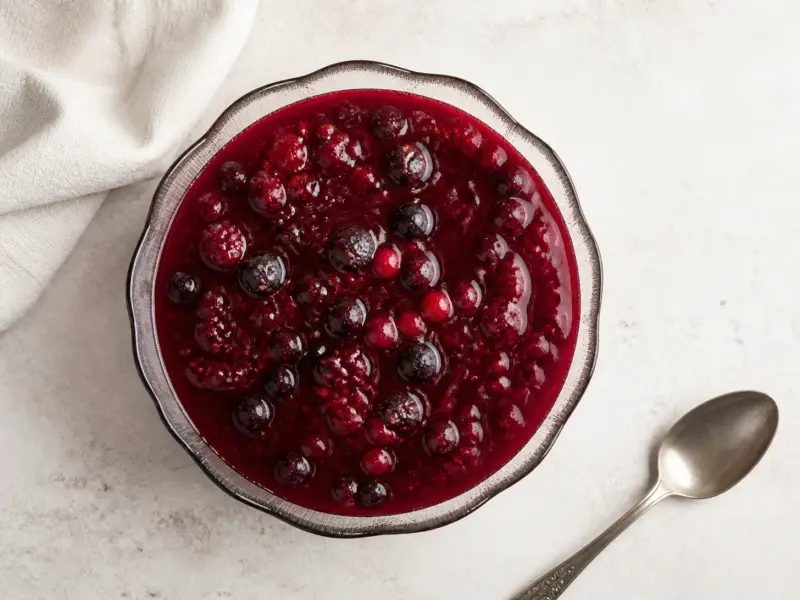 Kissel
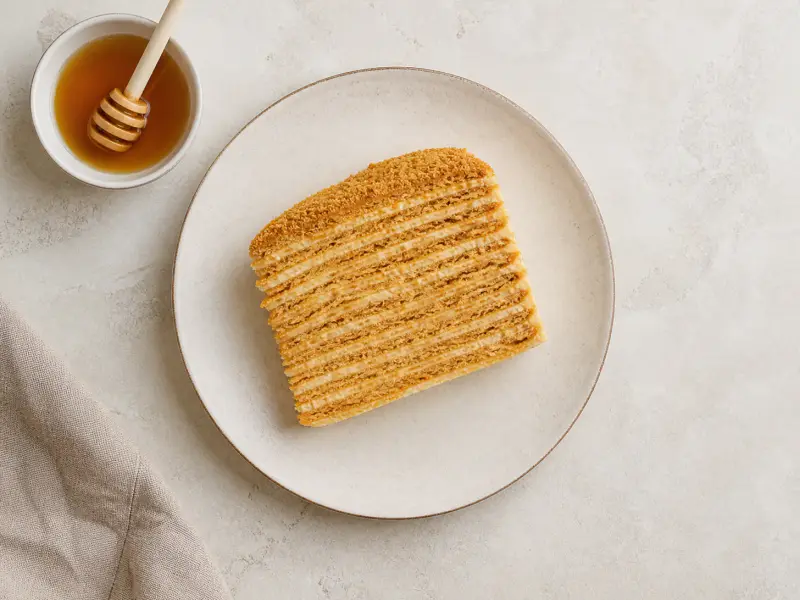 Medovik
 Pryaniki
 Ptichye Moloko
 Sharlotka