Sage and Onion Stuffing
Oven-dried bread, onion and celery softened in butter and plenty of sage, bound with stock and egg and baked in a dish so the top crunches.
- Prep
- 25 min
- Cook
- 1 hr 20 min
- Resting
- 20 min
- Total
- 2 hr 5 min
- Serves
- 10
- Revisions
- 1
Allergens
- Celery
- Cereals containing gluten
- Eggs
- Milk
Named from the ingredients as written, including those carried in from sub-recipes. This is not a guarantee — check the labels on what you actually buy, and note that a product’s recipe can change.
Ingredients
Serves
Method
Heat the oven to 160C/140C fan.
Spread the bread cubes over two baking trays and dry them in the oven for 20 minutes, until they feel firm and dry but have not coloured.
Tip the bread into your largest bowl and turn the oven up to 190C/170C fan.
Melt the 100g butter in a wide frying pan over medium-low heat.
Add the onions, celery and salt and cook for 12-15 minutes, stirring now and then, until soft and translucent with no browning.
Stir in the sage and thyme and cook for 1 minute more, until the sage smells strong and resinous.
Scrape the vegetables and every bit of butter over the bread, add the parsley and pepper, and toss.
Whisk the eggs into the warm stock. If the stock is too hot to hold a finger in, the egg will cook into threads.
Pour the stock over the bread a third at a time, folding gently, until every cube is damp and nothing is pooling at the bottom of the bowl.
Leave for 10 minutes so the bread can absorb it.
Butter a 23 x 33cm baking dish with the 15g butter.
Pile the stuffing in loosely without pressing it down.
Cover with foil and bake for 25 minutes.
Uncover and bake for 20-25 minutes more, until the top is deep golden and crunchy at the edges and the centre reads 74C.
Rest for 10 minutes before spooning it out.
Nobody has rated this recipe yet.
Sign in to rate this recipe. One rating per person, and you can change it.
What to expect
- Taste
Savoury and herbal, with sage leading: piney, slightly bitter and warm, the classic match for rich meat. The onion is soft and sweet after its long, gentle cooking, and the butter and stock give the bread a rich, almost meaty savouriness.
- Aroma
Sage frying in butter is the defining smell, sharp and resinous, with sweet onion and celery underneath. As it bakes, toasted bread joins in.
- Texture
Two textures in one spoonful: the top crunchy and almost like croutons, the middle soft, moist and spoonable without being mushy. The vegetables are melting rather than crunchy.
- Sound
The crunch of the top layer as the spoon breaks it, and the sizzle of butter at the edges of the dish.
- How the flavour moves
Buttery, toasty crust first, then soft savoury bread and sweet onion. The sage builds as you chew and stays longest, a warm, slightly bitter herbal finish that is what makes it cut through gravy and turkey.
- Serve it
Hot, straight from the oven after a short rest.
- Goes with
Roast turkey, turkey gravy and cranberry sauce; also roast chicken and roast pork.
Cook's notes
- Difficulty
Easy.
- Cost
Cheap. Bread, onions, celery, butter and herbs.
- Equipment
Two baking trays, a large bowl, a wide frying pan and a 23 x 33cm baking dish.
- When to make it
Alongside a roast bird or joint.
- Best season
Sage is at its best from late summer into autumn, which suits the season.
- You know it is done when
A deep golden top with darker, crunchy edges and peaks, the sides bubbling slightly where they touch the dish.
- And it feels like
Crisp on top, soft and moist but not wet underneath, holding together as it is spooned out.
- Food safety
Contains raw egg and stock, so the centre must reach 74C. If made ahead and refrigerated before baking, add 10-15 minutes to the covered time.
- Where it goes wrong
- Using fresh bread, which turns to paste.
- Adding too much stock, which makes it soggy and heavy.
- Pressing it into the dish, which makes it dense.
- Browning the onions, which makes them bitter rather than sweet.
- Adding hot stock to the eggs, which scrambles them.
- If it does go wrong
Too dry: drizzle over a little more warm stock before or during baking. Soggy: bake uncovered for longer. Top browning before the middle is hot: cover it with foil again.
- Making it ahead
Dry the bread up to 2 days ahead and keep it in an airtight container. The whole dish can be assembled the day before and refrigerated, then baked with a little extra time.
- Keeping it
Keeps 3 days covered in the fridge.
- Reheating
Reheat in a dish at 180C/160C fan with a splash of stock, uncovered for the last few minutes to re-crisp the top.
- Freezing
Freezes well baked, for up to 2 months. Thaw in the fridge before reheating.
- Leftovers
Excellent pressed into a hot buttered pan and fried until crisp on both sides, or layered into a turkey sandwich.
- Scaling it
Halves or doubles easily; use two dishes rather than one deeper one, so it cooks through and has more crust.
- Substitutions
Cornbread for half the bread gives a Southern-style dressing. Turkey stock made from the giblets can replace the chicken stock. 1 tbsp dried sage can stand in for fresh, but the flavour is dustier.
- Dietary swaps
Contains cereals containing gluten, eggs, milk and celery, and celery again in most chicken stocks. For a vegetarian version, use vegetable stock; for dairy free, olive oil instead of butter. Gluten-free bread works if it is dried well, though it gives a softer result.
- Shopping for it
A plain white loaf or sourdough with a firm crumb; avoid sweet or enriched breads.
- Keeping the cost down
A good use for a loaf that is going stale, and herbs from the garden.
- Sustainability
Uses up stale bread.
- Nutrition
Mainly carbohydrate from the bread, with fat from the butter.
- Worth it?
The side dish that earns the most second helpings, and better baked in a dish than it ever was inside the bird.
Where it comes from
- Origin
England and the United States.
- Also called
Stuffing, or dressing.
- What the name means
Stuffing describes what was traditionally done with it. Dressing is the term preferred in much of the American South and was sometimes adopted in the nineteenth century as the more genteel word.
- History
Recipes for filling birds and joints with breadcrumbs, herbs and fat appear in English cookery from the medieval period onwards, and sage and onion became the standard English stuffing for goose and pork. Bread stuffings travelled to America with English settlers and became a Thanksgiving standard.
- Why it matters
For many Americans the side dish people look forward to most at Thanksgiving, with strong family and regional loyalties to particular versions.
- When it is eaten
Thanksgiving, Christmas and Sunday roasts.
- The traditional way
Packing the mixture into the cavity of the bird to cook in its juices.
- How it changed
Baking it separately has become common advice because of food safety and the overcooking of the breast that stuffing inside the bird causes. Boxed stuffing mixes have been popular in the US since the 1970s.
- Regional variations
Cornbread dressing in the South, oyster stuffing on the East Coast, sausage stuffing widely, wild rice stuffing in the Upper Midwest, and British versions bound with sausage meat.
- How this version differs
Baked entirely outside the bird, and kept meat-free apart from the stock.
- Sources and credit
No individual creator.
 Chicken Stock
 Baked Mac and Cheese
 Braised White Beans with Sage
 Chopped Salad
 Corn Pudding
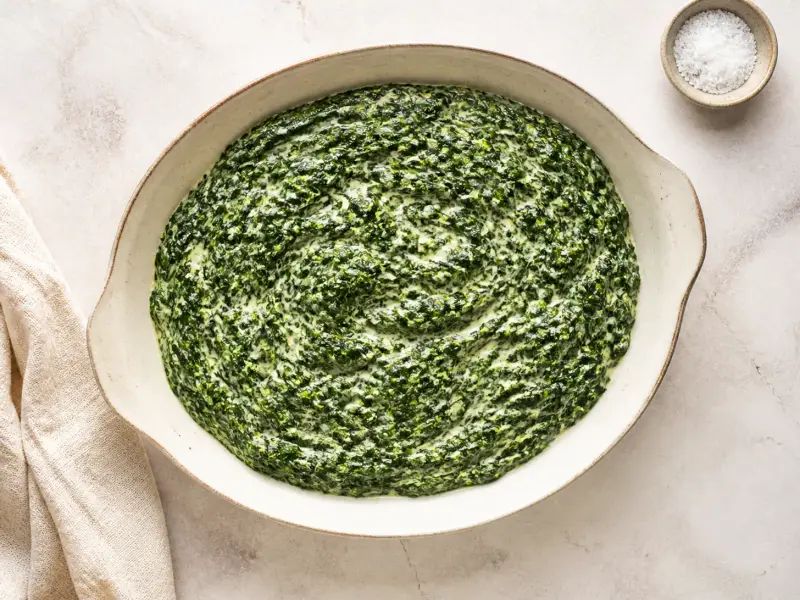 Creamed Spinach
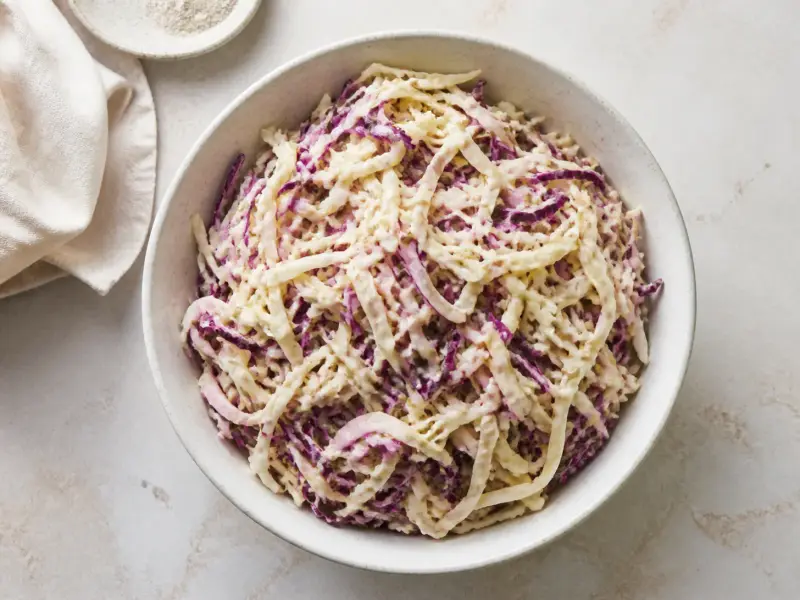 Crunchy Cabbage Slaw
 American
 Side dishes
 Fresh herbs