Holodets
Холодец
Kholodets
Холодец — the cold thing.
Pork trotters and beef simmered for hours until the broth sets to a firm savoury jelly around the shredded meat.
- Prep
- 45 min
- Cook
- 6 hr
- Resting
- 11 hr 30 min
- Total
- 18 hr 15 min
- Serves
- 10
- Revisions
- 5
Allergens
- Mustard
Named from the ingredients as written, including those carried in from sub-recipes. This is not a guarantee — check the labels on what you actually buy, and note that a product’s recipe can change.
Ingredients
Serves
Method
Put the trotters and hock in a bowl of cold water and leave them for 3 hours, changing the water twice, which draws out blood that would otherwise cloud the broth.
Scrub the trotters and scrape off any remaining bristle with the back of a knife.
Put the trotters, hock and beef shin in a very large pot and pour over the 4 litres of cold water.
Bring it to the boil, then pour the whole lot into a colander, rinse the meat under the tap and rinse out the pot.
Tipping away the first water costs you nothing and is the surest route to a clear jelly, since most of the scum comes off in those first few minutes.
Return the meat to the clean pot, cover with fresh cold water to about 3cm above the bones and bring it slowly back to the boil.
Skim the grey foam off with a ladle until the surface stays clear.
Add the onions, carrots, bay leaves, peppercorns and allspice berries.
Drop the heat until one bubble breaks somewhere every second or two, and hold it there with the lid ajar for 5-6 hours.
Never let it come back to a rolling boil. A boil emulsifies the rendered fat into the liquid and the jelly sets cloudy and greasy, and nothing you do afterwards takes that back out.
Add hot water only if the bones actually break the surface, and add as little as you can. Every addition dilutes the gelatine that has to set the whole dish.
Stir in the salt in the last hour, once the volume has stopped dropping.
Test the set before you stop: spoon a little broth onto a cold saucer and refrigerate it for 10 minutes. It should firm to a tacky film that holds a fingerprint.
If it is still liquid, simmer for another hour and test again rather than reaching for a packet of gelatine.
Lift the meat out onto a tray and discard the onions, carrots and whole spices.
Strain the broth through a colander lined with a double layer of muslin into a clean pan.
Leave the meat until it is cool enough to handle, then pull it off the bone.
Discard the bones, skin, gristle and cartilage, feeling through the meat for splinters as you go.
Chop or shred the meat into rough 1cm pieces.
Stir the grated garlic into the hot strained broth off the heat. Garlic simmered from the start loses everything it has; added at the end it stays sharp.
Taste and season the broth a shade saltier than you would want to drink it, because cold food reads flatter than hot and this will be eaten fridge-cold.
Divide the meat between two shallow 1 litre dishes and scatter the parsley over.
Ladle the broth over to cover the meat by about 1cm, easing the pieces apart so the liquid runs between them.
Cool it fast. Stand the dishes in a sink of cold water for 20 minutes, then refrigerate them, and get them into the fridge within two hours of the pot leaving the heat.
This matters more here than in most dishes: a deep dish of warm meat broth left on the counter sits for hours in the temperature range where bacteria multiply, and the finished jelly is eaten cold and uncooked.
Refrigerate for at least 8 hours, until it is set firm enough that a finger leaves a dent and no liquid runs when the dish is tilted.
Lift the white cap of set fat off the surface with a spoon and discard it.
Cut into squares and serve cold, with English mustard and grated horseradish alongside.
It is not a preserve, whatever the jelly suggests, and it is not shelf-stable. Keep it refrigerated at all times, take it out only to serve, and eat it within three days.
Nobody has rated this recipe yet.
Sign in to rate this recipe. One rating per person, and you can change it.
Related recipes
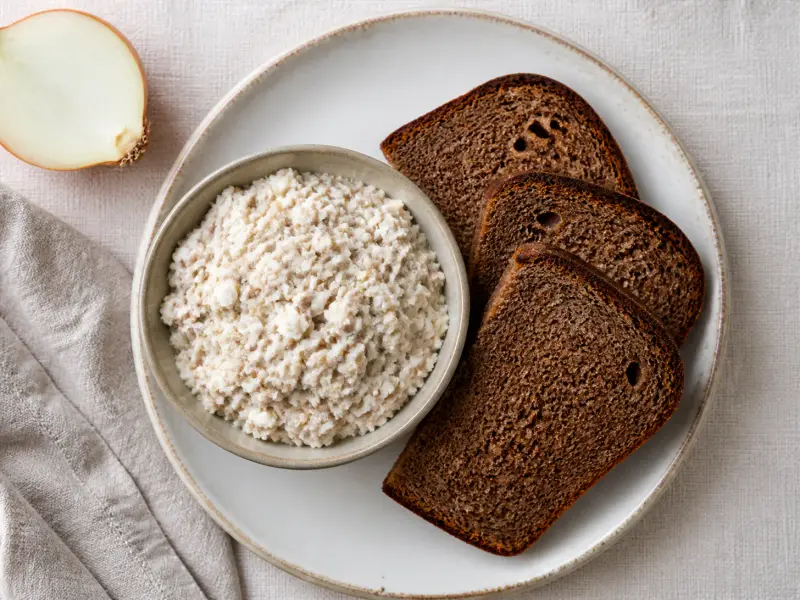 Forshmak
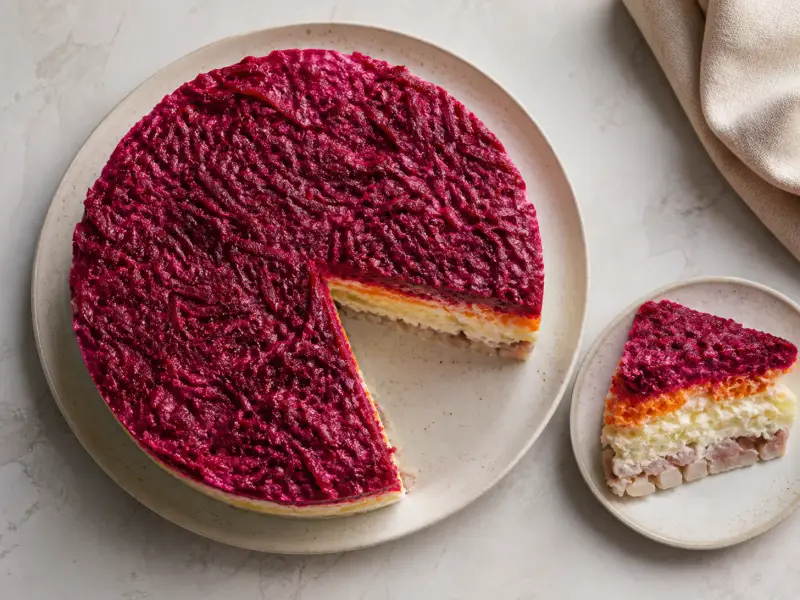 Herring Under a Fur Coat
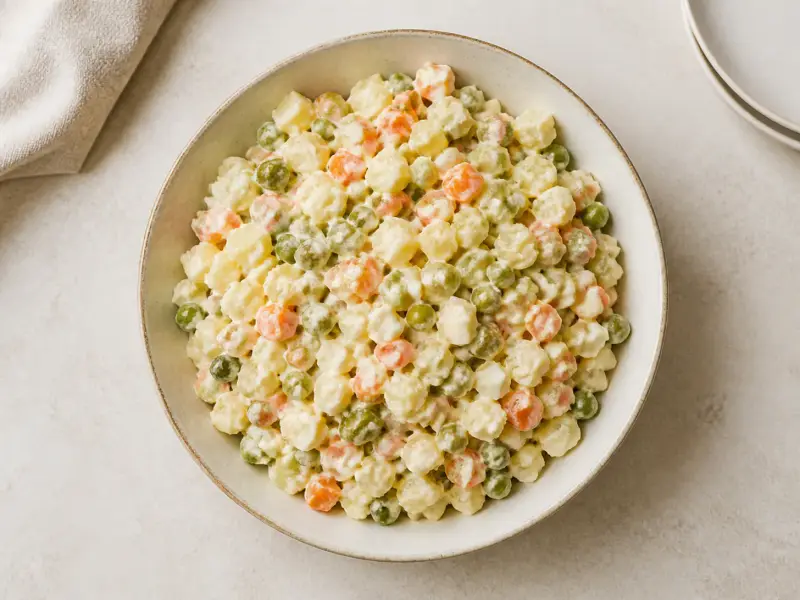 Olivier Salad
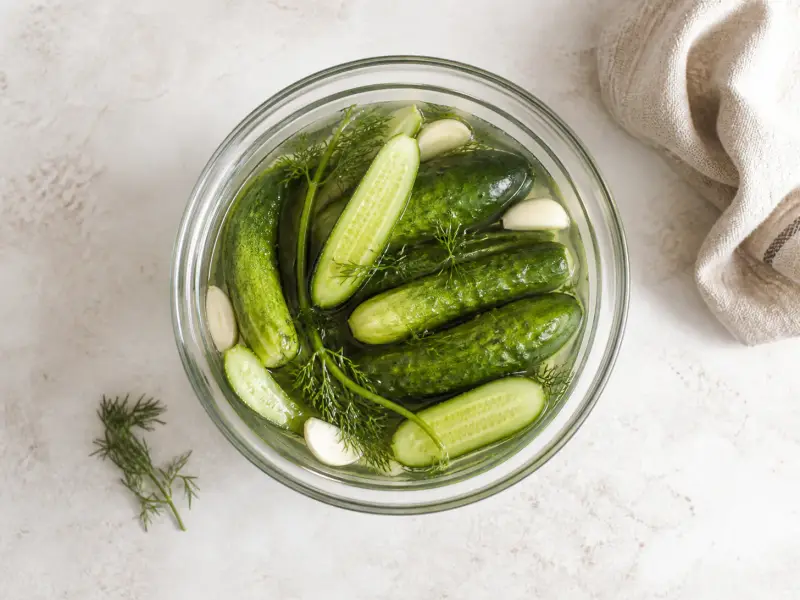 Quick Salted Cucumbers
 Salat Mimosa
 Vinegret
Categories
Cuisines
Courses & dish types