Clam Chowder
Tinned clams and their juice, which is the whole flavour, and the milk added off a rolling boil so it does not split.
- Prep
- 15 min
- Cook
- 35 min
- Total
- 50 min
- Serves
- 4
- Revisions
- 1
Allergens
- Celery
- Cereals containing gluten
- Milk
- Molluscs
- Sulphites
Named from the ingredients as written, including those carried in from sub-recipes. This is not a guarantee — check the labels on what you actually buy, and note that a product’s recipe can change.
Ingredients
Serves
Chowder
To finish
Method
Chowder
Cook the bacon in a heavy pan over medium heat until crisp, then lift it out and keep it for the top.
Add the butter to the bacon fat with the onion, celery, thyme and bay, and cook for 10 minutes until soft with no colour.
Stir in the flour and cook for 2 minutes.
Drain the clams, keeping every drop of the juice. That juice is the entire seafood flavour of the soup — the clams themselves are quite mild — and pouring it away is the most common way this dish ends up tasting of potato.
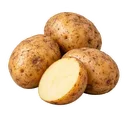
Add the clam juice and the stock gradually, stirring, then add the potatoes.
Simmer for 15 minutes, until the potatoes are tender and starting to break at the edges.
To finish
Add the milk and cream and bring it back to a bare simmer without letting it boil.
Milk boiled hard in an acidic, salty soup can curdle, and a chowder that has split cannot be brought back. It should steam and never bubble hard.
Add the clams and warm through for 2 minutes only. They are already cooked and longer makes them rubbery.
Fish out the bay and thyme stalks, stir in the white pepper and taste for salt — the clam juice and bacon bring a good deal already.
Serve with the crisp bacon, parsley and crackers on top.
Nobody has rated this recipe yet.
Sign in to rate this recipe. One rating per person, and you can change it.
What to expect
- Taste
Sweet and briny against the salt of the bacon, with the cream rounding it and white pepper giving a distinct hot-earthy note at the back. It should taste of the sea rather than of dairy.
- Aroma
Bacon first, then a clean briny smell when the clam juice goes in.
- Texture
Soft potato, slightly chewy clam and a thick but not gluey liquid. Any graininess means the milk boiled.
- Sound
None once the dairy is in, and that silence is the signal — a chowder that is bubbling audibly is too hot.
- How the flavour moves
Salt and smoke first, then sweetness and brine, then a long creamy finish with pepper at the end.
- Serve it
Hot but never boiled, which is a distinction that matters more here than almost anywhere else in the collection.
- Goes with
Oyster crackers or crusty bread. A cold beer, or a crisp white.
Cook's notes
- Difficulty
Beginner, with one thing that can be ruined at the end.
- Cost
Low to mid.
- Equipment
A heavy pan.
- When to make it
Cold weather.
- Best season
None for tinned.
- You know it is done when
Potatoes tender and just beginning to break at the edges, which is what thickens the soup naturally.
- And it feels like
Thick enough to coat a spoon, with distinct pieces of potato and clam in it.
- Food safety
Tinned clams are cooked and need only warming. Nothing else unusual. Molluscs are a declared allergen and shellfish allergy is severe, so this dish should be named clearly to anyone eating it.
- Where it goes wrong
- Draining the clams and throwing the juice away, which discards the flavour.
- Boiling after the milk goes in, which can curdle it irreversibly.
- Floury potatoes, which dissolve into a purée.
- Simmering the clams for ten minutes, which makes them rubbery.
- Over-salting before tasting — the clam juice and bacon are both salty.
- If it does go wrong
Split or grainy: it boiled, and it will not come back. Thin: mash a few of the potato cubes against the side of the pan. Bland: the juice was discarded; a splash of fish stock helps but does not replace it. Rubbery clams: they were in too long.
- Making it ahead
Make it to the point before the dairy, then finish on the day.
- Keeping it
Two days in the fridge.
- Reheating
Gently and never to a boil. The clams will toughen slightly on a second heating whatever you do.
- Freezing
Not recommended. Dairy goes grainy and the potatoes go mealy.
- Leftovers
Thinned with a little more milk, or spooned over a baked potato.
- Scaling it
Doubles cleanly.
- Substitutions
Fresh clams if you have them: steam 1kg in a covered pan with a splash of wine until they open, keep every drop of the liquor, and pick the meat. Smoked haddock instead of clams makes a different chowder — this site has one.
- Dietary swaps
Contains molluscs, milk and gluten, plus celery and sulphites from stock. Pescatarian without the bacon. The gluten can go with a cornflour slurry instead of a roux. Not adaptable for a dairy-free version without becoming a different soup.
- Shopping for it
Tinned clams are usually near the tinned fish. Check that they are packed in juice rather than drained.
- Keeping the cost down
Tinned clams are far cheaper than fresh and are the right ingredient here rather than a compromise.
- Sustainability
Clams are among the best seafood choices there is. They are filter feeders that need no feed, farmed clams improve water quality as they grow, and their carbon footprint is a fraction of that of any fished or farmed finfish, let alone meat. Most tinned clams are farmed. The bacon is the heaviest thing in the bowl, and the version without it is a perfectly good soup.
- Nutrition
Rich from the dairy, high in protein, and clams are unusually high in iron and B12.
- Worth it?
Keep the juice and do not let it boil. Two rules and the soup tastes of the sea instead of the potato.
Where it comes from
- Origin
New England, on an older Atlantic form.
- Also called
New England clam chowder.
- Said out loud
Straightforward.
- What the name means
Probably from the French chaudière, a cauldron, or from an English west-country word for a fish stew. The derivation is not settled.
- History
Chowder as a fisherman's pot of fish, biscuit and salt pork is documented on both sides of the Atlantic from the eighteenth century, and the milk-thickened New England clam version develops out of it. Rhode Island has a clear-broth version and Manhattan a tomato one, and the rivalry between the milk and tomato camps is genuine — in 1939 a Maine legislator introduced a bill to make putting tomatoes in chowder illegal, which was a joke and is a real indication of how strongly people felt.
- Why it matters
A regional identity dish in New England, and one of a small number of American soups known worldwide.
- When it is eaten
Cold weather, coastal holidays, and a first course at an American restaurant.
- The traditional way
Rendering salt pork or bacon, building on its fat, and thickening with a roux and dairy.
- How it changed
Ship's biscuit as a thickener gave way to a flour roux and potatoes.
- Regional variations
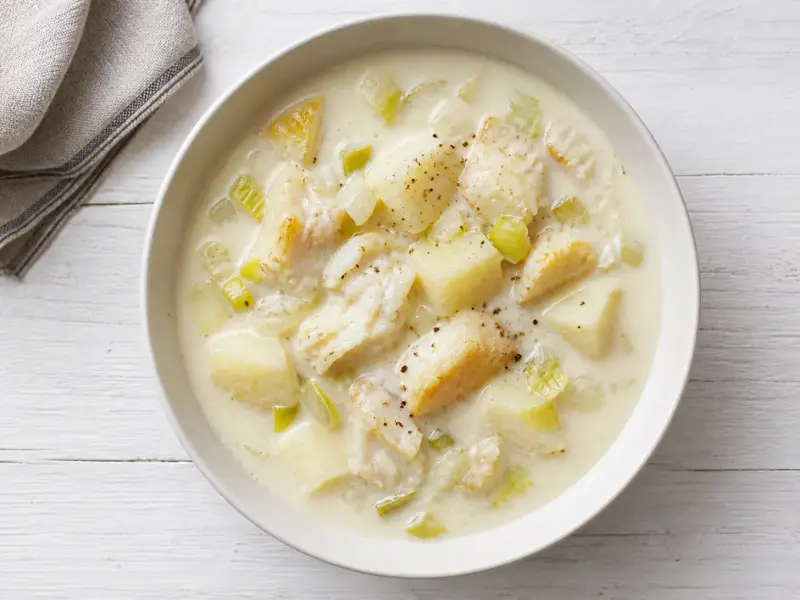
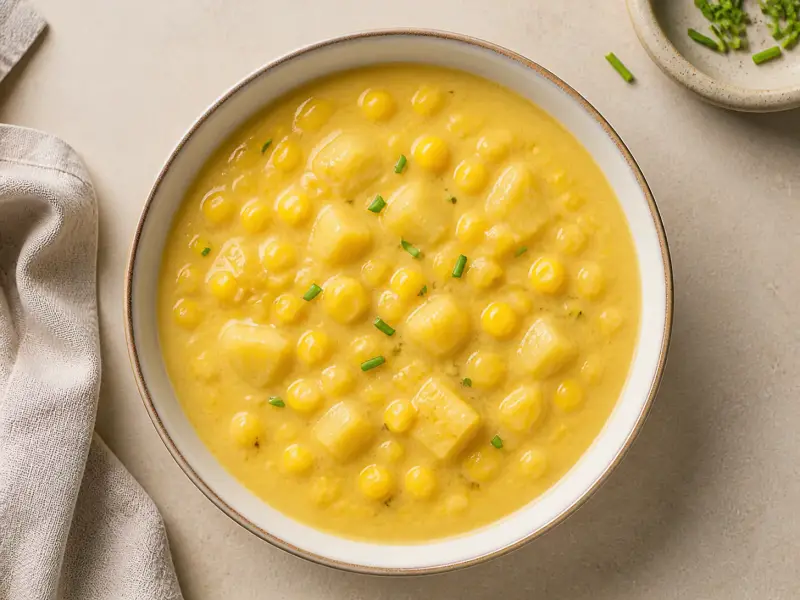
Manhattan chowder is tomato-based and contains no dairy. Rhode Island's is a clear broth. This site also has Smoked Haddock Chowder and Sweetcorn Chowder, both in the same family.
- How this version differs
It is written for tinned clams, because that is what most people have, and it insists on keeping the juice — which recipes written for fresh clams take for granted and recipes written for tins routinely omit.
- Sources and credit
None.
 Smoked Haddock Chowder
 Herring Under a Fur Coat
 Sweetcorn Chowder
 Ukha
 Ackee and Saltfish
 Air Fryer Salmon
 American
 Soups
 Fish
 Potatoes
 Pescatarian